What to wear and bring to the studio
Fitted clothes, grip socks and no zips: a short list that saves the upholstery and your first class.
New reformer foundations batch starts 3 November · Eight reformers per class
2nd floor, 14 Union Park, Khar West, Mumbai 400052
Mon–Sat · 6.30 am – 9 pm · Sun 8 am – 1 pm
Both teach the same ideas. Here is how they differ in feel, in price and in what each suits.
Pilates began on the mat, and the reformer came later to add resistance and support. In our studio both follow the same principles: slow control, breath, a long spine and steady work from the middle of the body. The difference is in how the work feels.
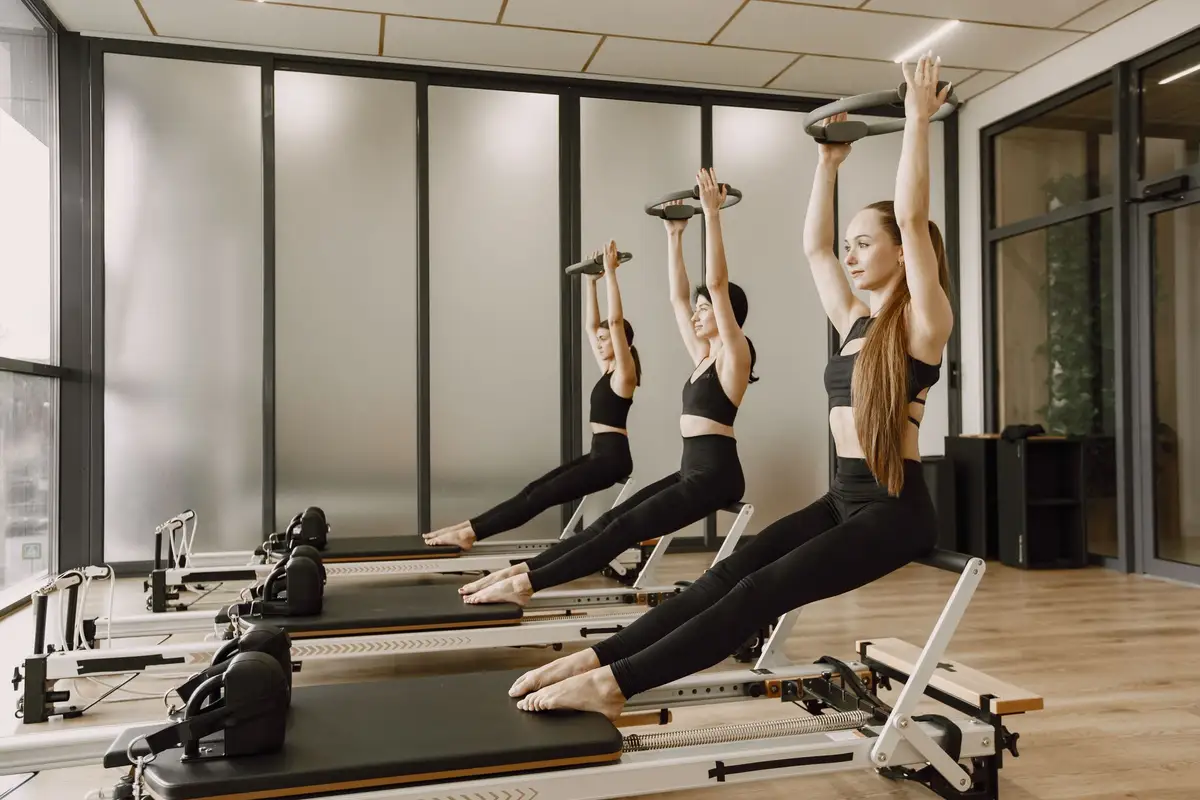
On the reformer, the springs help and resist at the same time. A light spring can support you through a movement you could not yet do alone, and a heavy one makes a familiar movement harder. The moving carriage also asks you to stay steady, which is why people often find it engaging from the first class. It costs more, ₹1,800 a class, because each person has a machine and the room holds eight.
On the mat there is nothing to hold you up, so your own body weight is the load. Small props like rings, balls and bands make exercises easier or harder. Mat classes hold twelve people and cost ₹950, and the exercises are easy to repeat at home.
If you are new and want to feel guided, start on the reformer. If you want something you can practise anywhere, or want to keep the cost down, the mat suits you well. Many of our regulars do two reformer classes and one mat class a week, which gives them the best of both without spending on daily reformer sessions.
Keep reading
Fitted clothes, grip socks and no zips: a short list that saves the upholstery and your first class.
Autos, umbrellas and a dry change of clothes: how our clients keep coming from June to September.
What you pay per class, why packs expire, and when a pack is worth it and when it is not.