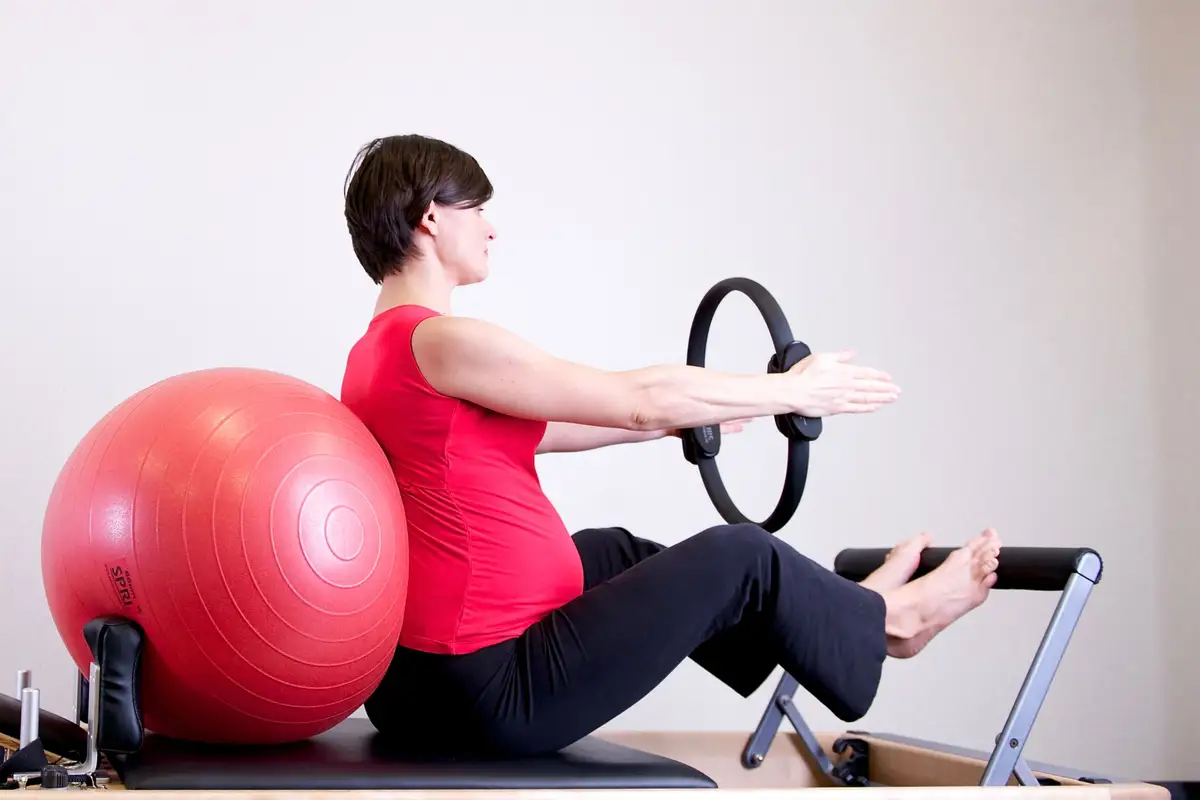
Our prenatal class: what we do and what we skip
From week 14, with your doctor’s note: how the class is planned, and why it changes every trimester.
New reformer foundations batch starts 3 November · Eight reformers per class
2nd floor, 14 Union Park, Khar West, Mumbai 400052
Mon–Sat · 6.30 am – 9 pm · Sun 8 am – 1 pm
Springs, ropes, wheels and upholstery: the weekly checks that happen after the last class.
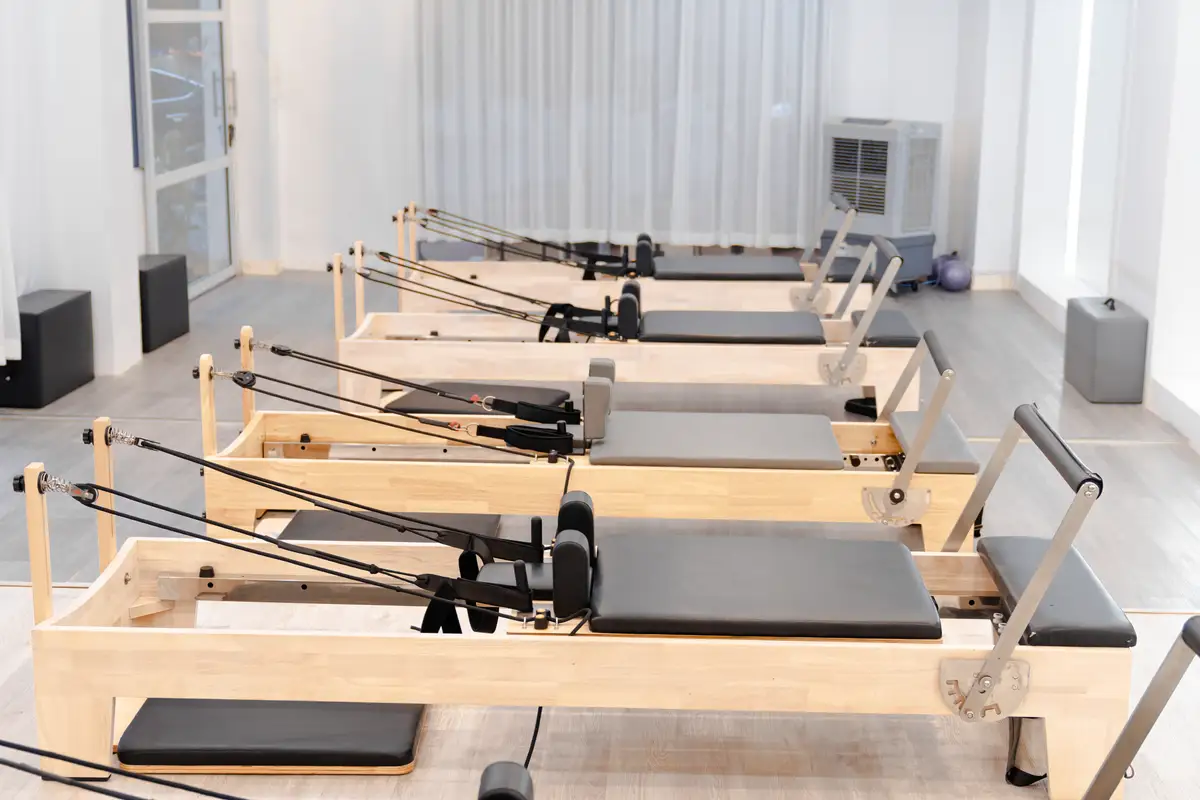
A reformer has parts that wear quietly: springs that lose a little tension, ropes that fray at the pulley, wheels that collect dust, and upholstery that cracks if it is cleaned with the wrong thing. Because eight people trust these machines every hour, we look after them on a fixed routine.
After every class, each carriage, footbar, headrest and strap is wiped with a mild cleaner and a soft cloth. We avoid alcohol sprays, which dry out the vinyl, and we never pour water on the frame. Grip socks help here too: less sweat and dust reach the carriage.
Every Saturday evening, after the last class, two instructors go through each reformer with a checklist. They look at every spring for gaps between the coils, run the ropes through their hands for wear, spin the wheels, clear the rails of hair and dust, and check that the footbar locks firmly in each position. Anything doubtful is replaced that night. We keep spare springs and ropes in the cupboard for this reason.
Twice a year a technician comes in on a Sunday afternoon to service the wheels and tracks and tighten the frames. Springs are replaced on a schedule, every two years or sooner if they show wear, whatever they look like. It is unglamorous work. It is also the reason the machines feel the same in your hundredth class as in your first.
Keep reading
From week 14, with your doctor’s note: how the class is planned, and why it changes every trimester.
Six weeks, two classes a week, babies welcome: how the block is built and when to start it.
November to February brings sangeets, late nights and travel. How to keep two classes a week going.