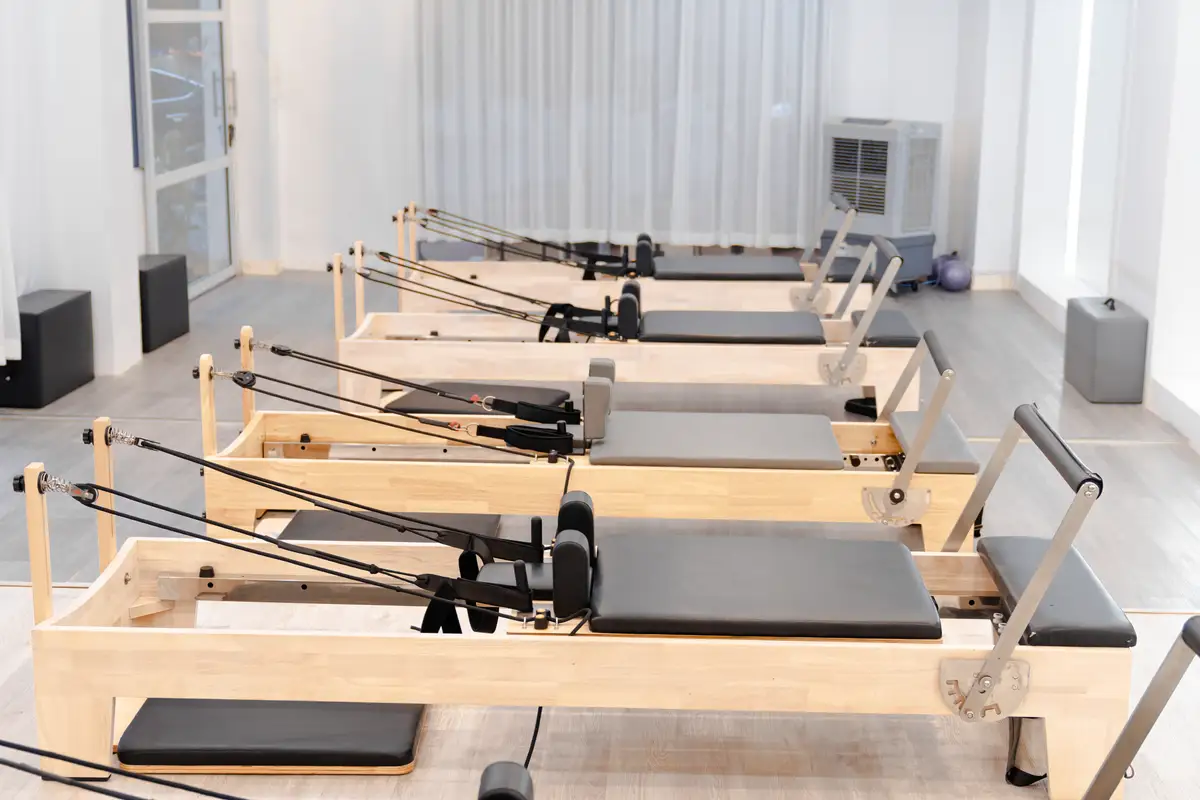
How we look after eight reformers
Springs, ropes, wheels and upholstery: the weekly checks that happen after the last class.
New reformer foundations batch starts 3 November · Eight reformers per class
2nd floor, 14 Union Park, Khar West, Mumbai 400052
Mon–Sat · 6.30 am – 9 pm · Sun 8 am – 1 pm
The most common worry we hear, answered: no, and here is what the springs do for stiff hamstrings.
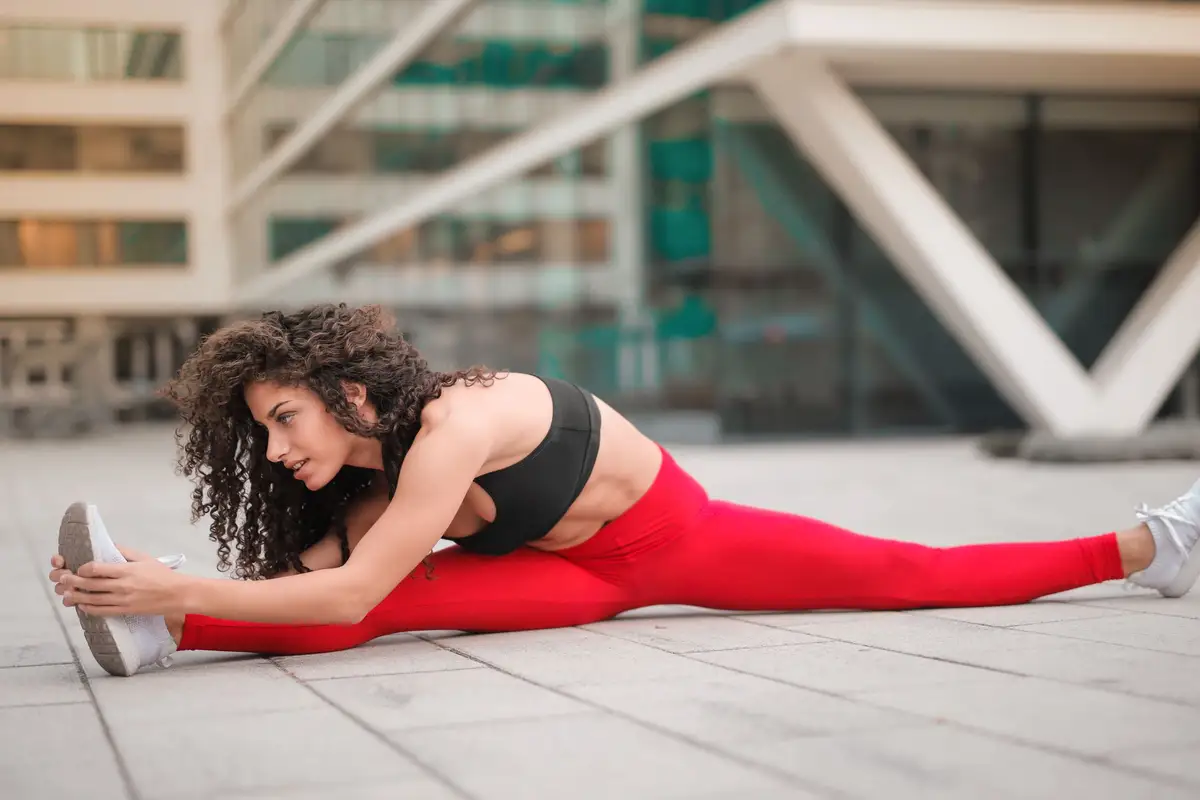
At least once a week someone tells us they cannot do pilates because they cannot touch their toes. We understand the worry. Photos of pilates usually show dancers with their legs up by their ears. But flexibility is not the starting point, and nobody in a foundations class is asked to show it.
The reformer is adjustable in almost every way. The footbar moves up and down, the headrest raises, and the springs can be set to support you through a stretch rather than force you into it. If your hamstrings are tight, your instructor will bend your knees, place a small box behind you or shorten the range. The exercise still works. It simply meets you where you are.
What pilates asks for is control: moving slowly, breathing steadily and keeping the movement where you meant it to be. That is something everyone can practise from the first class, whatever their age or shape. Our clients range from college students to a retired engineer of 74 who comes three mornings a week.
Range of movement often changes with regular practice, and many clients notice it after a few months. But that is something that happens along the way, not something you need before you begin. Come as you are, tell your instructor what feels stiff, and let the springs do some of the work.
Keep reading
Springs, ropes, wheels and upholstery: the weekly checks that happen after the last class.
From week 14, with your doctor’s note: how the class is planned, and why it changes every trimester.
Six weeks, two classes a week, babies welcome: how the block is built and when to start it.