Quick answer
A size guide that cuts returns uses measurements from your own garments, not a generic chart; says whether figures are body or garment measurements; explains how to measure at home with a tape or thread; gives fit advice for in-between sizes; and sits right beside the size buttons on every product page.
A good size guide is one of the cheapest ways to cut returns and exchanges. It should use measurements taken from your own products rather than a generic chart, say clearly whether the numbers are body or garment measurements, explain how to measure at home, and give honest fit advice for people between sizes. Then put it right next to the size buttons, where shoppers are deciding. Below are ready structures for blouses, kurtas, footwear, kids' wear and rings.
Why do generic size charts cause returns?
An "M" from one maker can be an "L" from another. Copying a chart from the internet, or from a different brand, means your sizes and your chart disagree, and the customer only finds out when the parcel arrives. Measure your own products, size by size, and update the guide when a supplier or pattern changes.
The other common confusion is body vs garment measurements. A body measurement is the shopper's chest; a garment measurement is the kurta's chest laid flat and doubled, which includes ease. Say which you are giving. If you give garment measurements, add a line such as "Choose a size about 2 inches larger than your body chest for a comfortable fit."
What should a blouse size guide include?
Blouse fit matters more than almost any other garment, and alterations are common. For ready-made or stitched blouses, include:
| Size | Bust | Waist (under bust) | Shoulder | Armhole | Sleeve length | Blouse length |
|---|---|---|---|---|---|---|
| 32 | your figure | … | … | … | … | … |
| 34 | … | … | … | … | … | … |
| 36 | … | … | … | … | … | … |
Add the margin you leave for alteration ("1 inch margin in side seams") and whether the blouse is padded. For unstitched blouse pieces, give the fabric length instead. Our guide to selling sarees online covers stitching options.
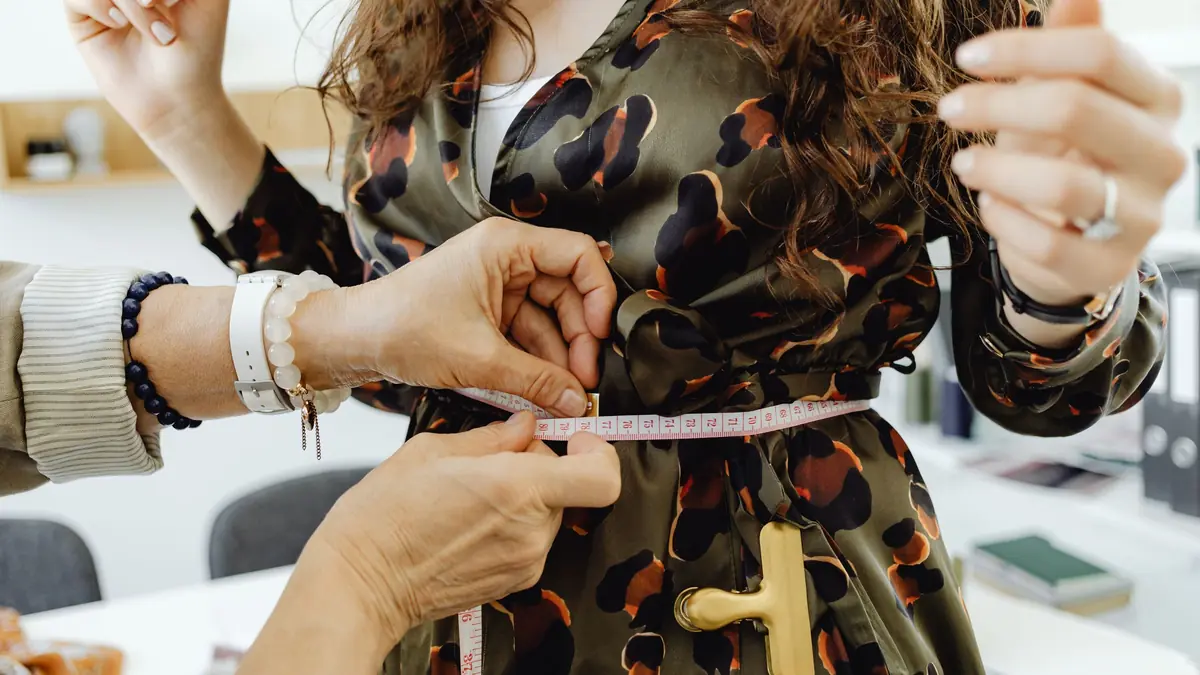
How to measure blouse size at home
- Bust: around the fullest part, tape level, not too tight.
- Under bust: just below the bust, snug.
- Shoulder: from one shoulder edge to the other across the back.
- Easiest method: measure a blouse that fits well, laid flat.
What should a kurta or kurti size chart include?
| Size | Chest | Waist | Hip | Shoulder | Length | Sleeve |
|---|---|---|---|---|---|---|
| S | … | … | … | … | … | … |
| M | … | … | … | … | … | … |
| L | … | … | … | … | … | … |
| XL | … | … | … | … | … | … |
Hip matters for straight and A-line kurtas; length matters for whether it is a short kurti, knee-length or calf-length. Add the model's height and the size she wears in the photos, for example "Model is 5'5" and wears S". That single line helps more than many shoppers' guesses. The same structure works for men's kurtas and shirts, with neck size added for shirts.
How should I size footwear?
Indian footwear sizes generally follow UK sizing, but there are differences between brands and styles, and some shoppers think in EU or US sizes. Give foot length in centimetres for each size, which is the most reliable:
| India / UK | EU | US | Foot length (cm) |
|---|---|---|---|
| 5 | from your maker | … | your measurement |
| 6 | … | … | … |
| 7 | … | … | … |
How to measure feet at home
- Stand on a sheet of paper against a wall, heel touching the wall.
- Mark the tip of the longest toe.
- Measure from the wall to the mark in centimetres.
- Measure both feet in the evening, when feet are slightly larger, and use the longer one.
Add fit notes: "runs narrow, size up for wide feet" or "Kolhapuris stretch slightly with wear".
How do I size kids' clothes?
Give age and measurements together, because children of the same age vary a lot. Height is the most useful single number. Advise sizing up when in doubt, since children grow quickly. More in our guide to selling kids' clothes and toys.
How do customers find their ring size?
Ring sizes are confusing because several systems are in use in India and abroad. The clearest approach is to give the inner diameter and inner circumference in millimetres for each of your sizes, and explain two ways to measure:
- With a ring that fits: measure the inside diameter across the middle in millimetres and match it to your chart.
- With a thread or paper strip: wrap it around the base of the finger, mark where it overlaps, and measure the length in millimetres. That is the circumference.
Advise measuring at the end of the day, when fingers are slightly larger, and choosing the larger size if between two. For rings that cannot be resized, say so clearly. For adjustable rings, say "adjustable, fits most sizes". See selling jewellery online for more.
How do I write fit notes that help?
A chart gives numbers; a fit note tells shoppers how the garment feels. Keep it short and specific to the product:
- "Relaxed fit. If you like a fitted look, choose one size down."
- "Fabric has no stretch. If between sizes, choose the larger one."
- "Sleeves are three-quarter length on most people."
- "Runs small in the hips; check the hip measurement."
Write fit notes after trying the product on, or ask someone of a typical size to try it. Update them when reviews or exchanges tell you something new. If a product comes in several sizes and colours, each combination can have its own price, stock and photo; see product variants for sizes and colours.
Where should the size guide appear?
- Next to the size buttons on the product page, as a "Size guide" link that opens without leaving the page.
- In the product description, a one-line fit note: "Relaxed fit; if between sizes, choose the smaller."
- On a dedicated page linked from the footer, for shoppers who want to measure before browsing.
- In WhatsApp replies, so you can send the same guide to everyone who asks.
UpMinutes lets you attach size guides to products and comes with starters for sarees and blouses, kurtas and shirts, footwear (India and UK), kids by age, and rings, which you edit with your own measurements. Size buttons and colour swatches can be switched on for products with options.
How do I know if my size guide is working?
Look at your returns and exchanges each month. If "size" is the most common reason, check which products and which sizes. A product where many people exchange M for L probably runs small; say so in the fit note or correct the chart. With UpMinutes, shoppers give a reason when they request a return, which makes this easy to spot. Our returns and exchange policy guide covers the policy side.
Size guide checklist
- Measurements taken from your own products, size by size
- Body or garment measurement clearly stated
- How-to-measure steps with a tape, ruler or thread
- Model height and size worn
- Fit notes for in-between sizes
- Guide linked beside the size buttons
- Monthly check of size-related returns
Frequently asked questions
Should I give sizes in inches or centimetres?
Give both if you can. Many Indian shoppers think in inches for clothing, while centimetres are more precise for feet and rings and suit buyers abroad.
Are Indian shoe sizes the same as UK sizes?
They generally follow UK sizing, but brands and styles differ. Giving foot length in centimetres for each size is the most reliable guide.
What is the easiest way for a shopper to measure ring size?
Measure the inside diameter of a ring that already fits, in millimetres, and match it to the chart. If between two sizes, choose the larger.