Quick answer
To sell sarees online, show each saree draped, flat and close up in daylight, state fabric, length, weave and blouse details plainly, give a blouse size guide, set a sensible COD limit for costly silks, pack flat in breathable covers, and plan festive and wedding ranges weeks ahead.
Selling sarees online works when the shopper can see and understand the saree almost as well as if she were holding it in your shop. That means honest photos in daylight, clear fabric and blouse details, a simple size guide for the blouse, sensible payment and COD rules for costly pieces, and careful packing. Whether you run a family saree shop, weave from home or resell from a cluster, the steps below will get your first collection online properly.
What does a saree product page need?
A saree shopper asks the same questions every time. Answer them on the page and you will spend less time on WhatsApp and get fewer returns.
- Fabric: pure silk, silk-cotton, cotton, linen, georgette, chiffon, organza, crepe. Say "pure" only if it is.
- Weave or craft: Kanjivaram, Banarasi, Chanderi, Maheshwari, Pochampally, Jamdani, block print, hand-painted. If it is a powerloom version of a handloom style, say so.
- Zari: real, tested or imitation zari, if relevant.
- Length: saree length and whether the blouse piece is attached and how long it is.
- Blouse: unstitched piece, ready-made blouse (with size) or stitching available.
- Weight and feel: light for daily wear, heavy and stiff for weddings.
- Care: dry clean only, gentle hand wash, colour may bleed in the first wash.
- Occasion: office wear, festive, wedding, gifting.
Write a short paragraph in your own voice too: where the saree is from, who wove it, what makes it special. Our guide to product descriptions that sell has a simple structure you can copy.
How should I photograph sarees?
Colour is the most common reason for saree returns, so shoot in daylight near a window, not under yellow tube lights. Avoid filters. For each saree, aim for five to seven photos:
- Full drape on a model or mannequin, so shoppers see how the pallu and pleats fall.
- Pallu spread out, the most photographed part of any saree.
- Border close-up showing the weave or zari.
- Body close-up with fabric texture visible.
- Blouse piece laid flat.
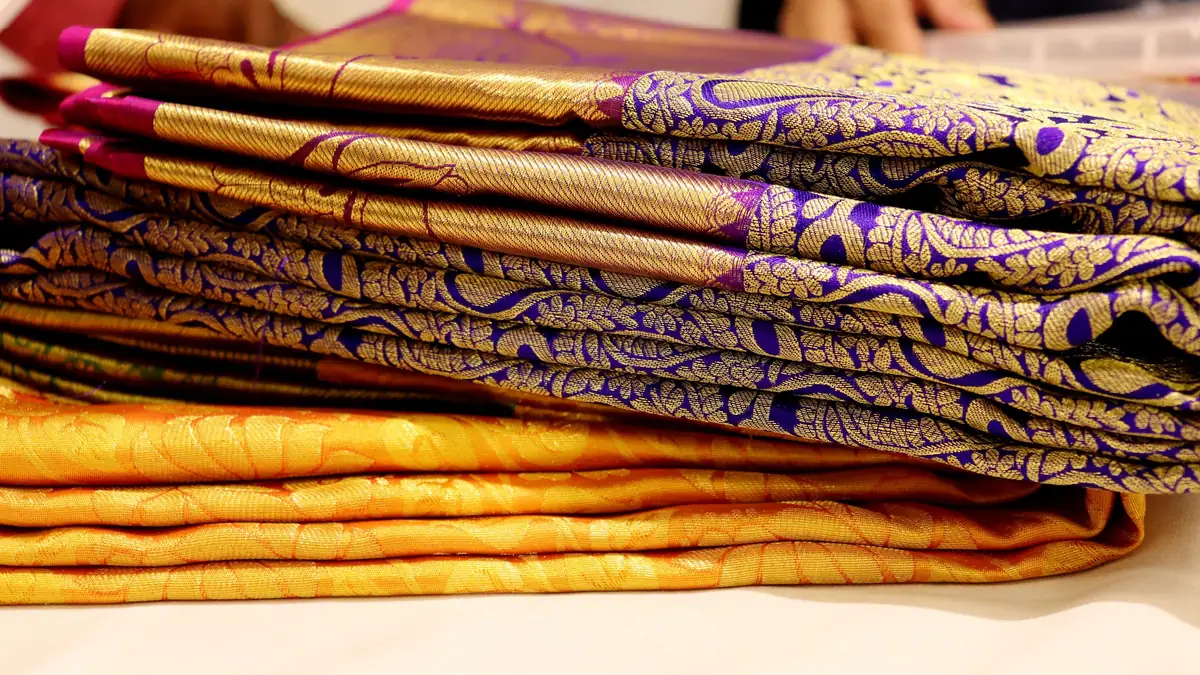
- Folded saree, the way it will arrive.
- Optional: a short video of the saree moving, which shows drape and sheen better than any still.
Use the same background and light for the whole collection so your store looks consistent. Our guide to product photos with a phone covers set-up, and flat lay and mannequin photography goes deeper into clothing.
If one design comes in several colours, photograph each colour separately rather than recolouring one photo. Shoppers notice, and it leads to "the colour was different" complaints.
How do I handle blouse sizes?
Sarees are free size, but blouses are not. If you sell ready-made or stitched blouses, give a size guide with bust, waist, shoulder, armhole, sleeve length and blouse length, plus a short "how to measure" note. Give a margin for stitching ("we leave 1 inch for alteration").
In UpMinutes you can add a size guide to products, and there is a ready starter for sarees and blouses you can edit to your own measurements. For more on writing size guides that cut exchanges, read size guides that reduce returns.
If you offer stitching, set it up as an option with its own price, for example "Unstitched" and "Stitched (+₹600)", and ask for measurements by WhatsApp or a note at checkout.
How should I price sarees online?
Work out your real cost per saree before you set a price: the saree, the blouse piece, fall and pico if you include them, packaging, courier, the payment gateway fee and an allowance for occasional returns. Then decide whether your price includes delivery.
Say you sell a cotton saree at ₹1,200. If delivery costs you around ₹80 to ₹120 and packaging another ₹30, free delivery may be fine. For a ₹15,000 silk, delivery is a small share of the price, but insurance and careful packing matter more. Use the free profit margin calculator to check each price.
Remember GST. Rates on textiles and garments depend on the item and its value, and they change from time to time, so confirm current rates and HSN codes with your CA. UpMinutes lets you set the GST rate and HSN code per product and prints them on each invoice.
Should I offer cash on delivery for sarees?
For everyday cotton and printed sarees, many buyers expect COD, especially outside metros. For expensive silks, a refused COD parcel means a costly saree travelling back and forth and possibly getting damaged.
A sensible approach:
- Offer COD up to a limit, say ₹3,000 or ₹5,000, and ask for online payment above that.
- Switch on the COD confirmation email, so shoppers confirm before you pack.
- Offer UPI prominently; most shoppers have a UPI app.
UpMinutes lets you set "Cash on delivery up to ₹", allow or refuse COD per delivery zone, and offer UPI, cards and EMI through your Razorpay account. More on balancing these in UPI, cards or cash on delivery.
How do I ship silk sarees safely?
- Fold neatly along existing folds and wrap in butter paper or muslin; avoid plastic directly on silk for long periods.
- Use a flat box, not a soft courier bag, for silks and heavy work, so they do not crush.
- Add a thank-you card and a care card.
- Seal with tamper-evident tape, and record a short video of packing costly pieces in case of disputes.
- Declare the correct value and check your courier's rules on insurance for high-value parcels.
Returns and exchanges for sarees
Be clear and fair. Many saree sellers accept returns only for damage or a wrong item, and exchanges for colour or size within a few days, provided the tag is intact and the fall and pico have not been done. Put this on every product page and on your returns policy. With UpMinutes, customers request a return from their order page with up to three photos, and you approve and refund to the original payment, UPI or store credit.
Plan festive and wedding ranges early
Sarees sell around festivals and weddings: Pongal and Sankranti, Ugadi and Vishu, Onam, Navratri and Durga Puja, Diwali, and the wedding seasons. Photograph festive collections four to six weeks ahead so they are live before shoppers start browsing. Our festival sales calendar for 2027 lists when to start for each.
Saree store launch checklist
- 20 to 50 sarees photographed in daylight, five to seven photos each
- fabric, weave, length, blouse and care on every page
- blouse size guide if you sell stitched blouses
- COD limit set, UPI and cards connected
- clear return and exchange rules
- packing material ready for silks
- collections by fabric, occasion and price
UpMinutes has fashion and saree-friendly themes among its 150 themes, each with a live demo you can try with your own products.
Frequently asked questions
Can I start a saree business online from home?
Yes. Many saree sellers start from home with a small stock, a phone for photos and an online store. Check with a CA about GST registration and keep stock in a clean, dry place.
How many photos should a saree listing have?
Five to seven is a good target: full drape, pallu, border, body texture, blouse piece and the folded saree. A short video helps shoppers see the drape and sheen.
Should I mention if a saree is powerloom?
Yes. Saying clearly whether a saree is handloom or powerloom builds trust and avoids returns from buyers who expected handwoven work.
How do I stop expensive sarees being returned on COD?
Set a COD limit so costly pieces are paid online, ask COD buyers to confirm by email, and make UPI the easy, obvious option at checkout.