Quick answer
Ship fragile items with the box-in-a-box method: wrap each piece, stop it moving, and leave cushioning on every side. Ship perishables only as far as they stay fresh, sealed against air and leaks, and send cakes and fresh sweets by local delivery or pickup. Limit delivery zones, set honest dates, and test-ship before you launch.
To ship fragile and perishable items safely in India, pack so that nothing can move and nothing can leak, and only promise delivery where the product will still arrive in good condition. For glass and ceramics, that means wrapping each piece, filling every gap and using a double box. For sweets, pickles and snacks, it means sealed inner packs and limiting how far you ship. For cakes and fresh desserts, it usually means local delivery or pickup only. Test with real parcels before you sell, and set delivery zones that match what your products can survive.
Why do fragile parcels break?
A courier parcel in India may be loaded, unloaded and sorted several times, often by hand, and may travel by van, truck and sometimes air. It can be dropped, stacked under heavier boxes or left in the heat. Most breakages come from three things:
- Movement inside the box: items knocking against each other or the box walls.
- Too little cushioning at the edges and corners, where drops hit hardest.
- Weak outer boxes that crush under weight.
“Fragile” stickers help a little, but packing has to assume they will be ignored.
How do you pack glass and ceramics?
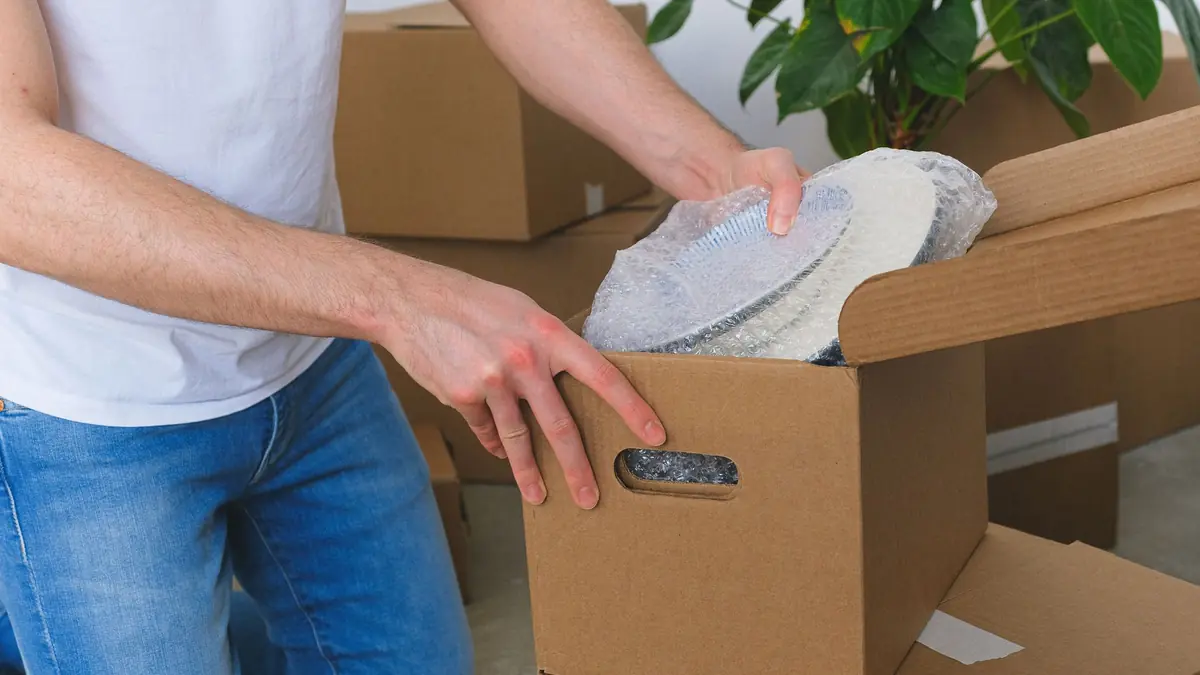
- Wrap each item separately in two or three layers of bubble wrap or corrugated sheet. Fill hollow items such as cups and vases with crumpled paper first.
- Protect handles, spouts and rims with extra wrap; they break first.
- Use a snug inner box. Items should not move when you shake it.
- Box in a box: place the inner box in a larger outer box with at least 5 cm of cushioning on every side (paper, air pillows or shredded corrugated).
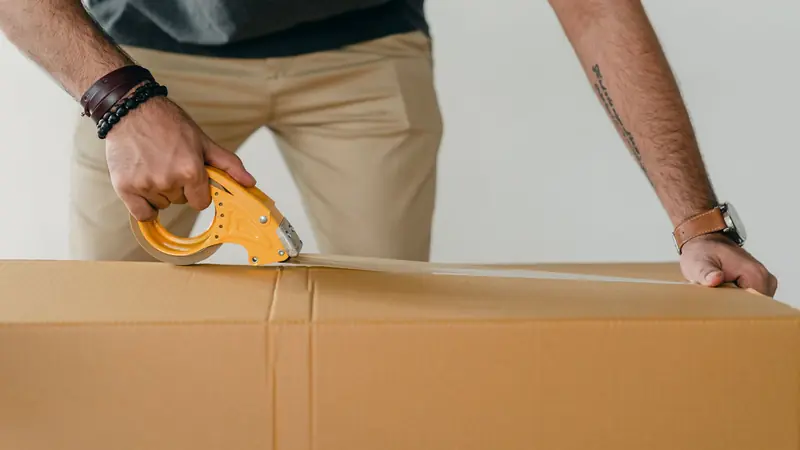
- Use a strong outer carton, preferably 5-ply for heavier or high-value items, and tape all seams in an H pattern.
- Do the shake test and a careful drop test from waist height before you ship your first real order.
Right-size your boxes. A box that is far too big costs more because couriers charge by volumetric weight, and it leaves room for movement.
How do you ship sweets, pickles and snacks?
| Product | Main risks | Packing approach |
|---|---|---|
| Dry sweets (laddoo, burfi, mysore pak) | Crushing, staleness, heat | Sealed food-grade tray or box, inner pouch, rigid outer carton; ship to areas you can reach within the shelf life |
| Syrup sweets (gulab jamun, rasgulla) | Leaks, spoilage | Sealed tins or leak-proof tubs, each bagged; often best sold locally only |
| Pickles and oils | Leaks, broken jars | Induction seal, taped cap, each jar bagged, upright and snug |
| Namkeen, chips, murukku | Crushing, air, humidity | Sealed laminated pouches, rigid box, light fill |
| Chocolates | Melting | Avoid peak summer routes or use insulation; ship early in the week |
Every food seller needs FSSAI registration or a licence and correct labels. Our guides to selling homemade pickles and snacks and home bakery orders go into those trades in detail.
What packing materials should you keep in stock?
Running out of the right materials in a busy week is how corners get cut. Keep a stock of: bubble wrap or corrugated rolls, two or three box sizes that fit your common orders, 5-ply cartons for heavy items, paper or air pillows for filling gaps, food-grade pouches and zip bags, induction seals or film for jars, strong tape and a tape gun, and printed “Fragile” and “This way up” labels. Paper-based fillers and corrugated wraps are kinder to the environment and still protect well; see eco-friendly packaging for ideas. Buy in bulk once you know your usage, and add the cost per order to your pricing.
Can you ship cakes and fresh food by courier?
In most cases, no. Cream cakes, fresh sweets, cut fruit and cooked food do not survive standard courier networks. Sell them for:
- Local delivery by your own rider or a hyperlocal service, within a radius you can reach in good time.
- Store pickup at a set time.
Dry cakes, cookies and brownies with a longer shelf life can travel further if well sealed. Be honest in the product description about where each product can go.
How do you limit where perishable products ship?
The safest store setup only accepts orders you can deliver well. On UpMinutes you can:
- Set delivery zones by PIN code, city, state or region, each with its own charge and delivery estimate in days.
- Charge by distance from your store for local delivery, which suits cakes and fresh food.
- Give a product its own delivery charge, for example to cover extra packing on glassware.
- Offer store pickup with pay at pickup.
- Show a “Check delivery” box on product pages, so shoppers see whether you deliver to their PIN code and how long it takes before they order.
If you sell a mix of long-life and fresh products, put the fresh ones in a clearly named collection such as “Local delivery only”, and say so in each product description.
Which courier should you use for fragile items?
Ask couriers about their handling and claims process before you need it. Things to check:
- Whether they accept food, liquids or glass, and on what conditions.
- How they handle damage claims, and what proof they need (photos of packing and the sealed box).
- Whether insurance or declared-value cover is available for high-value items.
- Typical transit times to your main delivery areas.
Shiprocket, which connects to UpMinutes, is a shipping aggregator that works with several courier companies; from an order you can book a courier, get the AWB and label, and receive tracking updates. Shiprocket bills its own rates. Our guide to shipping in India: couriers and PIN codes compares the main options.
How do you handle breakages when they happen?
Even good packing fails occasionally. Have a process ready:
- Photograph or video every fragile parcel before sealing; it helps with courier claims.
- Ask customers to film the unboxing for high-value fragile items, and say so politely on the product page.
- Let customers report damage with photos. UpMinutes return requests accept up to three photos and a reason.
- Replace or refund quickly. A good response to a broken parcel can earn a loyal customer.
- Note what broke and change your packing.
Put your approach in your returns policy; see our returns and exchange guide.
How do you set honest delivery promises?
- Add a day or two of buffer to courier estimates for fragile and food items.
- Avoid shipping perishables just before weekends or public holidays, when parcels sit in hubs.
- In festive peaks, publish a last order date for each zone.
- Pause orders with holiday mode if you cannot ship for a few days.
A fragile and perishable shipping checklist
- Each item wrapped, gaps filled, box-in-a-box for glass
- Strong outer carton, H-pattern taping, shake and drop tested
- Food sealed, labelled and shipped only within shelf life
- Cakes and fresh food on local delivery or pickup only
- Delivery zones and estimates match what products can survive
- Photos taken before sealing; damage process ready
- Test parcels sent to far-off friends before launch
Frequently asked questions
Can I send sweets by courier across India?
Dry sweets with a decent shelf life can travel if sealed and boxed well, but syrup sweets and fresh items usually should not. Ship only as far as the sweets stay fresh.
What is the box-in-a-box method?
You pack the wrapped item snugly in an inner box, then place that box in a larger outer box with cushioning on every side, so knocks are absorbed before they reach the item.
Should I charge more for shipping fragile items?
Often yes, because packing costs more and boxes are bigger. You can set a product-specific delivery charge for those items.
Who pays if a courier breaks a parcel?
That depends on the courier’s terms and any cover you bought. Keep packing photos, and treat the customer fairly first, then pursue the claim.