Quick answer
To sell homemade pickles and snacks online, get FSSAI registration first, then label every jar with ingredients, net weight, dates and your FSSAI number. Pack jars to survive a courier, price after adding packing, delivery and payment fees, and grow with festive gift boxes and repeat customers who come back when the jar runs out.
Selling homemade pickles, podi and snacks online starts with FSSAI registration, which most home food businesses can get through a basic registration. After that, the work is practical: proper labels on every jar, packing that survives a courier, prices that cover packing and delivery as well as ingredients, and a small store where customers can order again when the jar runs out.
Do you need FSSAI registration to sell pickles from home?
Yes. Every food business in India, including one run from a home kitchen, needs FSSAI registration or a licence. Small businesses below a turnover limit usually need only basic registration, applied for online through FSSAI's FoSCoS portal; bigger operations need a State licence. Once you have it, your FSSAI number goes on every label and on your online product pages.
You may also need GST registration, especially to ship to other states, and some cities have local rules on running a food business from home. Rules change, so confirm the details with a CA or food-licensing consultant. Our guide to registrations to start an online business has the general list, and home business ideas for homemakers covers getting started from home.
What should a pickle or snack label include?
Packaged food labels in India have required details. Typically:
- Product name and a veg (green) or non-veg (brown) mark
- List of ingredients, in descending order by weight
- Allergens (peanuts, sesame, mustard and so on)
- Net weight
- Manufacturing or packing date and best-before or use-by date
- Price (MRP, inclusive of taxes)
- Your business name and address
- FSSAI logo and registration number
- Storage instructions, such as “Use a dry spoon. Refrigerate after opening.”
Check the current FSSAI labelling regulations or ask your consultant for the full list. Get labels printed on oil-resistant stock; paper labels on oily jars look tired within days.
How do you pack pickles so they don't leak?
Leaking oil is the most common complaint for pickle sellers. A layered approach works:
- Fill properly: leave a little headspace, wipe the rim clean of oil.
- Seal: use an induction seal or a food-grade plastic film under the lid, then tighten the cap.
- Tape: shrink band or tape around the lid.
- Bag: put each jar in a sealed zip pouch so any leak stays contained.
- Cushion: wrap glass jars in bubble wrap or corrugated sleeves; PET jars are lighter and less fragile.
- Box: a snug carton with no space for jars to move, marked “Fragile” and “This way up”.
Dry snacks such as murukku, chakli, mixture and chips need the opposite care: protection from air and crushing. Use sealed laminated pouches with a nitrogen flush if you can arrange it, and a rigid box so they do not arrive as crumbs. Our guide to shipping fragile and perishable items covers glass and food in more detail.
Before launch, send test parcels to friends in two or three far-off cities and ask for honest photos when they arrive.
How long do homemade pickles and snacks keep?
Shelf life depends on your recipe, oil, salt, moisture and hygiene, so you must work it out for your own products rather than copying a number. Some sellers send samples to an FSSAI-recognised lab for shelf-life testing, which also gives you confidence in the best-before date on your label. Be conservative: a pickle that is still good after the date is fine; one that spoils before it is a refund and a bad review.
Shelf life also shapes where you ship. Snacks that stay crisp for only a couple of weeks should go to customers within a few days' courier reach. On UpMinutes you can set delivery zones by PIN code, city or state and give each zone a delivery estimate in days, so you only accept orders you can deliver in time.
How should you price homemade pickles?
Home sellers often price by comparing with shop brands and forget their own costs. Work it out per jar:
| Cost item | Example for a 300 g jar (illustrative) |
|---|---|
| Ingredients (mango, oil, spices) | ₹70 |
| Jar, seal, label | ₹25 |
| Packing material per jar | ₹15 |
| Your share of courier cost | ₹50 |
| Payment fee and small allowance for breakage | ₹10 |
| Total cost | ₹170 |
These numbers are made up to show the method; use your own. If that jar sells for ₹220, your profit before your time is just ₹50. Selling two or three jars in one parcel spreads the courier cost and changes the picture completely. That is why combo packs matter so much for pickle sellers. Use the free profit margin calculator to test different prices, and read profit per order for the full method.
Offers that raise the order size
- Combo packs: “Andhra trio” with avakaya, gongura and lemon pickle.
- Free delivery above an amount that matches about three jars.
- Buy 3 get 1 free on small jars.
- Quantity prices for customers buying for a family or office.
UpMinutes supports all of these: bundles, buy X get Y, quantity price breaks, free-delivery thresholds and coupons.
What makes a pickle product page sell?
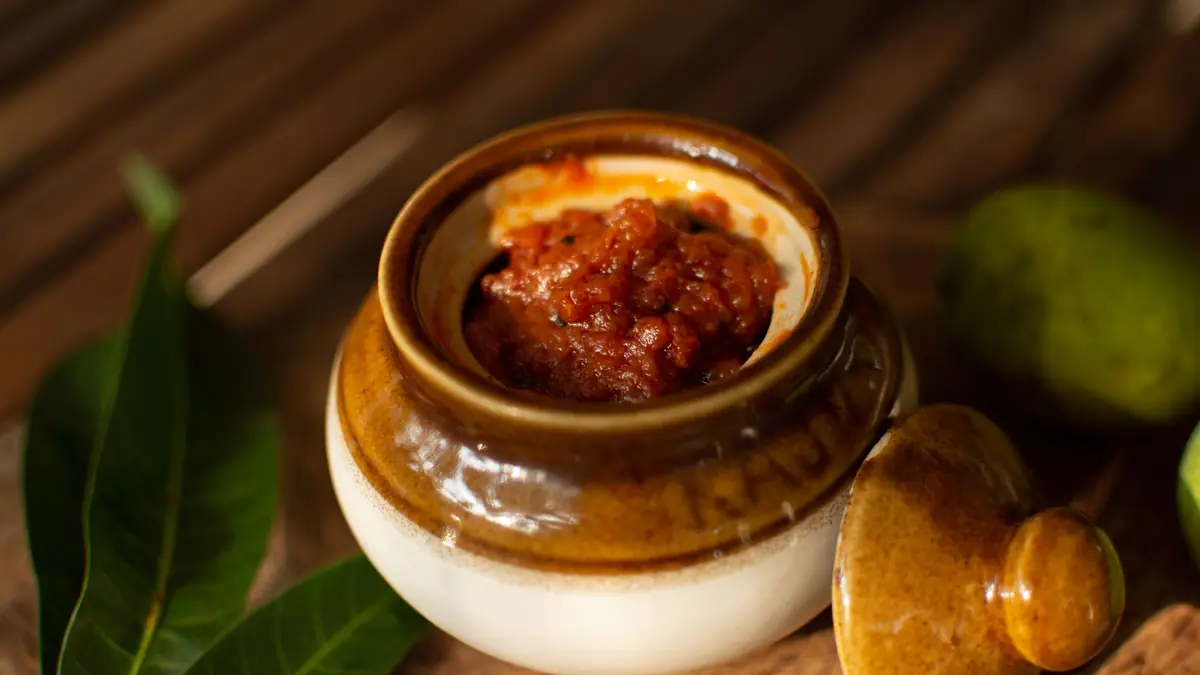
Online shoppers cannot taste or smell your pickle, so the page has to do it for them. Show the jar, a close-up of the pickle on a spoon, and the pickle served with rice or curd rice. Describe the taste plainly: how sour, how hot, how much garlic, which oil. Say where the recipe comes from, whether it is your grandmother's Guntur-style avakaya or a Kerala lime pickle. Mention spice level in every title variant if you make mild and hot versions, and list allergens near the top, not hidden at the end. Our guide to product descriptions that sell has more ideas.
How do festive gift boxes help?
Diwali, Sankranti, Raksha Bandhan and weddings bring gift orders, often in bulk. A gift box of three small jars and a snack pouch, with a printed note, sells at a better margin than single jars and introduces your food to new households. Plan festive boxes six to eight weeks ahead, take pre-orders with a clear dispatch date, and stop orders once your kitchen is full. Gift cards help late shoppers who miss the delivery cut-off. Our festival sales calendar lists the key dates.
How do you get repeat orders?
Pickle and snack customers come back when they love the taste. Make it easy:
- A handwritten-style card in the box with your store link and a small coupon for the next order.
- Review requests after delivery, so new shoppers see real opinions.
- “Email me when it's back” on seasonal pickles, so you capture demand for next mango season.
- WhatsApp order updates so customers know when to expect the parcel.
A quick launch checklist
- FSSAI registration done; GST checked with a CA
- Labels with all required details and your FSSAI number
- Leak-proof packing tested on real courier routes
- Shelf life worked out for each product
- Prices that cover packing, courier and fees
- Two or three combos and a festive gift box plan
Frequently asked questions
Can I sell pickles online without FSSAI registration?
No. Every food business needs FSSAI registration or a licence, including home kitchens, and your FSSAI number should appear on labels and product pages.
Glass or plastic jars for shipping pickles?
Food-grade PET jars are lighter and less likely to break, which lowers courier cost and damage. Glass looks premium but needs more cushioning and careful boxing.
How do I stop pickle oil leaking in transit?
Seal under the lid with an induction seal or food film, tape the cap, bag each jar separately and pack them tightly upright. Test with real parcels before launch.
Should I offer cash on delivery for pickles?
You can, but set a sensible COD limit and confirm COD orders before packing, because a returned parcel of food usually cannot be resold.