Quick answer
First-time buyers come back when the first order goes well and you stay in touch without nagging. Deliver on time with clear updates, pack with care and a personal note, thank them, ask for a review, and give a reason to return: back-in-stock alerts, loyalty points, a next-order coupon and well-timed emails about things they actually like.
To turn first-time buyers into repeat customers, make the first order go smoothly, then stay in touch in ways that help them rather than pester them. That means accurate delivery dates and order updates, careful packing with a personal note, a thank-you message, a review request after delivery, and a reason to come back: an alert when something they wanted is back, loyalty points, a small coupon for the next order, and emails about products they are likely to want. Retention is mostly a set of small habits, done every time.
Why do repeat customers matter so much?
Winning a new customer usually costs money, through ads, influencer gifting, marketplace commission or discounts. A customer who comes back on their own costs you very little. They already trust you, so they need less convincing, ask fewer questions and are more forgiving if something goes slightly wrong. For a small store, a base of loyal customers is also what makes income steadier between festivals and sales.
A useful number to watch: of the people who bought from you three months ago, how many have ordered again? Your reports and customer list can tell you. Track it every month and try to push it up.
Does retention start before the first order arrives?
Yes. Most customers decide whether to come back in the days between paying and opening the parcel. The basics:
- Honest delivery dates. Promise what you can keep. A parcel that arrives a day early beats one that arrives a day late.
- Updates at every stage. Confirmed, shipped with a tracking link, out for delivery, delivered. Our guide to order tracking updates explains why “where is my order?” messages fall when updates go out automatically.
- Fast answers. Reply to questions on WhatsApp and email the same day.
On UpMinutes, order updates go out by email and, if you connect it, from your own WhatsApp Business number, in the customer's language. SMS order updates are also available through MSG91; tracking links by SMS are coming soon.
What should go in the parcel?
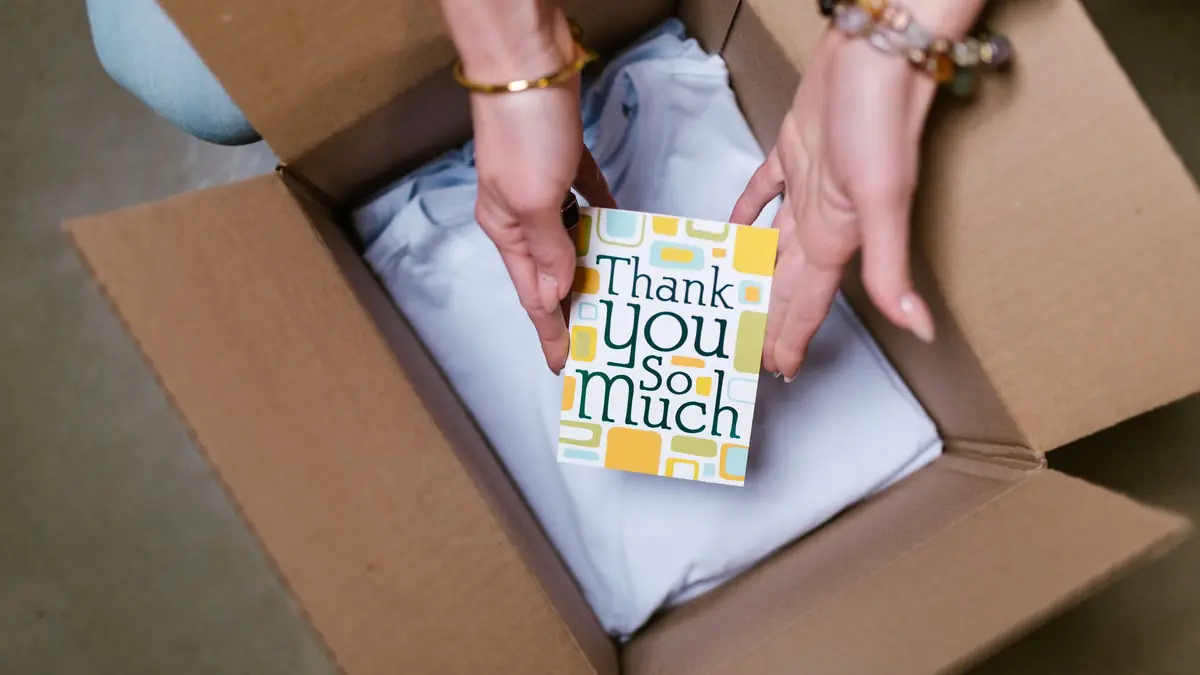
The unboxing is your one physical moment with an online customer. Make it count without spending much:
- A thank-you card, ideally signed by hand or at least with the customer's first name.
- Care instructions so the product lasts: washing a handloom saree, storing silver, keeping pickles fresh.
- A next-order coupon with an expiry date, printed on the card.
- A small extra, such as a sample, a sticker or a bookmark, when your margin allows.
- Your store address and WhatsApp number, so they can find you again without searching Instagram.
Our post on eco-friendly branded packaging has ideas that look good without costing much.
Which follow-up messages bring customers back?
| When | Message | Purpose |
|---|---|---|
| Right after the first order | Thank-you email | Welcome them and set expectations |
| A few days after delivery | Review request | Feedback, plus social proof for new shoppers |
| When a wished-for item returns | Back-in-stock email | Catch demand you would otherwise lose |
| When a wishlisted item gets cheaper | Price-drop email | A natural reason to buy |
| New arrivals, festivals | Email campaign to subscribers | Stay remembered |
| Before a gift card expires | Reminder | Turn unused balances into visits |
UpMinutes can send each of these: a first-order thank-you email, review requests after delivery, back-in-stock emails from “Email me when it's back”, wishlist price-drop emails, gift card expiry reminders, and email campaigns to your subscribers with a live preview and test send. Abandoned-cart reminders bring back shoppers who did not finish checking out. See email newsletters for a small store for what to write.
How often is too often?
For most small stores, two to four emails a month is plenty, plus the automatic messages triggered by orders. Every message should either be useful (a restock, a care tip, a new collection they are likely to like) or genuinely good value. If you have nothing worth saying this week, say nothing.
What does a good thank-you or review email say?
Keep it short and human. A thank-you email might read: “Thank you for your first order, Priya. We pack every saree by hand in our Kanchipuram workshop, and yours will leave within two days. If anything is not right, just reply to this email.” A review request works best a few days after delivery, once the customer has used the product, and asks one simple question rather than a long survey. Follow up on feedback, good or bad, and thank people by name. Reviews from real buyers bring in new customers, and following up shows existing ones that someone is listening. Our guide to getting more product reviews has wording you can borrow.
Do loyalty points work for small stores?
They can, if they are simple. A points scheme gives regular customers a small, growing reason to choose you over a marketplace. Keep it easy to understand: points for every ₹100 spent, a few welcome points for signing up, and points that turn into a discount at checkout.
UpMinutes includes loyalty points: you set points per ₹100 spent and welcome points. Points are earned when the order is delivered (so returns do not earn points) and redeemed at checkout when the customer is signed in. Our guide to loyalty points for a small store covers how generous to be.
Store credit and gift cards
Two more tools help keep money inside your store. When a customer returns something, offering store credit instead of a refund (where they are happy with that) keeps them coming back. Gift cards bring new customers through your existing ones, especially at festivals.
How do you handle problems so customers still return?
Something will go wrong eventually: a delayed parcel, a wrong size, a damaged item. How you handle it decides whether that customer ever buys again. Reply quickly, apologise without excuses, fix it generously, and keep the customer informed until it is resolved. A clear returns process with photos and quick approvals helps; read our returns and exchange guide.
Can you make reordering easier?
- Let customers save your store to their home screen; UpMinutes stores can be installed on phones like an app, with your icon.
- Keep popular products in stock and clearly listed, so a returning customer finds the same item quickly.
- For things people use up, a reminder near the usual reorder time helps. UpMinutes does not run automatic product subscriptions, so a timely email works instead.
A retention checklist
- Delivery dates you can keep, with updates at every stage
- Thank-you card, care tips and next-order coupon in the parcel
- Thank-you email and review request switched on
- Back-in-stock and wishlist emails switched on
- A simple loyalty points scheme
- Two to four useful emails a month to subscribers
- A returns process that is quick and fair
- A monthly check of how many customers ordered again
Frequently asked questions
What is a good repeat purchase rate for a small store?
It varies widely by product: staples and consumables get reordered far more than furniture or wedding wear. Compare your own rate month by month rather than chasing an industry figure.
Should I give every customer a next-order coupon?
A small coupon with a clear expiry in the first parcel is a common and effective habit. Avoid giving coupons so often that customers stop paying full price.
Do loyalty points work if I sell expensive, rarely bought items?
Less so. For high-value, occasional purchases, great service, care tips and referral or gift card offers usually do more than points.
How do I win back customers who have not ordered in months?
Send a short, personal email showing new arrivals related to what they bought before, with a modest time-limited offer. Then respect their choice if they do not respond.