How to read the Sasihithlu surf forecast
Swell height, period, wind and tide: what the numbers mean for a beginner on this particular beach.
Season runs October to May · Lessons at 7 am and 4 pm, tide permitting
Beach Road, near the river mouth, Sasihithlu, Mangaluru 574146
Daily · 6.30 am – 6.30 pm · October to May
From the safety talk on the sand to your first wave in the white water, the two hours step by step.
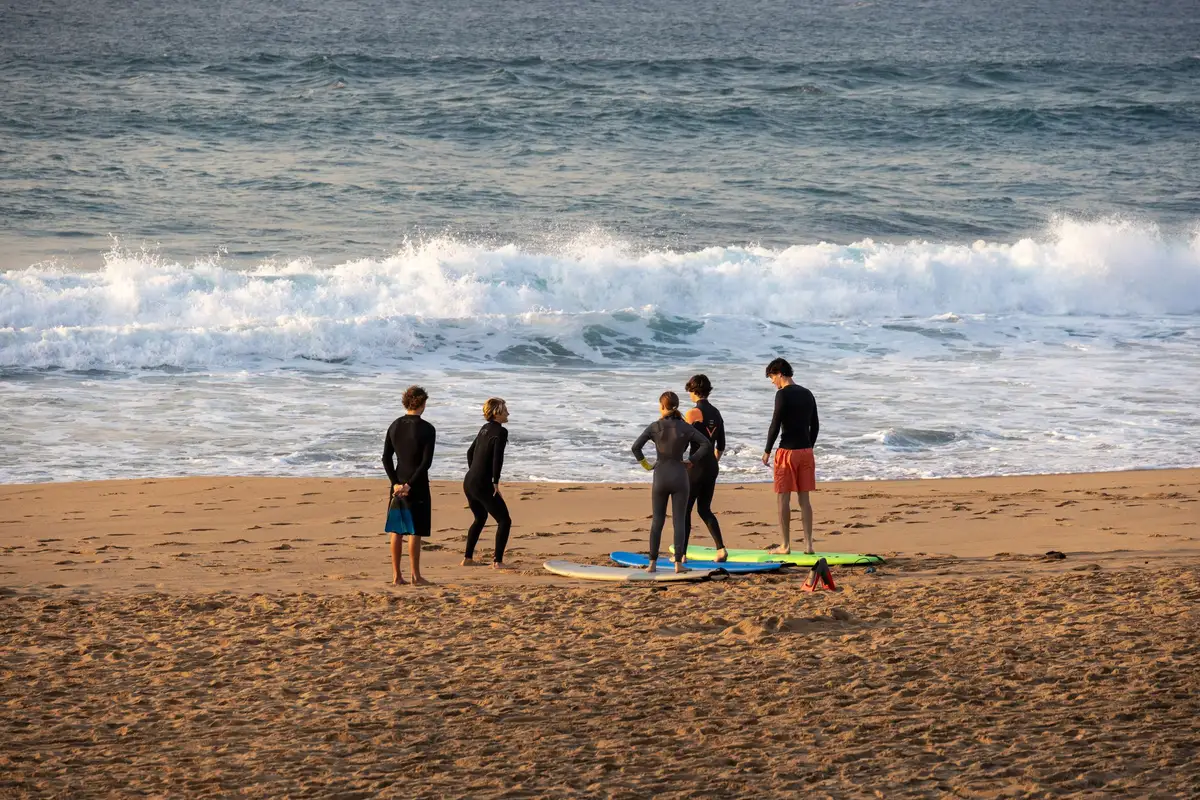
Most people arrive at their first lesson a little nervous, which is reasonable. The sea is big and the board looks long. Here is what actually happens, so there are no surprises.
The first twenty minutes are on the sand. Your coach shows you how the lesson area is marked, where the current runs that day and what to do if you fall: cover your head, come up slowly, and let the leash bring the board back to you. Then you practise lying on the board, paddling and the pop-up, the move from lying to standing, on the sand until it feels natural.
Then you walk into the sea to about waist depth. You will not paddle out past the breaking waves. Instead, your coach holds the tail of your board, waits for a small broken wave and pushes you into it. You paddle twice, feel the board pick up speed and try to stand. Most people fall the first few times. That is the lesson working.
By the second hour, many people ride a wave to the sand on their feet, or at least on their knees. Your arms will be tired and you will have swallowed some salt water. Drink plenty, eat something and come back the next morning. The second lesson is almost always easier than the first.
Keep reading
Swell height, period, wind and tide: what the numbers mean for a beginner on this particular beach.
The most common worry we hear, answered plainly: what a rip is, why it forms and how to get out of one.
Why we put every beginner on a long foam board, and when it makes sense to move to something smaller.