Rip currents: how to spot one and what to do
The most common worry we hear, answered plainly: what a rip is, why it forms and how to get out of one.
Season runs October to May · Lessons at 7 am and 4 pm, tide permitting
Beach Road, near the river mouth, Sasihithlu, Mangaluru 574146
Daily · 6.30 am – 6.30 pm · October to May
Swell height, period, wind and tide: what the numbers mean for a beginner on this particular beach.
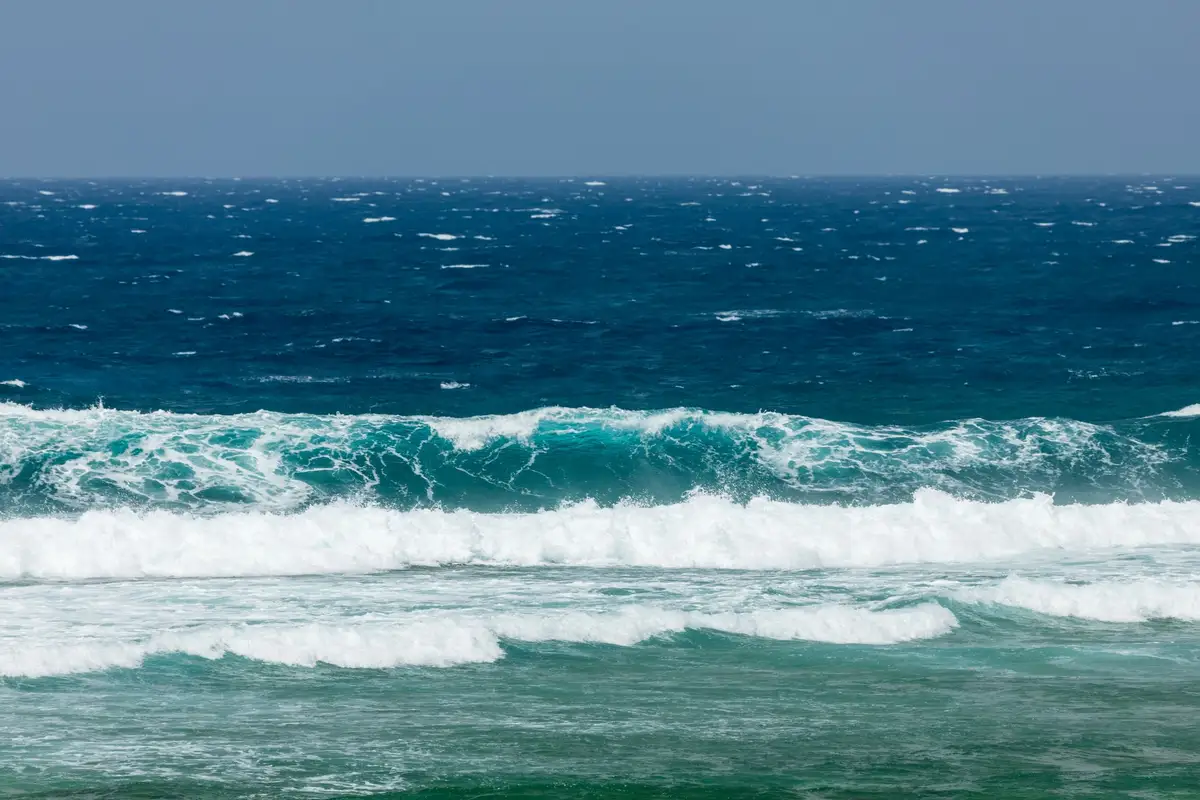
Every morning at 6 we send a short surf report to our WhatsApp list. If you want to understand it, or read a forecast yourself, these are the four numbers that matter on this coast.
Swell height is the size of the waves arriving from the open sea. For beginners at Sasihithlu, half a metre to one metre is ideal. Above about 1.5 metres the white water becomes strong enough to knock adults over, and we move lessons or call them off.
Swell period is the time in seconds between waves. A short period, six or seven seconds, means choppy, close-together waves. Ten seconds or more means cleaner, more powerful lines. Long-period swell looks small from the beach but hits harder, which surprises people. Wind matters as much as swell. Here the wind usually blows gently from the land in the early morning, which smooths the waves, and turns onshore from the sea by late morning, which makes them messy. That is why our lessons start at 7.
Tide decides where the waves break over the sandbar. At mid-tide they break gently in waist-deep water; at very low tide they can dump onto shallow sand. We set lesson times by the tide table, so on some days you will start at 6.30 and on others at 8. The report always says which.
Keep reading
The most common worry we hear, answered plainly: what a rip is, why it forms and how to get out of one.
Why we put every beginner on a long foam board, and when it makes sense to move to something smaller.
When the waves are small and clean, when they get bigger, and why we close for the monsoon.