The Sasihithlu season, month by month
When the waves are small and clean, when they get bigger, and why we close for the monsoon.
Season runs October to May · Lessons at 7 am and 4 pm, tide permitting
Beach Road, near the river mouth, Sasihithlu, Mangaluru 574146
Daily · 6.30 am – 6.30 pm · October to May
Why we put every beginner on a long foam board, and when it makes sense to move to something smaller.
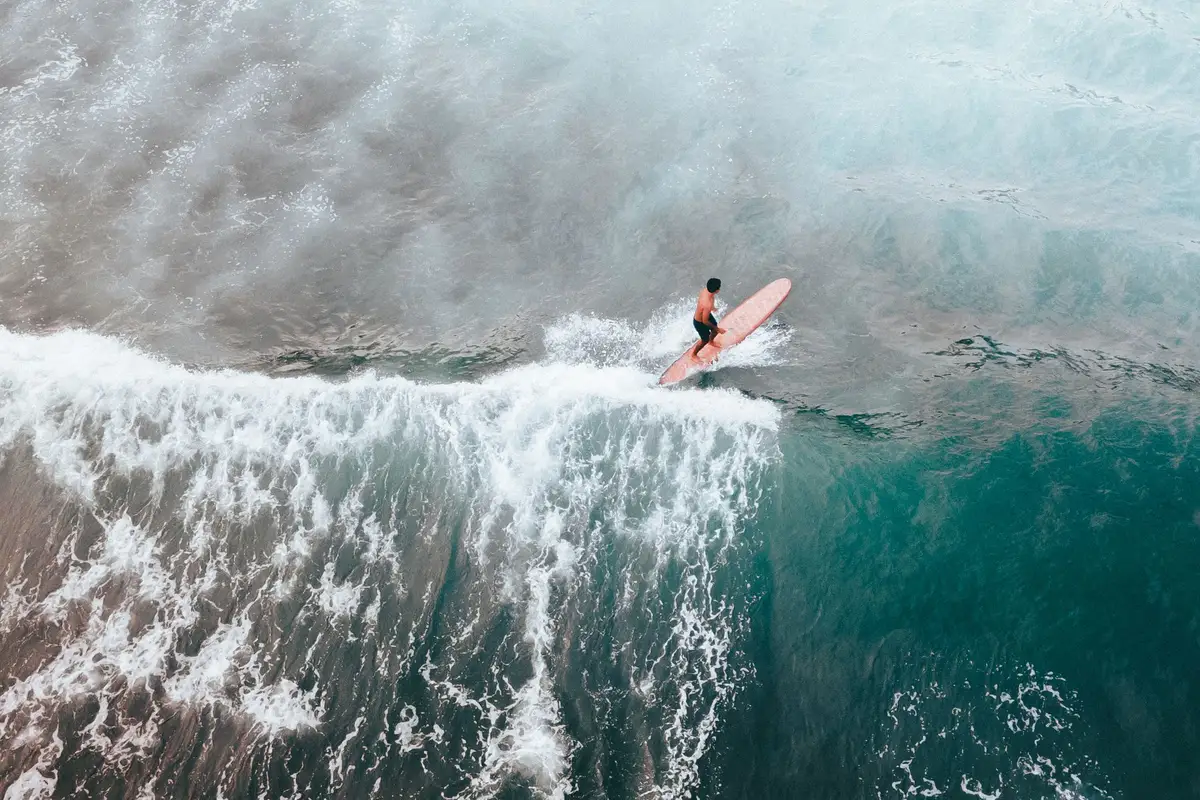
Every beginner at Nandini Point starts on a soft-top: a foam board between 8 and 9 feet long, with a soft deck and rubber fins. People sometimes ask for a smaller, harder board because it looks more like surfing in films. We say no for good reasons.
A long board floats more, so it is easier to paddle and catches waves earlier. It is wider, so it is more stable when you stand. The soft deck and fins mean a bump from your own board is a bruise, not a cut. Almost everyone learns faster on more foam.
You are ready to move down when you can paddle out past the white water on your own, sit on the board and turn it, and catch unbroken waves without a push. For most people that takes 15 to 25 sessions. The next step is usually a 7 to 8 foot epoxy board, which is lighter and turns more easily but still floats well.
If you are thinking of buying a first board, rent different sizes from us for a few weeks first. Board rental is ₹900 for half a day, and our coaches will watch you surf and suggest a size. A second-hand 8 foot board in good condition costs between ₹18,000 and ₹30,000 in India; a new one, more.
Keep reading
When the waves are small and clean, when they get bigger, and why we close for the monsoon.
Rinse, shade and a soft bag: small habits that keep a board in good condition for years.
What a camp day looks like, how we keep children safe and what parents usually ask before they book.