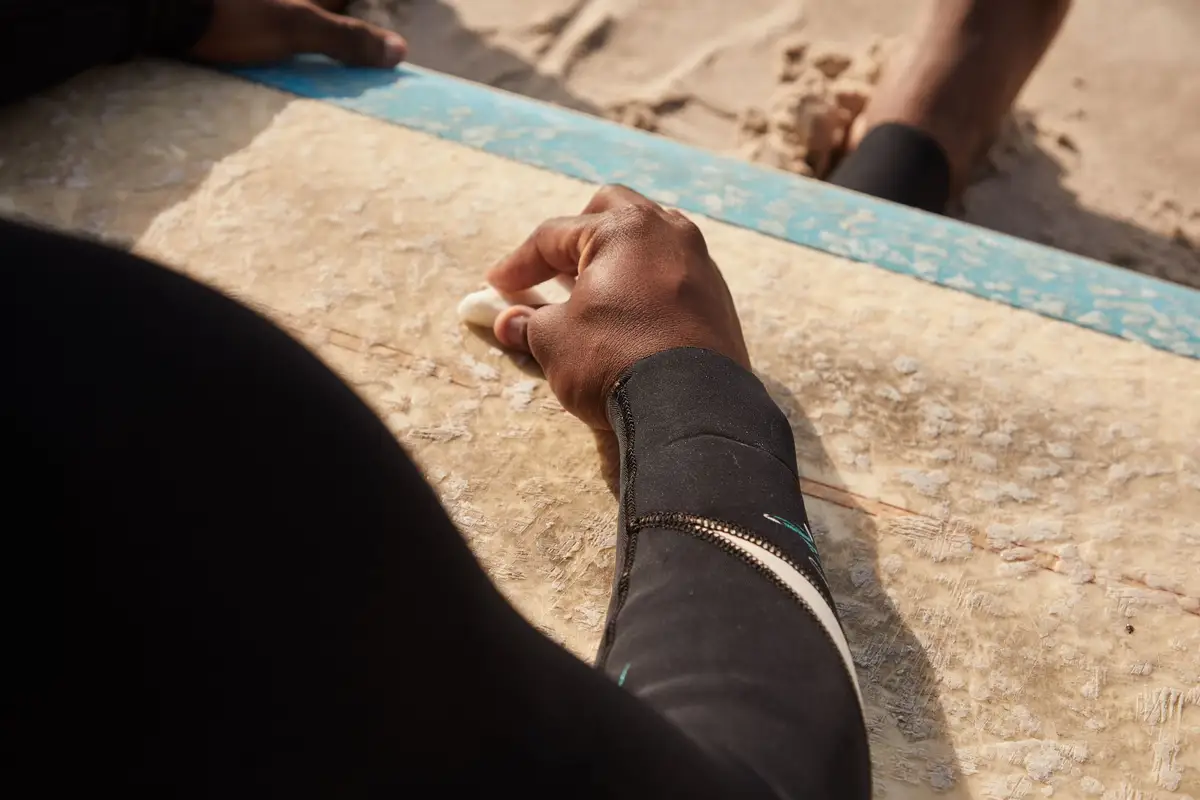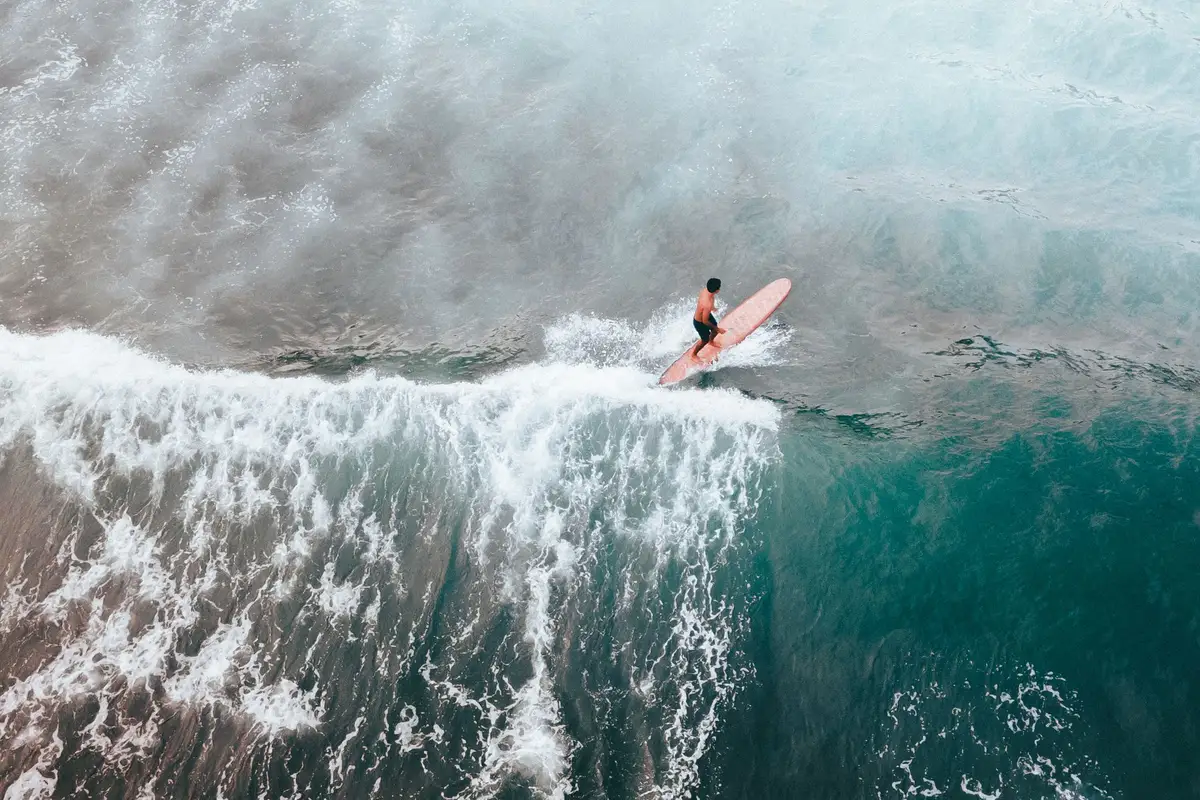
Soft-top or hard board: choosing your first surfboard
Why we put every beginner on a long foam board, and when it makes sense to move to something smaller.
Season runs October to May · Lessons at 7 am and 4 pm, tide permitting
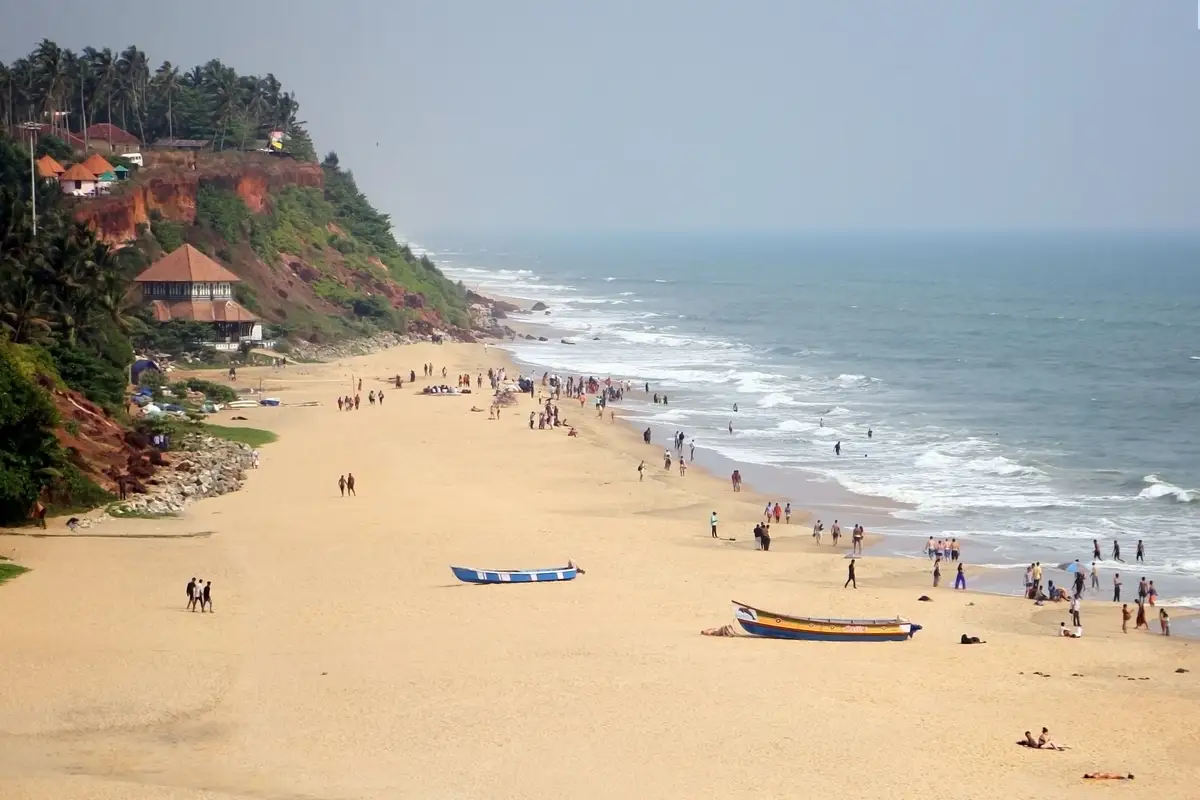
Beach Road, near the river mouth, Sasihithlu, Mangaluru 574146
Daily · 6.30 am – 6.30 pm · October to May
The most common worry we hear, answered plainly: what a rip is, why it forms and how to get out of one.
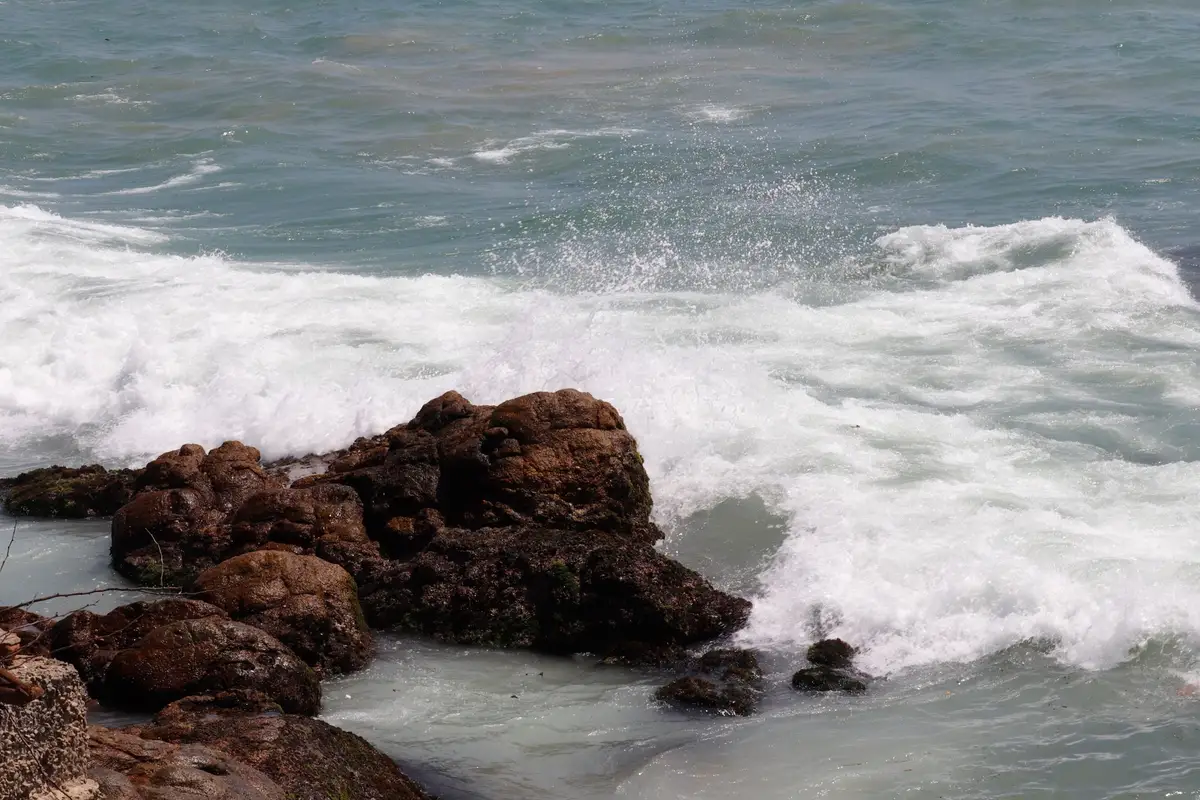
A rip current is a narrow channel of water flowing away from the beach, back out to sea. Waves push water onto the shore, and that water has to return somewhere. It finds the deepest channel between sandbars and flows out through it. At Sasihithlu, rips form most often near the river mouth and at the ends of the sandbar.
From the beach, a rip often looks calmer than the water around it: a darker strip where waves are not breaking, sometimes with foam or sand drifting out. That calm look is exactly why swimmers walk into them.
If you are caught in one, the rule is simple. Do not swim straight back towards the beach against it; even strong swimmers tire quickly that way. Stay on your board if you have one, because it floats. Paddle sideways, parallel to the beach, until you are out of the current, then come in on the waves. If you are tired, float, raise one arm and wave. Rips usually weaken a short distance out.
We never place lessons in a rip, and your coach checks the water each morning before the safety talk. We also show you where the rips are that day, with flags on the sand. Knowing what one looks like is useful on every beach you visit, not only ours.
Keep reading
Why we put every beginner on a long foam board, and when it makes sense to move to something smaller.
When the waves are small and clean, when they get bigger, and why we close for the monsoon.
Rinse, shade and a soft bag: small habits that keep a board in good condition for years.