Ordering a bagh in your own colours
What to expect when you order a bagh made to order: choices, timings, photos and payment.
Every piece hand-darned in villages around Amritsar · Shipped across India in 4 days
41 Lawrence Road, near Novelty Chowk, Amritsar 143001
Mon–Sat · 10.30 am – 8 pm · Sun 12 – 6 pm
Will the colours run? A common worry, answered, with the simple way to wash a cotton phulkari at home.
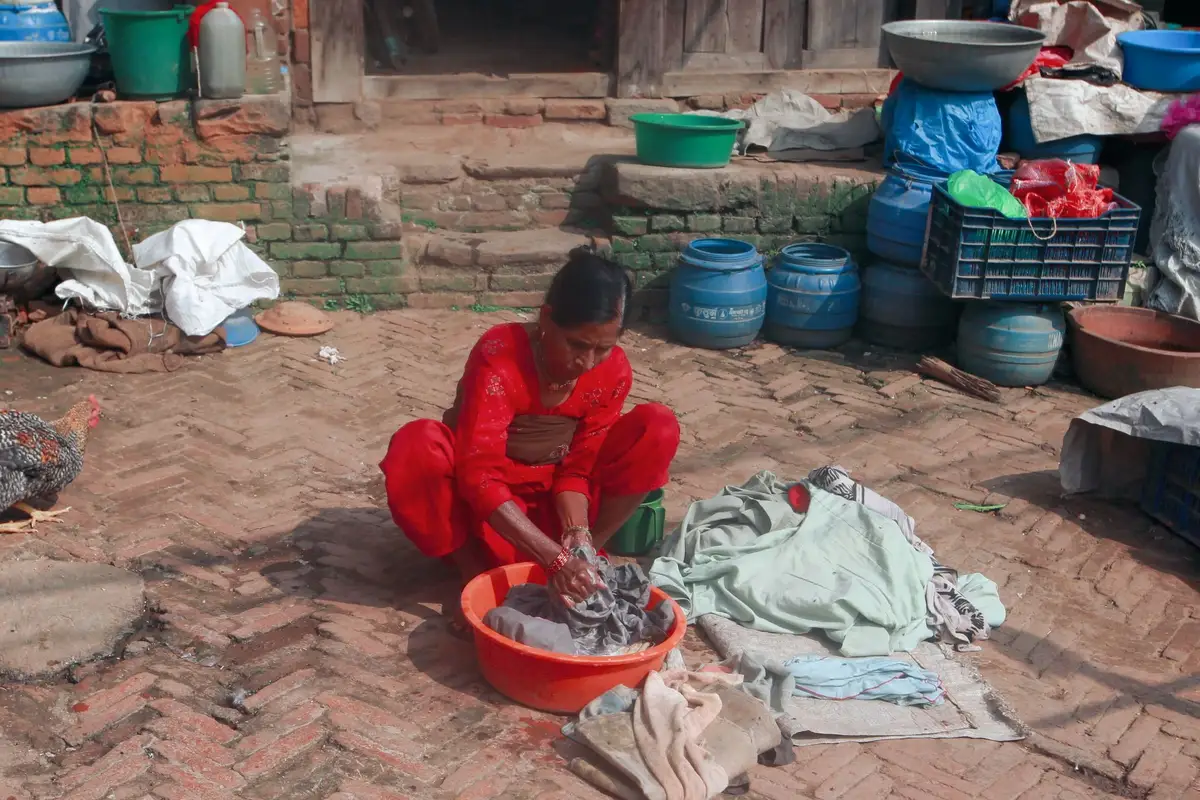
The most common question at our counter is whether the colours will run. It is a fair question, because some cheaper phulkari is dyed with colours that bleed into the base cloth at the first wash. The silk floss we use is dyed by a family of dyers in Amritsar and tested in cold water before it goes to the villages. The khaddar is washed before it is cut. So the colours should hold, but silk and cotton still need a gentle first wash.
Use a bucket of cold water, not lukewarm, with a spoonful of mild liquid soap or soapnut water. Wash the piece alone. Swirl it gently for two or three minutes, do not rub or scrub the embroidery, and do not leave it to soak. Rinse twice in cold water until the water runs clear.
Do not wring it. Roll it in a dry towel and press to remove water, then dry it flat or over a line in the shade, embroidery side down. Direct sun fades silk quickly.
To iron, place it face down on a towel and iron the back on a cotton setting with a cloth in between. The towel keeps the embroidery raised rather than flattened. Georgette dupattas and baghs are better dry cleaned. Ask the cleaner to use a gentle solvent and to steam rather than press the embroidery.
Keep reading
What to expect when you order a bagh made to order: choices, timings, photos and payment.
Silk floss is strong but hates folds, damp and naphthalene. A simple routine keeps a bagh bright for decades.
The two words are used loosely, but they describe different amounts of work. Here is how to tell them apart.