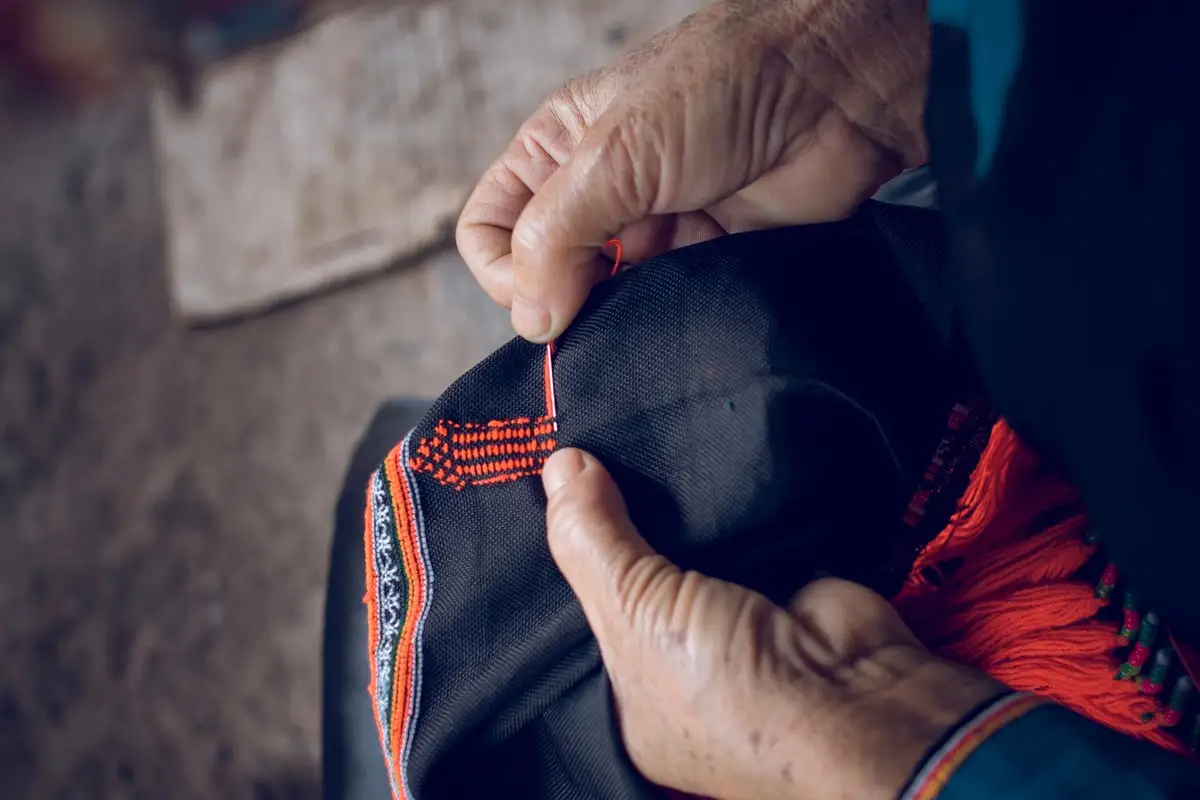
Bagh or phulkari: what is the difference
The two words are used loosely, but they describe different amounts of work. Here is how to tell them apart.
Every piece hand-darned in villages around Amritsar · Shipped across India in 4 days
41 Lawrence Road, near Novelty Chowk, Amritsar 143001
Mon–Sat · 10.30 am – 8 pm · Sun 12 – 6 pm
Silk floss is strong but hates folds, damp and naphthalene. A simple routine keeps a bagh bright for decades.
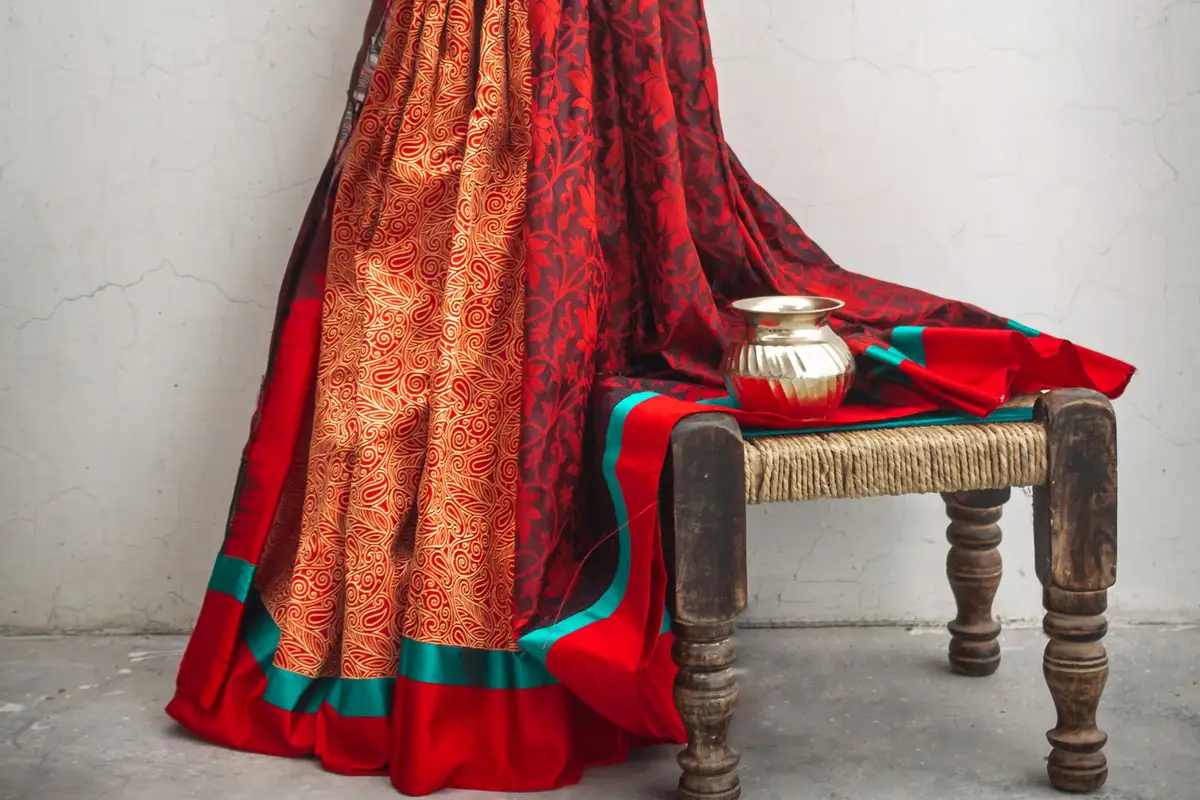
Many families in Punjab still have a bagh that is sixty or seventy years old. The ones that have survived well were kept in the same simple way, and it is worth copying.
The main danger is folding along the same lines for years. Silk floss is glossy because it is untwisted, and a sharp fold in the same place will eventually crack it. Fold your phulkari loosely, with a sheet of cotton or muslin between the layers, and change the fold lines each time you take it out. A heavy bagh is better rolled around a cardboard tube than folded at all.
Keep it in a cotton bag or wrapped in an old cotton dupatta, never in plastic, which traps moisture. Choose a shelf away from the outer wall, especially through the monsoon. Naphthalene balls stain silk and leave a smell that is hard to remove; use cloves, dried neem leaves or a cedar block in a muslin pouch instead.
Twice a year, on a dry day, open it out and let it air in the shade for a few hours. Never in direct sun, which fades the golden and orange shades first. If a few stitches come loose, do not pull them. Bring or post it to us, and one of our makers will darn it back in the same direction.
Keep reading
The two words are used loosely, but they describe different amounts of work. Here is how to tell them apart.
In our experience, much of the phulkari sold today is machine-made. Three quick checks will tell you which you are holding.
What the chope means at a Punjabi wedding, and how to plan one if you want to keep the custom.