What to wear for Lohri and Baisakhi
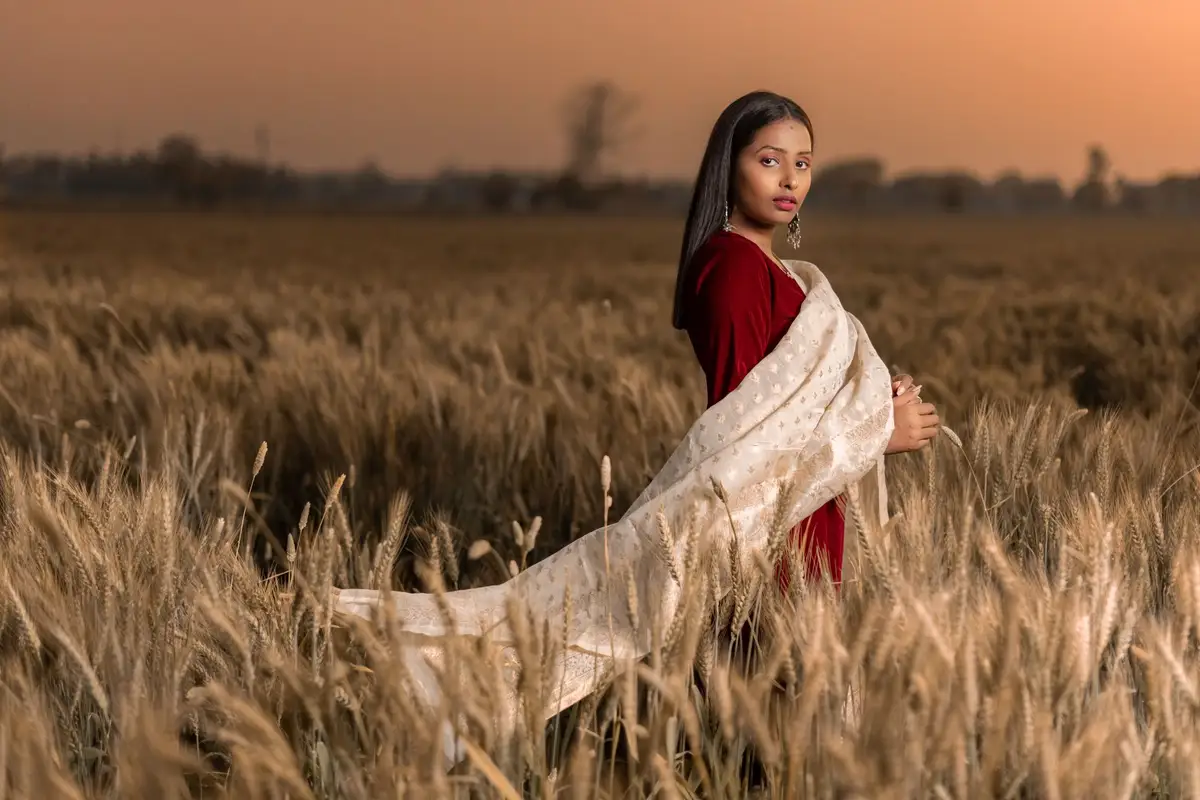
Two festivals, two seasons: warm layers for a January bonfire and light cotton for an April harvest fair.
Every piece hand-darned in villages around Amritsar · Shipped across India in 4 days
41 Lawrence Road, near Novelty Chowk, Amritsar 143001
Mon–Sat · 10.30 am – 8 pm · Sun 12 – 6 pm
What the chope means at a Punjabi wedding, and how to plan one if you want to keep the custom.
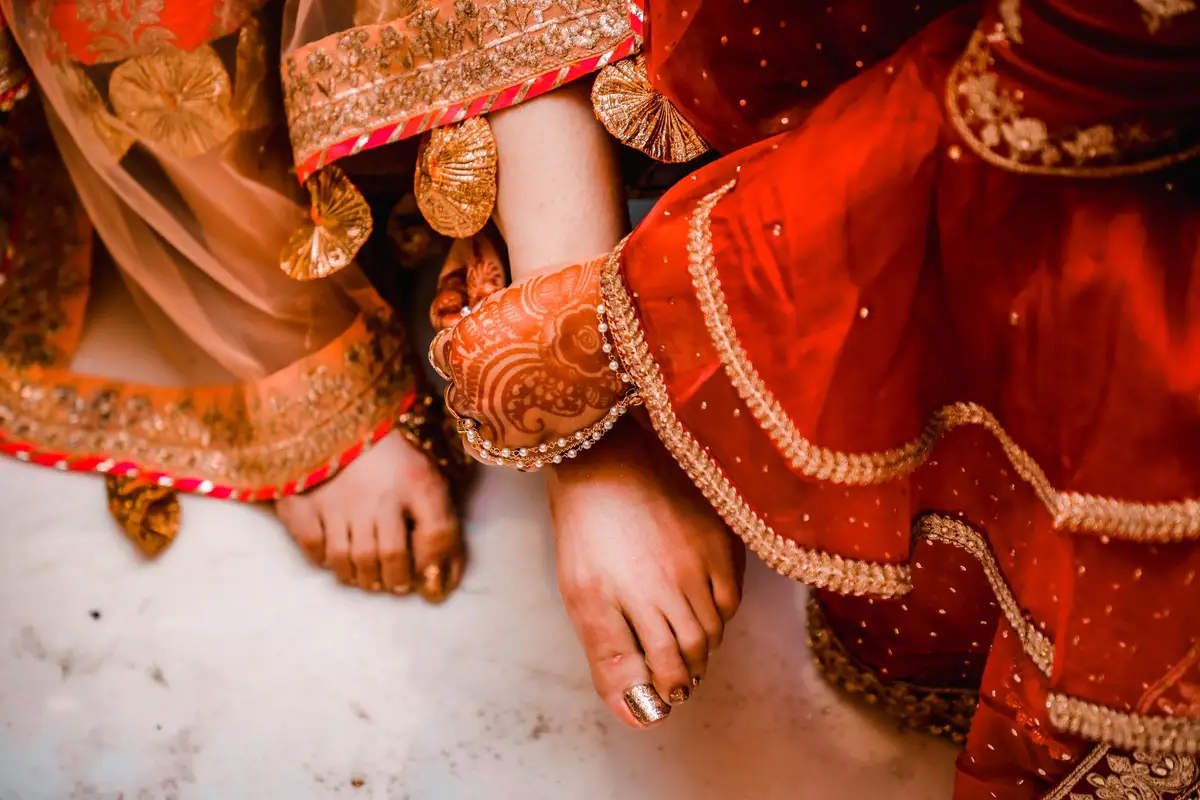
In many Punjabi families the chope is given to the bride by her nani or mami, her maternal grandmother or aunt, and she wears it during the ceremony of the chooda, when the red and ivory bangles are put on.
The chope is different from other phulkari in its stitch. Instead of the darn stitch, its border is worked in a double running stitch that looks the same on the front and the back. That is why it is called two-sided, and why the bride can drape it either way. It is almost always red khaddar with golden yellow silk, and the pattern is a band of triangles and steps along the edges.
Traditionally the nani began stitching when her granddaughter was born. Few families have that time now, so many ask a group of makers to do it for them. If you want a chope made to order, allow at least eight weeks. Tell us the bride’s height so we can set the length, and whether you want the family’s initials worked into a corner.
We also keep a few ready chope dupattas in the shop, each about 2.5 m long. Because the stitch must be counted exactly on both sides, a chope takes longer than a phulkari of the same size, which is reflected in its price.
Keep reading
Two festivals, two seasons: warm layers for a January bonfire and light cotton for an April harvest fair.
Twenty-two women, one courtyard and three hours of darning before lunch: how a phulkari is made.
A ₹38,500 wari da bagh, broken down: cloth, silk, the maker’s time and the rest.