Why a hand-darned bagh costs what it does
A ₹38,500 wari da bagh, broken down: cloth, silk, the maker’s time and the rest.
Every piece hand-darned in villages around Amritsar · Shipped across India in 4 days
41 Lawrence Road, near Novelty Chowk, Amritsar 143001
Mon–Sat · 10.30 am – 8 pm · Sun 12 – 6 pm
Twenty-two women, one courtyard and three hours of darning before lunch: how a phulkari is made.
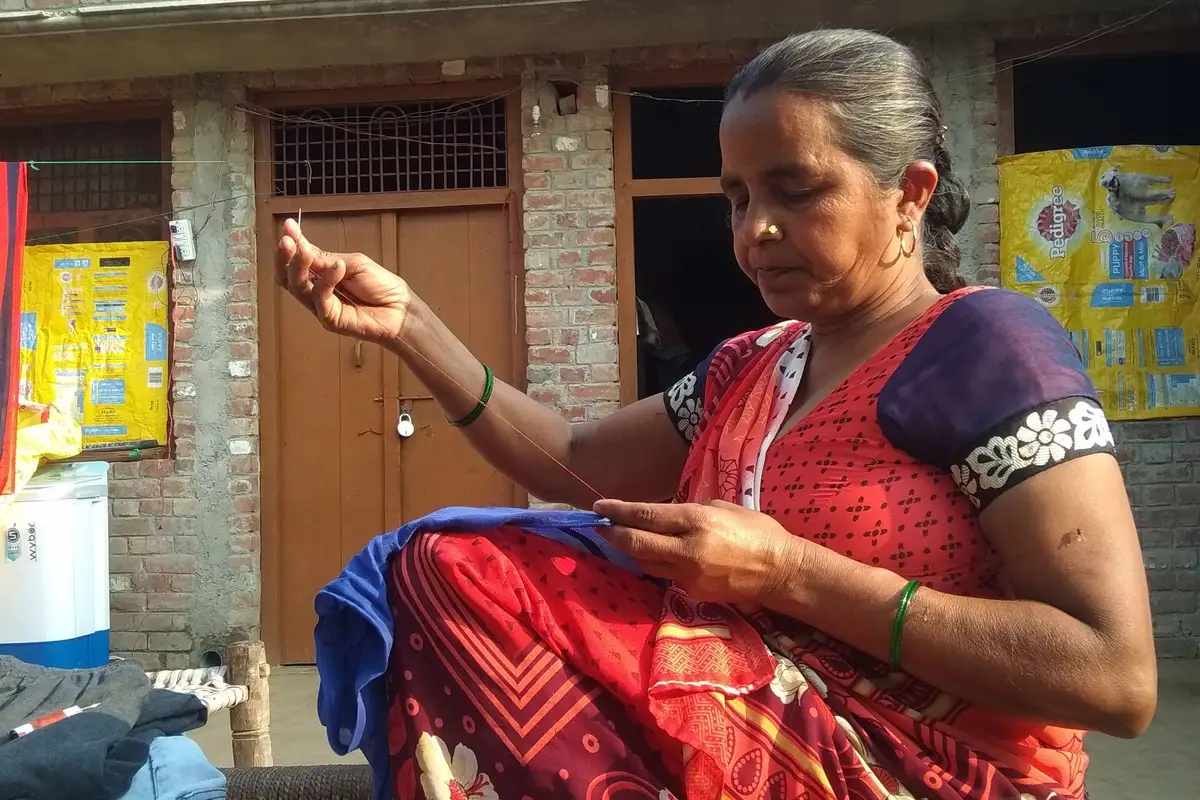
The Rayya group meets in Gurmeet Kaur’s courtyard, about 40 km east of Amritsar on the Beas road, from nine in the morning until the sun is too strong. There are 22 women in the group, aged between 19 and 71.
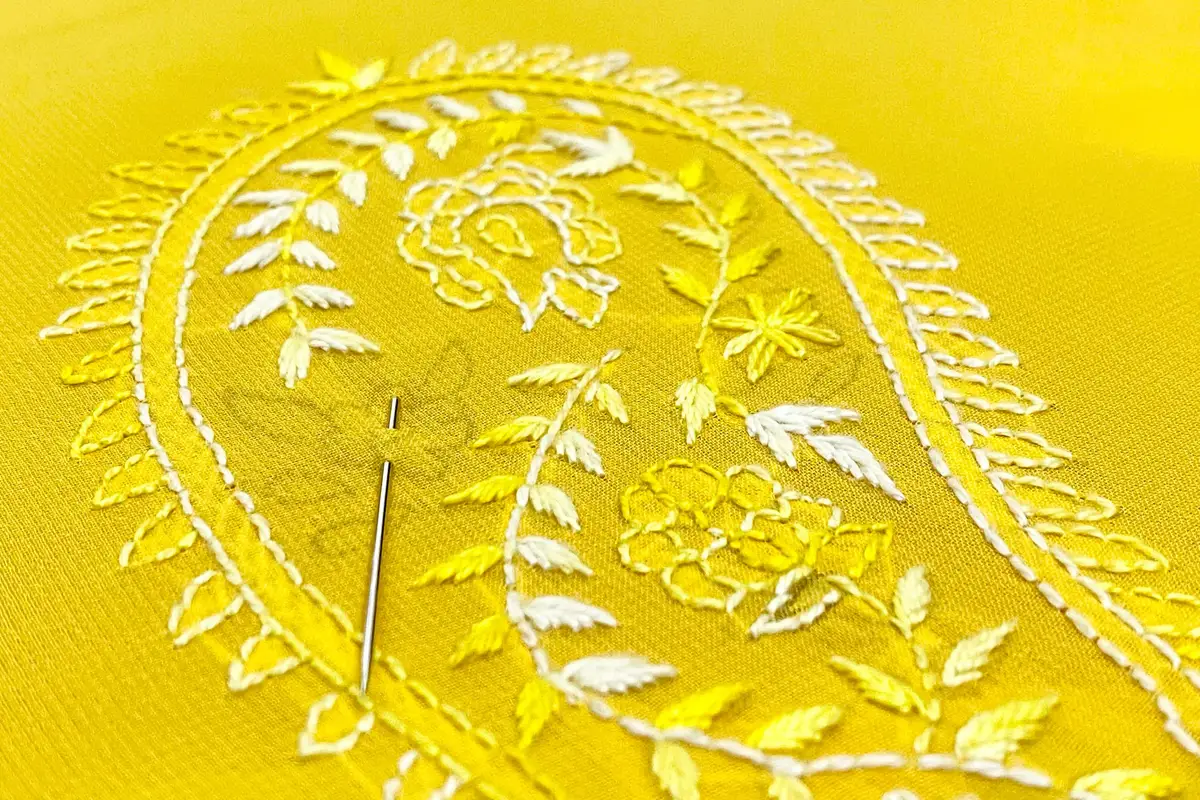
On the first Monday of each month our van brings khaddar and silk floss, and takes back finished pieces. The cloth comes already cut, with only a few lines of the pattern marked with a blunt needle. The rest is counted. Each woman works by counting threads in the khaddar and darning across a set number of them, building the pattern row by row from the back of the cloth.
The older women do the dense bagh work, because they have the patience for single-colour fields where every stitch must lie in the same direction. Younger women often begin with borders and butis on dupattas, and move on as their hands become steady.
They talk, listen to the radio, and break for tea at eleven. Children come home from school and sit with their mothers. Work is paid by the piece, at a rate agreed before the cloth goes out, and half is paid when the work starts. When a piece is finished, the maker’s name and village are written on a cloth tag and stitched on, which is the same tag you find on everything we sell.
Keep reading
A ₹38,500 wari da bagh, broken down: cloth, silk, the maker’s time and the rest.
How to get from the Harmandir Sahib to Lawrence Road, and what else is worth seeing on the way.
Will the colours run? A common worry, answered, with the simple way to wash a cotton phulkari at home.