Hand or machine: how to check a phulkari
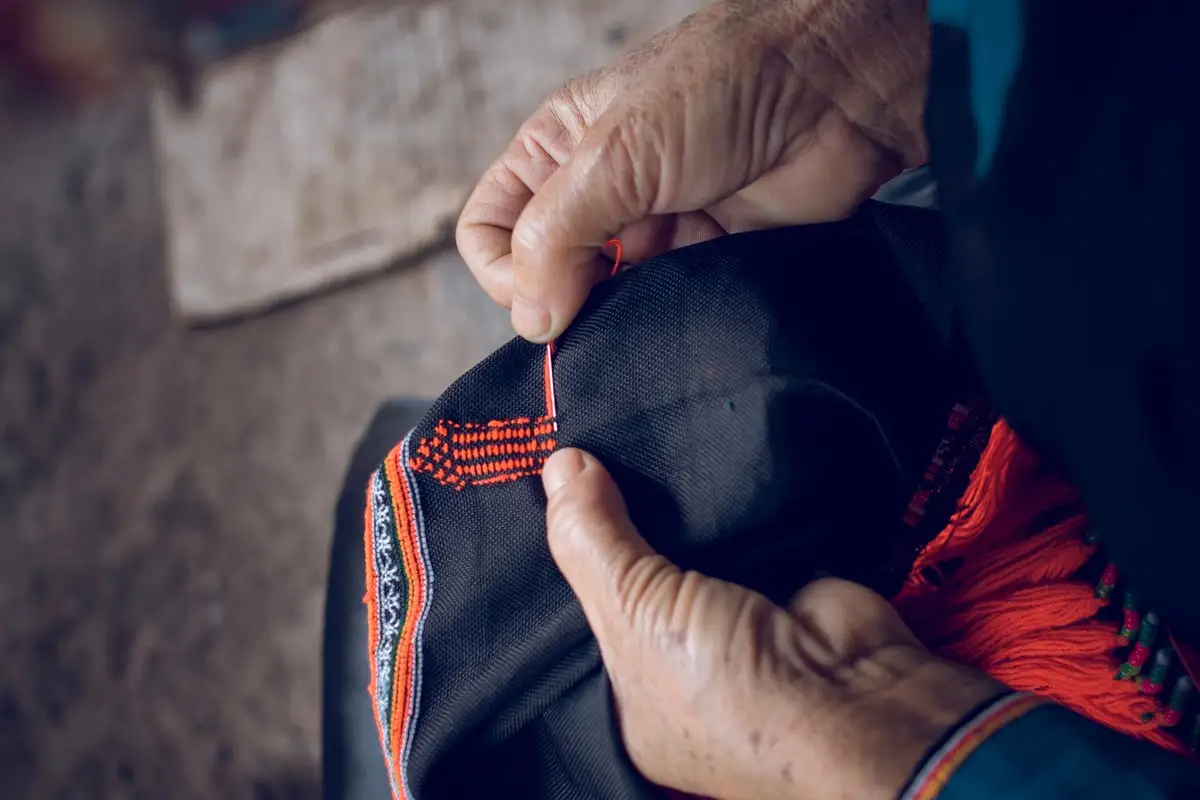
In our experience, much of the phulkari sold today is machine-made. Three quick checks will tell you which you are holding.
Every piece hand-darned in villages around Amritsar · Shipped across India in 4 days
41 Lawrence Road, near Novelty Chowk, Amritsar 143001
Mon–Sat · 10.30 am – 8 pm · Sun 12 – 6 pm
The two words are used loosely, but they describe different amounts of work. Here is how to tell them apart.
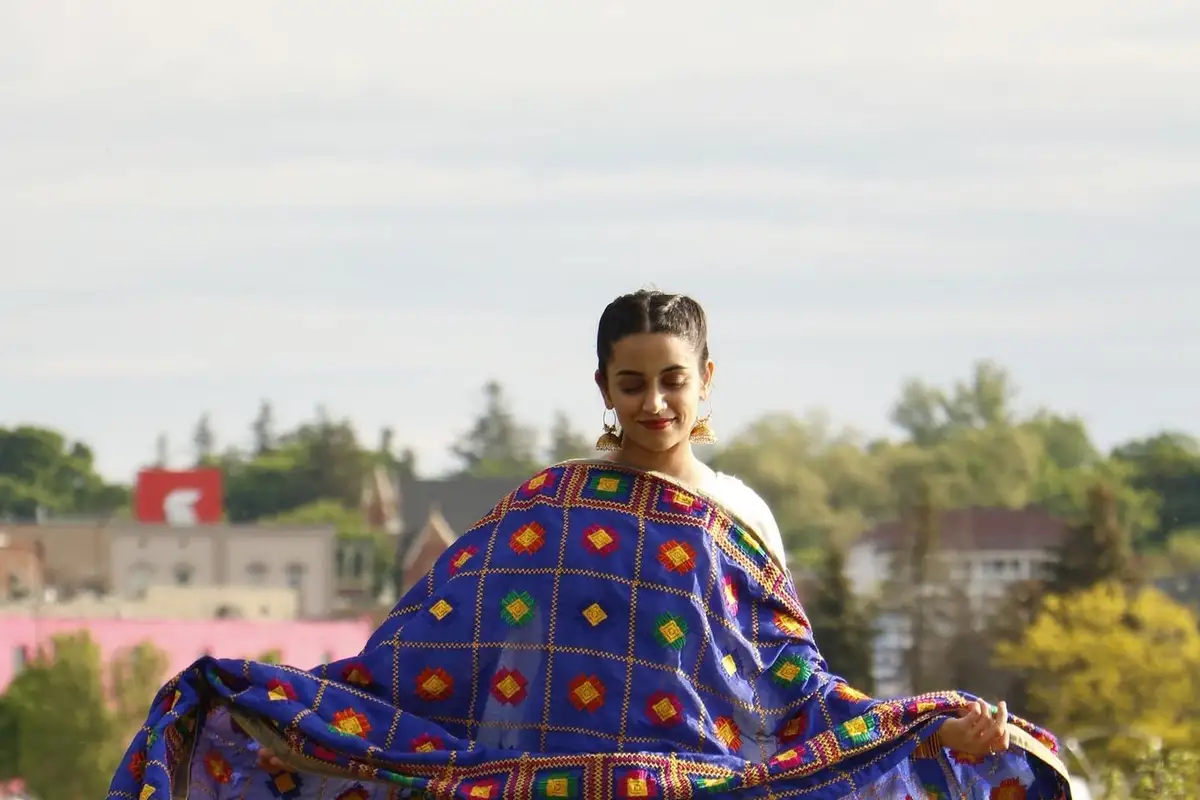
Phulkari means flower work, and it is used today for almost any embroidered dupatta from Punjab. In our workroom, and among the older makers, the word has a narrower meaning.
A phulkari has motifs spread across the cloth with the base fabric showing between them: flowers, wheat ears, small geometric shapes, sometimes a border that is denser than the body. A dupatta like this can take two to four weeks, depending on how close the motifs are.
A bagh, which means garden, is covered completely. You see almost no khaddar at all, only silk floss laid in long darning stitches, often in one golden shade, with the pattern made by changing the direction of the stitch. Because the light catches each direction differently, a single-colour bagh still shows a clear design. A full bagh takes one woman around three months.
There are named baghs too. The wari da bagh, in gold on red, was made for a bride. The chope, worked in a double running stitch, was given by the bride’s maternal family. The thirma is worked on white cloth. When you buy from us, the tag says which it is, so you know what you are paying for: a phulkari, a half bagh or a full bagh.
Keep reading
In our experience, much of the phulkari sold today is machine-made. Three quick checks will tell you which you are holding.
What the chope means at a Punjabi wedding, and how to plan one if you want to keep the custom.
Two festivals, two seasons: warm layers for a January bonfire and light cotton for an April harvest fair.