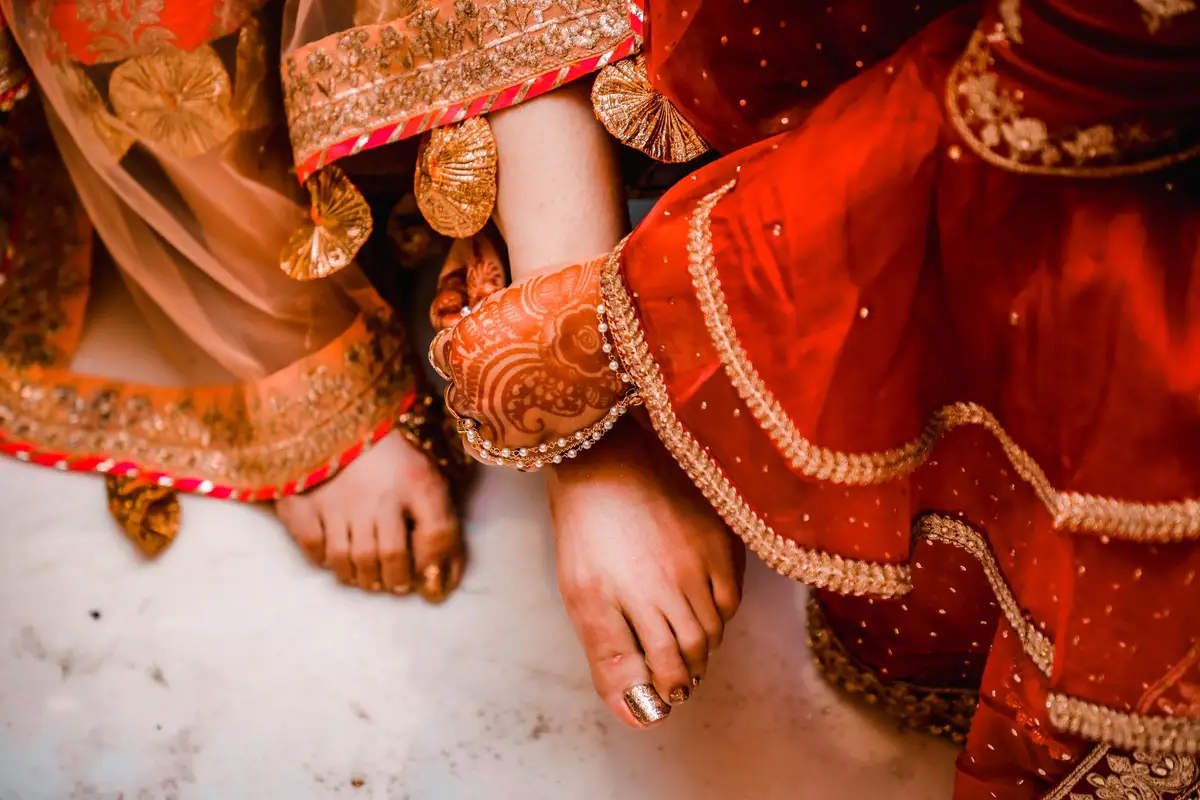
The chope: a dupatta from the bride’s nani
What the chope means at a Punjabi wedding, and how to plan one if you want to keep the custom.
Every piece hand-darned in villages around Amritsar · Shipped across India in 4 days
41 Lawrence Road, near Novelty Chowk, Amritsar 143001
Mon–Sat · 10.30 am – 8 pm · Sun 12 – 6 pm
In our experience, much of the phulkari sold today is machine-made. Three quick checks will tell you which you are holding.
Walk through any market near the Golden Temple and you will see hundreds of bright dupattas labelled phulkari. Most of them are machine embroidered, and there is nothing wrong with that as long as the price and the label are honest. But if you are paying for hand work, it is worth knowing how to check.
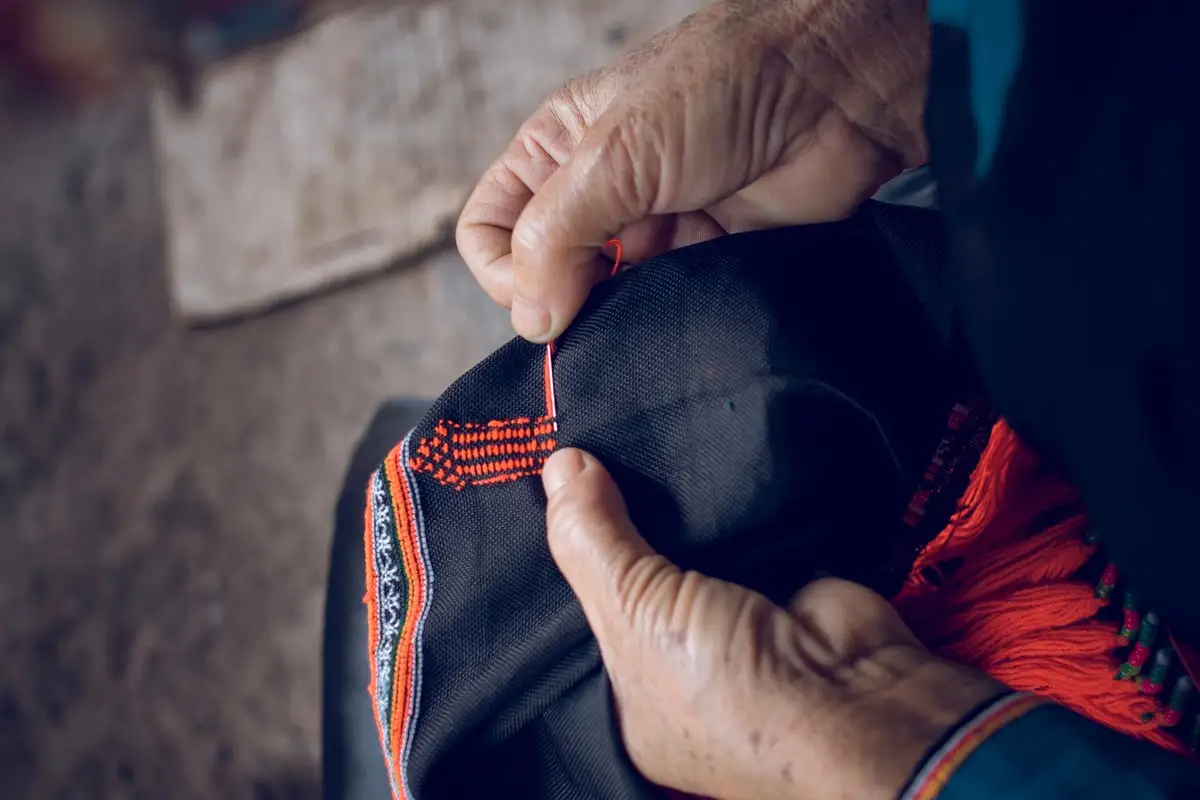
First, turn it over. A hand-darned phulkari is worked from the back, so the back shows short, slightly uneven stitches and the front shows long floats of silk. A machine piece looks almost the same on both sides, or shows a mesh of thread and backing on the reverse.
Second, look at the edges of a motif. Hand darning has tiny irregularities: one stitch a little longer than the next, a row that drifts slightly. Machine stitches are identical and evenly spaced, and the outlines are perfectly crisp.
Third, look at the thread. Traditional phulkari uses untwisted silk floss, called pat, which is glossy and flat. Machine work usually uses twisted rayon or polyester thread, which is rounder and has a harder shine. Price is a clue as well. A hand-darned cotton dupatta takes at least two weeks of a woman’s time, so it cannot honestly sell for a few hundred rupees.
Keep reading
What the chope means at a Punjabi wedding, and how to plan one if you want to keep the custom.
Two festivals, two seasons: warm layers for a January bonfire and light cotton for an April harvest fair.
Twenty-two women, one courtyard and three hours of darning before lunch: how a phulkari is made.