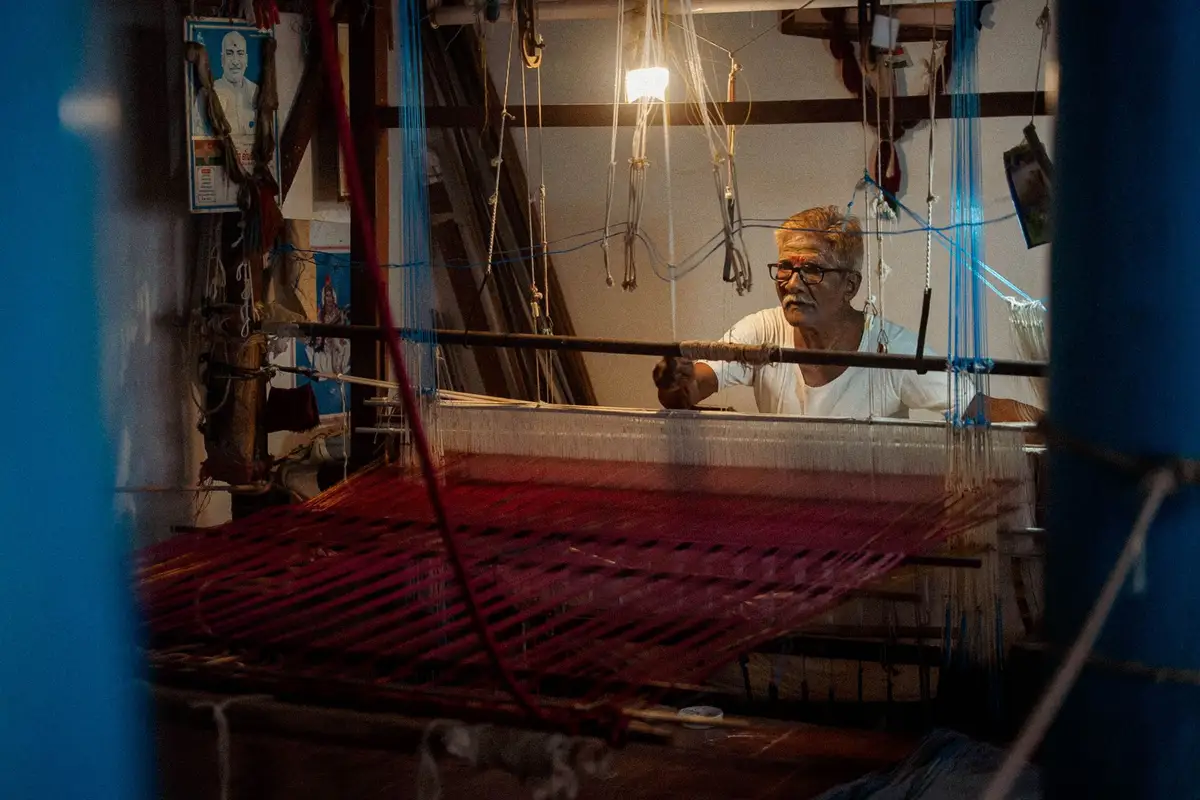
What makes a korvai saree
Why the border and body are woven separately, and how to spot the joint.
Free shipping across India on orders above ₹2,999 · Cash on delivery available
14 Cross Cut Road, Gandhipuram, Coimbatore 641012
Mon–Sat · 10 am – 8.30 pm · Sun 11 am – 6 pm
Fold it differently each time, keep it away from naphthalene, and let it breathe twice a year.
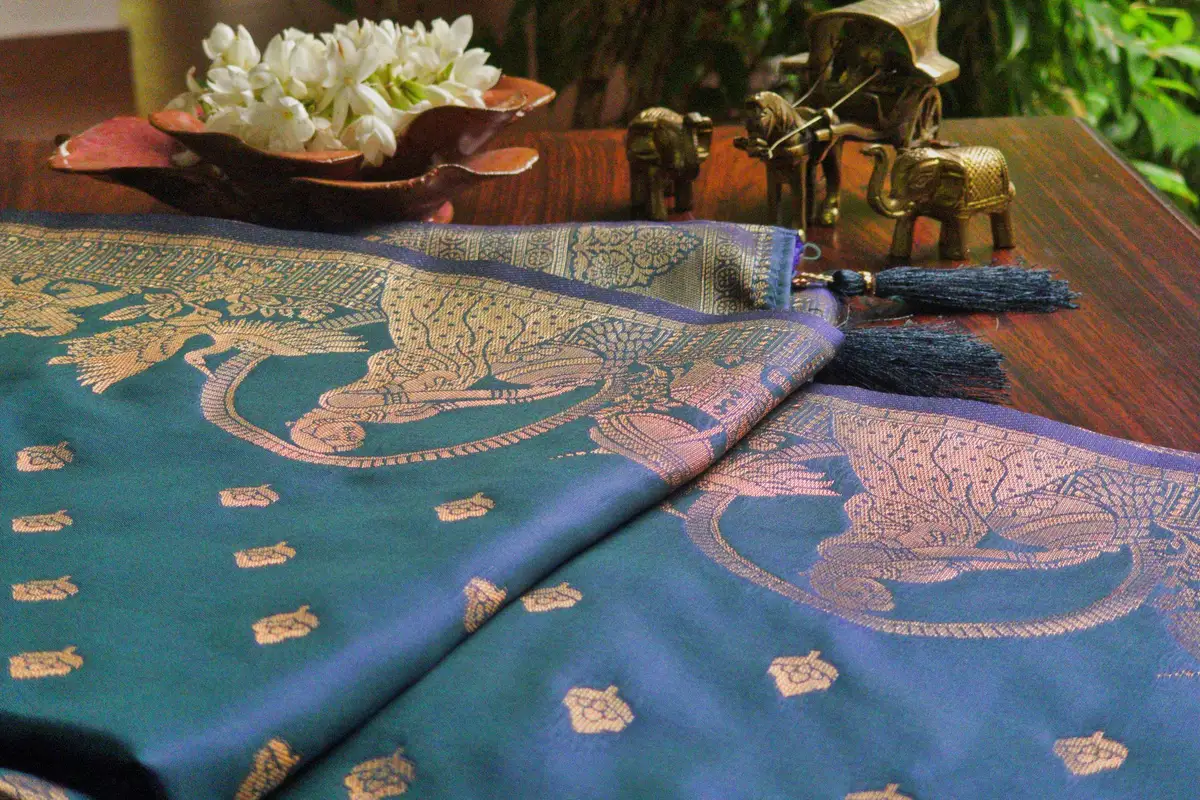
A good silk saree will outlast the wedding it was bought for, if it is stored well. Most of the damage we see in old sarees comes from the cupboard, not from wearing them.
After wearing, hang the saree in the shade for an hour so any sweat dries before you fold it. Do not wash it at home; the first wash should be a dry clean, and only when it is actually soiled. Small stains from food or kumkum can be dabbed with cold water the same day, never rubbed.
Fold silk along different lines each time you put it away. Zari cracks when it is folded on the same crease for years, and the break shows as a dull line across the border. Wrap each saree in a soft cotton cloth or an old mul dhoti, not plastic, so the silk can breathe. Keep naphthalene balls out of the cupboard: they tarnish zari. A few cloves or dried neem leaves in a cloth pouch do the same job.
Twice a year, ideally once before the monsoon and once after, take your silks out, air them in the shade and refold them. It takes twenty minutes and it is the single most useful thing you can do for a saree you want to hand on.
Keep reading
Why the border and body are woven separately, and how to spot the joint.
Colour, weight and zari: what to decide first, and what can wait.
Weight, drape, zari and price compared, so you know which silk to ask for before you visit.