How dabu printing works
Mud, sawdust and indigo: the six steps between a plain length of cotton and a dabu print.
Printed and dyed in our Jaipur workshop · Shipped across India in 4–6 days
41 Chhipa Mohalla, Sanganer, Jaipur 302029
Tue–Sun · 10 am – 7 pm · Sessions by booking
Why we dye most in winter, slow down in the monsoon, and plan your orders around it.
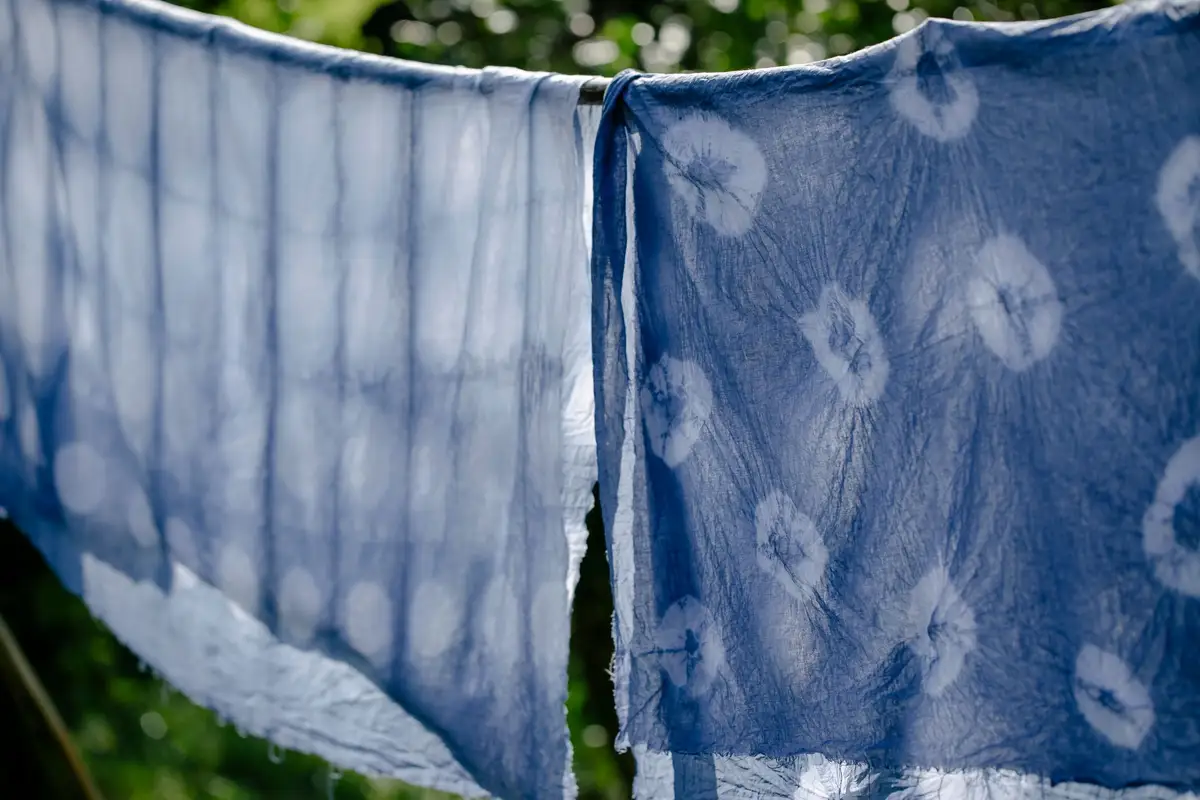
Hand printing and natural dyeing depend on weather more than people expect. Our workshop has its own calendar, and knowing it helps if you are planning a wedding order or a large length of fabric.
October to March is the best season. The air is dry, the sun is steady, and cloth printed in the morning is dry by afternoon. The indigo vat stays warm enough to work well until December, and we cover it with jute sacks on cold nights. Most of our sarees, razais and custom lengths are made in these months.
April to June is very hot. Cloth dries fast, sometimes too fast, and the dabu paste can crack before it is dyed, giving heavy crackle lines. We print earlier in the morning and stop by noon. The vat ferments quickly and needs feeding every day.
July to September is the monsoon. Cloth will not dry properly, and damp dabu smears. We print far less, mend blocks, clean the vats and build up fabric stock printed earlier in the year. Some printers go home to their villages for the sowing season.
So, if you need a custom length for a wedding in November, order by early September. For razais before winter, October is ideal. And if you visit in August, the tables may be quiet, but the dyers will be happy to show you the vats.
Keep reading
Mud, sawdust and indigo: the six steps between a plain length of cotton and a dabu print.
Cold water, mild soap and shade: how to keep hand-dyed blue deep for years.
Five things to look for, at the shop or on a product photo, before you pay for hand printing.