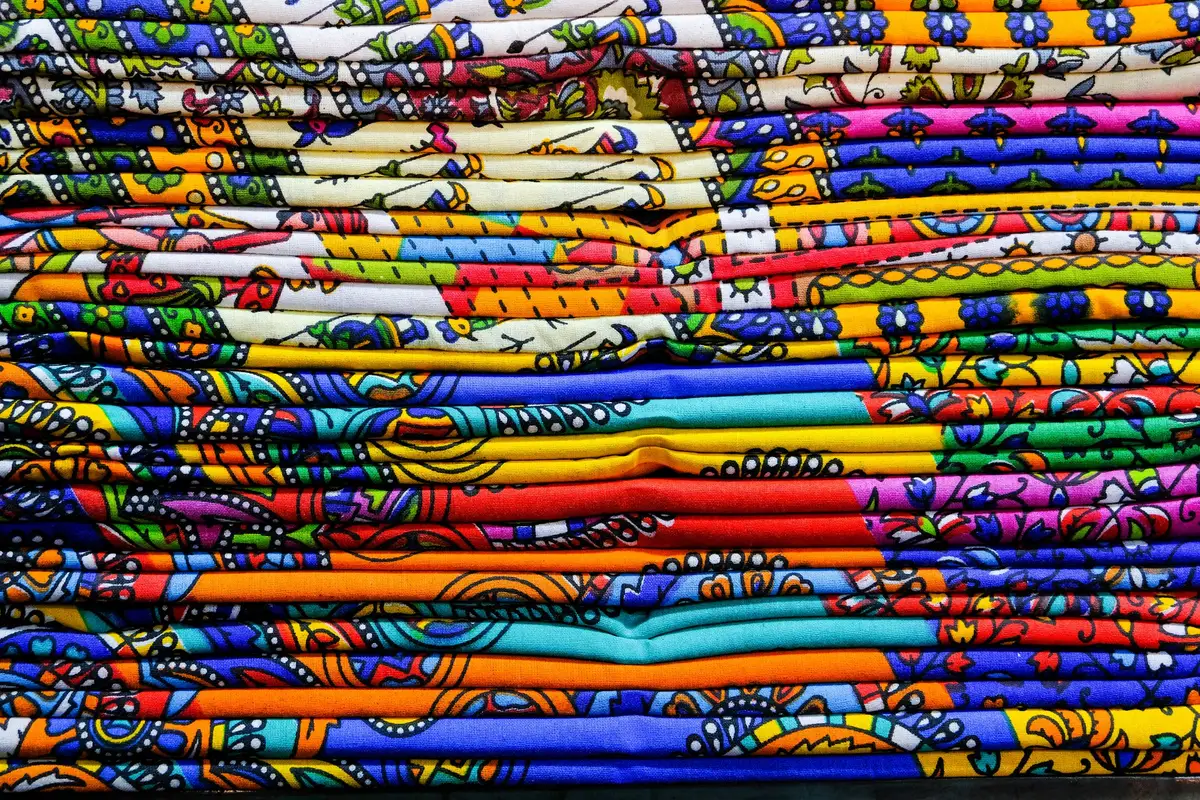
Telling hand block print from screen print
Five things to look for, at the shop or on a product photo, before you pay for hand printing.
Printed and dyed in our Jaipur workshop · Shipped across India in 4–6 days
41 Chhipa Mohalla, Sanganer, Jaipur 302029
Tue–Sun · 10 am – 7 pm · Sessions by booking
Cold water, mild soap and shade: how to keep hand-dyed blue deep for years.
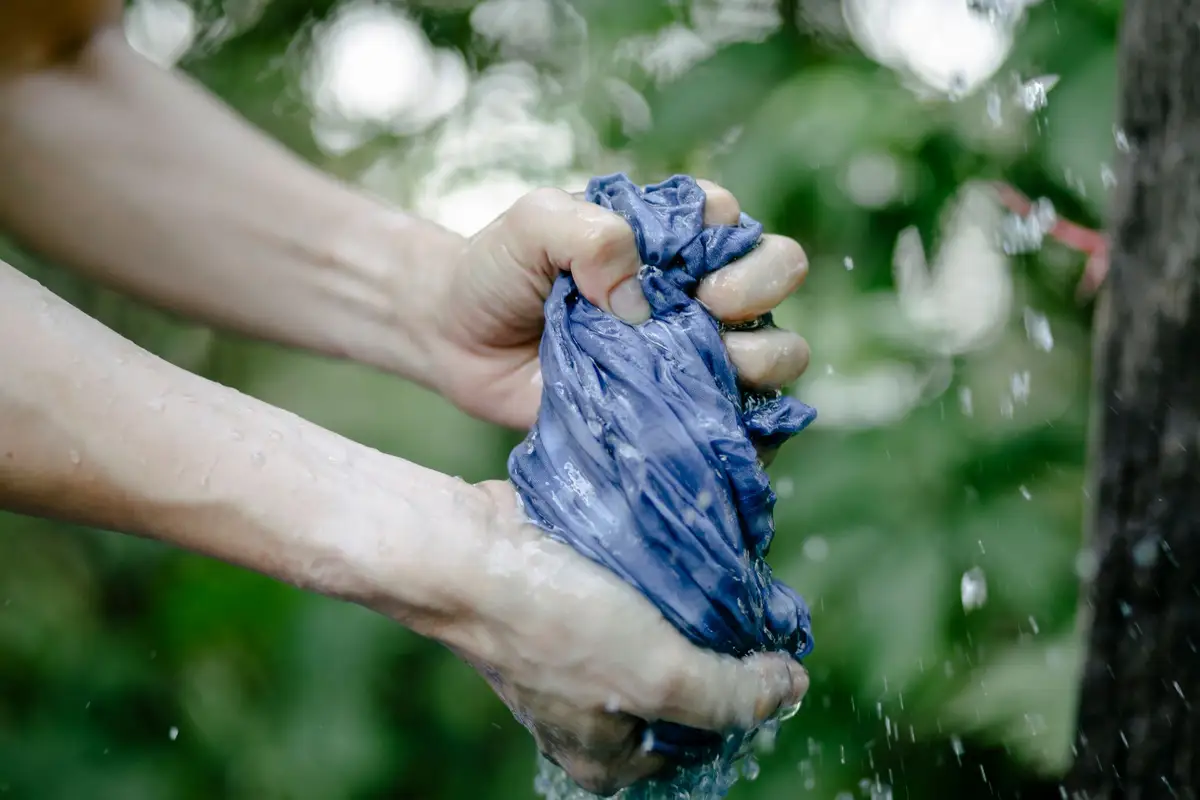
Indigo does not dissolve into cotton the way most dyes do. It sits on the fibre in layers, built up with each dip. That is why it fades gently and evenly, and why washing matters more than with a machine-dyed shirt.
We wash every piece twice before it leaves the workshop, so most of the loose dye is already gone. Even so, wash it alone the first two or three times, in cold water, with a mild liquid soap. Do not soak it for long; ten minutes is enough. Hot water and strong detergent strip the indigo faster.
Dry it inside out, in shade. Jaipur sun is strong enough to fade indigo in a single afternoon on the roof. A balcony with indirect light is ideal. Iron it on the reverse while slightly damp.
Avoid bleach and anything with optical brighteners. They react with the dabu areas and can leave yellow marks.
Over a few years, the blue will soften from night to dusk, and the cream areas will warm slightly. Many of our customers like this more than the new colour. If you want to keep it as dark as possible, have it dry cleaned instead. And if you ever want a faded piece deepened, bring it to the workshop; we can redip cotton pieces in the vat for ₹300 to ₹600.
Keep reading
Five things to look for, at the shop or on a product photo, before you pay for hand printing.
Two printing towns within an hour of the city: how to get there, and what to see in each.
Choosing weight, filling and print for a hand-quilted razai, and caring for it between winters.