Washing indigo so it lasts
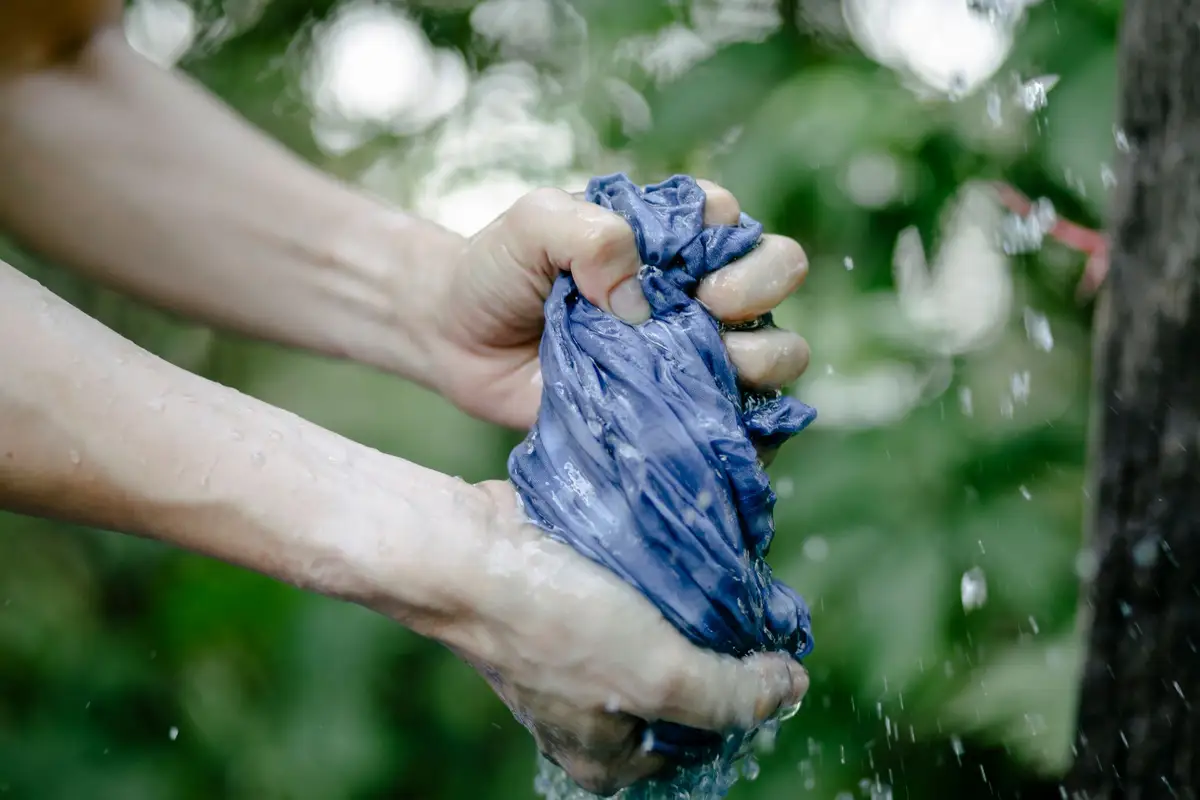
Cold water, mild soap and shade: how to keep hand-dyed blue deep for years.
Printed and dyed in our Jaipur workshop · Shipped across India in 4–6 days
41 Chhipa Mohalla, Sanganer, Jaipur 302029
Tue–Sun · 10 am – 7 pm · Sessions by booking
Mud, sawdust and indigo: the six steps between a plain length of cotton and a dabu print.
Dabu is a resist print. Instead of printing colour, the printer prints a paste that keeps colour out. Where the paste sits, the cloth stays pale; everywhere else turns blue in the vat.
The paste is made the evening before from black clay dug near Bagru, gum, lime and wheat chaff, beaten together in a stone trough until it is smooth and sticky. In the morning the printer dips a teak block in it and presses it onto damp cotton, moving along the table in a rhythm you can hear from the lane. Straight after printing, the wet paste is dusted with fine sawdust so it does not smear.
The cloth dries in the sun for a day. Then it goes into the indigo vat, a deep earthen pit in the floor. Each dip lasts a few minutes. The cloth comes out yellow-green and turns blue in front of you as the air reaches it. For a deep shade we dip it three to five times, drying between dips.
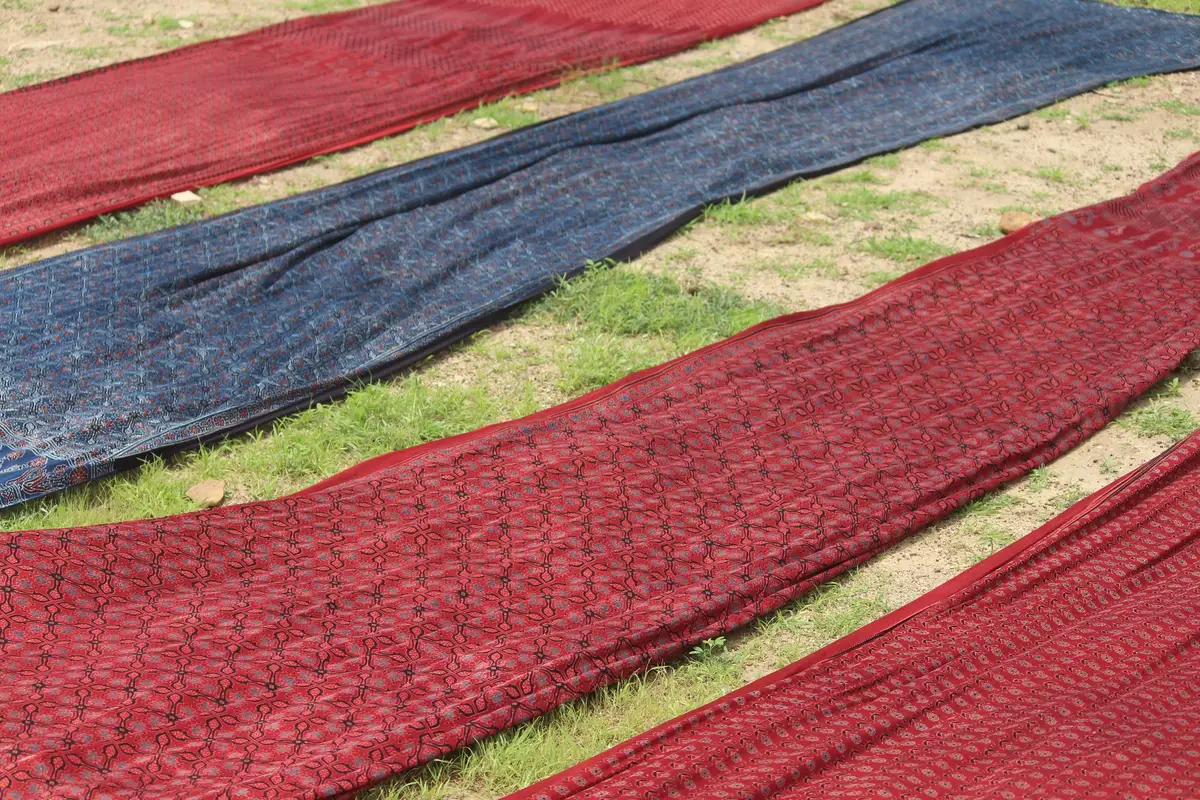
Finally the cloth is soaked and washed to remove the mud, and the pattern appears: cream leaves on blue, with the fine crackle lines where indigo crept through cracks in the dried paste. Every piece is then washed again and dried on the field behind the workshop. From first block to last rinse, it takes about a week.
Keep reading
Cold water, mild soap and shade: how to keep hand-dyed blue deep for years.
Five things to look for, at the shop or on a product photo, before you pay for hand printing.
Two printing towns within an hour of the city: how to get there, and what to see in each.