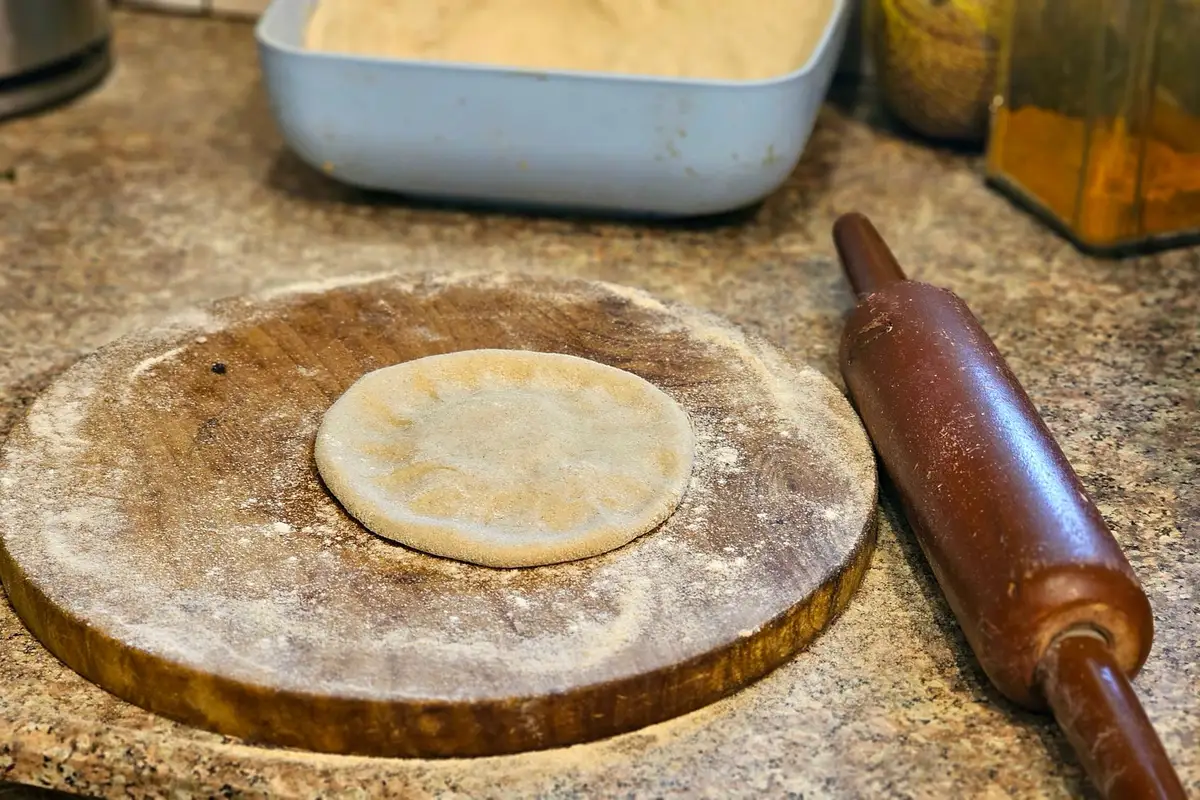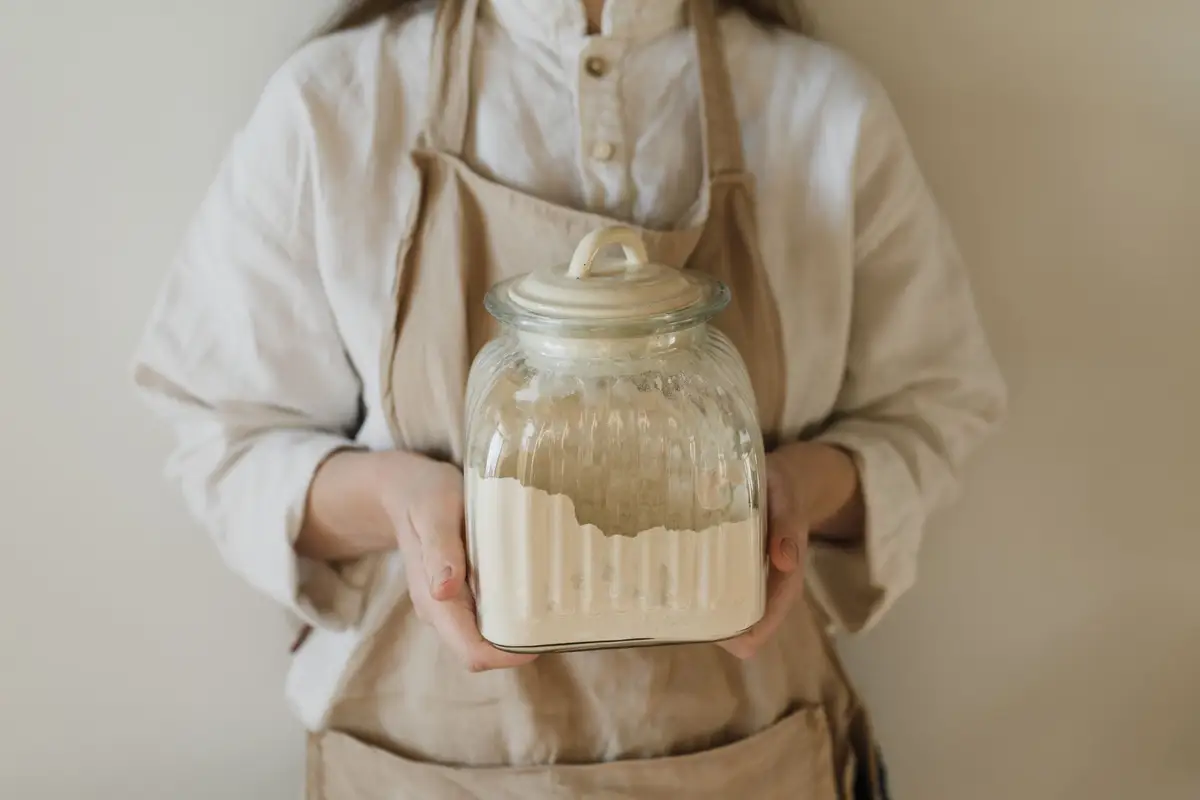
Storing atta so it stays fresh
A steel drum, a dry spoon and a cool corner: simple habits for whole flour.
Ground to order every morning · Indore delivery the same evening · Flours shipped across India
22 Jawahar Marg, near Sanyogitaganj Mandi, Indore 452007
Mon–Sat · 7 am – 8 pm · Sun 7 am – 12 noon
From the wheat sack to the paper bag: the six steps behind every order.
Every order starts as whole wheat in a jute sack. We buy sharbati after the March harvest from three families near Sehore and store it whole in steel bins through the year. Whole grain keeps well. Flour does not, which is why we never grind ahead.
In the morning the wheat for the day’s orders goes through a cleaner that shakes out stones, straw and dust, then it is washed, spread on cloth and left to dry until noon of the day before. Dry wheat grinds evenly; damp wheat clogs the stones.
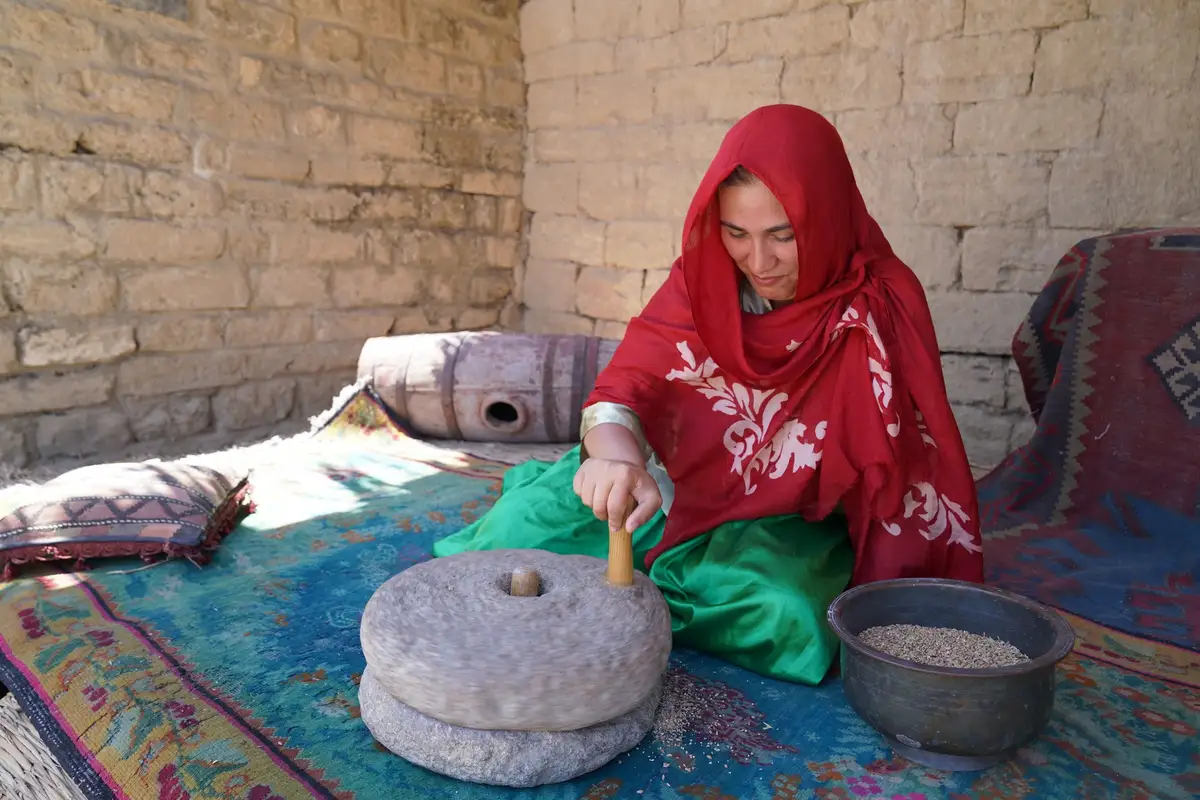
The chakki is two round granite stones, the bottom one fixed and the top one turning slowly. Grain falls through a hole in the top stone and is crushed outward between grooved faces. Because the stones turn slowly, the flour comes out warm to the hand, not hot. Arpit checks it every few minutes by rubbing a pinch between his fingers and adjusting the gap.
Nothing is sifted out. The bran and the germ stay in the flour, which is why our atta is a little darker than packet atta and why it needs a little more water. Each order is weighed, bagged in paper, and the milling date is written on the bag in pen. On a winter morning we grind about 1,800 kg.
Keep reading
A steel drum, a dry spoon and a cool corner: simple habits for whole flour.
Sharbati, khapli, lokwan and durum: what each grain does in a roti.
Bajra, makka and the raab season: what Indore kitchens grind from November.