How to taste chocolate
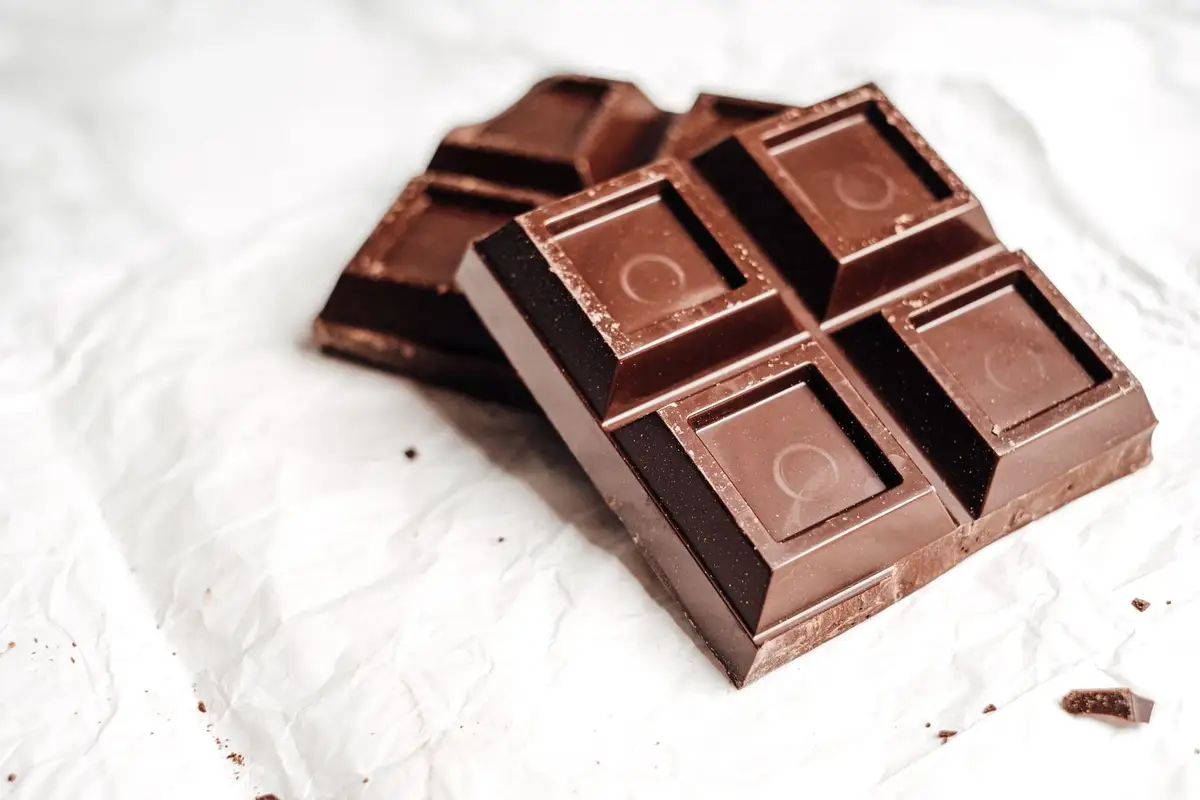
Look, snap, smell, melt: the four steps to notice what is really in a bar.
Shipped in insulated boxes across India · Bonbons made fresh every Thursday
24 Rue Romain Rolland, White Town, Puducherry 605001
Tue–Sun · 11 am – 8 pm · closed Monday
Harvest, ferment, dry, roast, crack, grind, temper and wrap: how a bar is made.
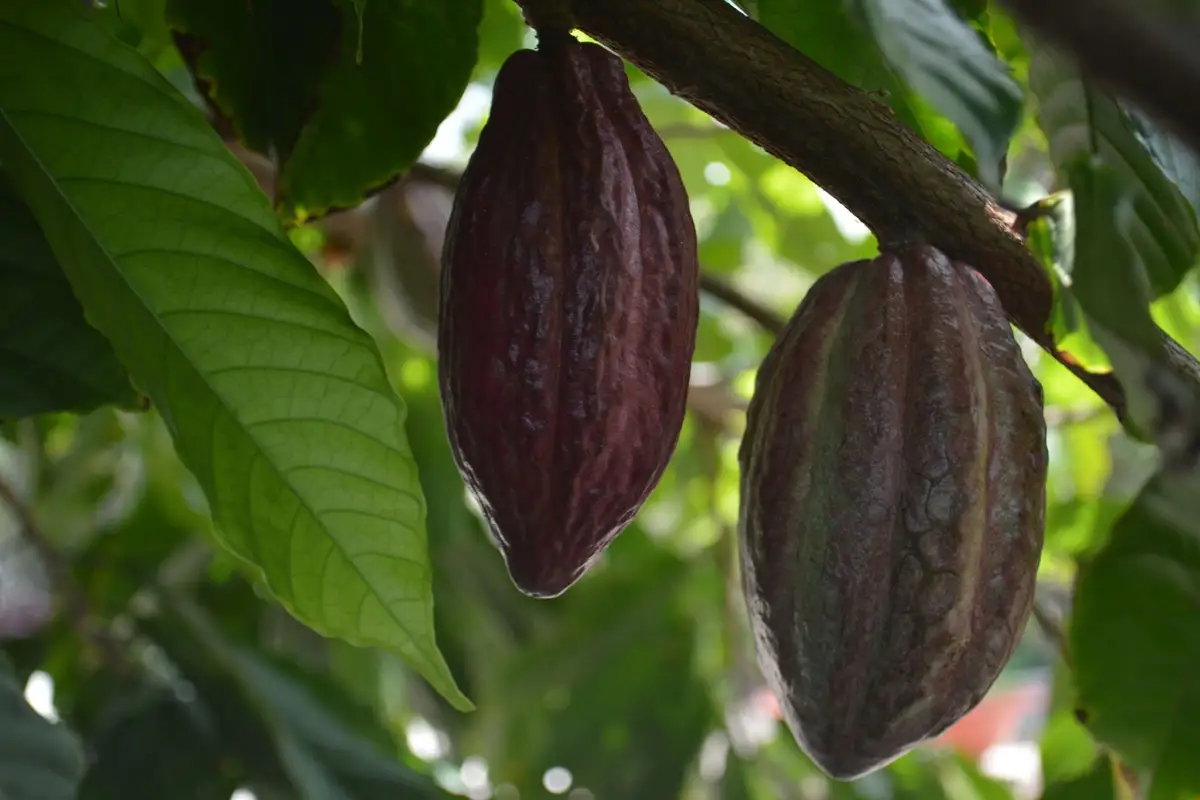
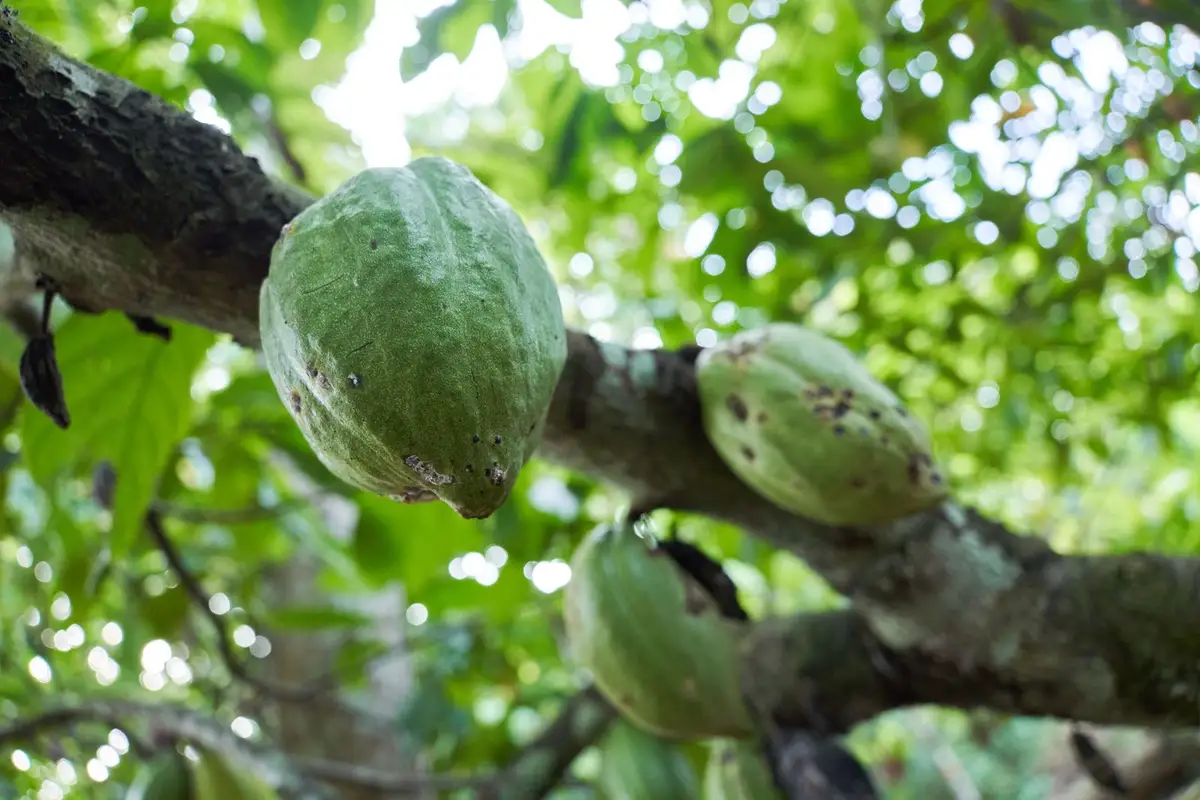
Cacao grows in pods on the trunk of the tree, and a farmer in Idukki picks them by hand when they turn yellow or orange. Inside are 30 to 40 beans covered in a sweet white pulp.
The beans are scooped into wooden boxes, covered with banana leaves and left to ferment for about six days. This is where much of the flavour is made; unfermented beans taste flat and bitter. Then they are dried in the sun for a week and packed into sacks for us.
In the workshop we sort the beans by hand, roast them in small batches at around 120 °C, and crack them so the husks can be blown away. What is left are nibs.
The nibs go into a stone grinder with sugar and turn for 48 hours, slowly becoming smooth, liquid chocolate. We then temper it by hand on marble, cooling and warming it so it sets glossy and snaps cleanly. Finally it is poured into moulds, cooled, and wrapped with the batch number.
Keep reading
Look, snap, smell, melt: the four steps to notice what is really in a bar.
Kerala, Karnataka and Andhra grow cacao. Here is what makes it different.
Grey streaks or a dusty coat do not mean a bar has gone bad. Here is what causes bloom and how to avoid it.