How to choose a dark chocolate percentage
What 55%, 72% and 85% really tell you, and why two bars with the same number can taste very different.
Shipped in insulated boxes across India · Bonbons made fresh every Thursday
24 Rue Romain Rolland, White Town, Puducherry 605001
Tue–Sun · 11 am – 8 pm · closed Monday
Grey streaks or a dusty coat do not mean a bar has gone bad. Here is what causes bloom and how to avoid it.
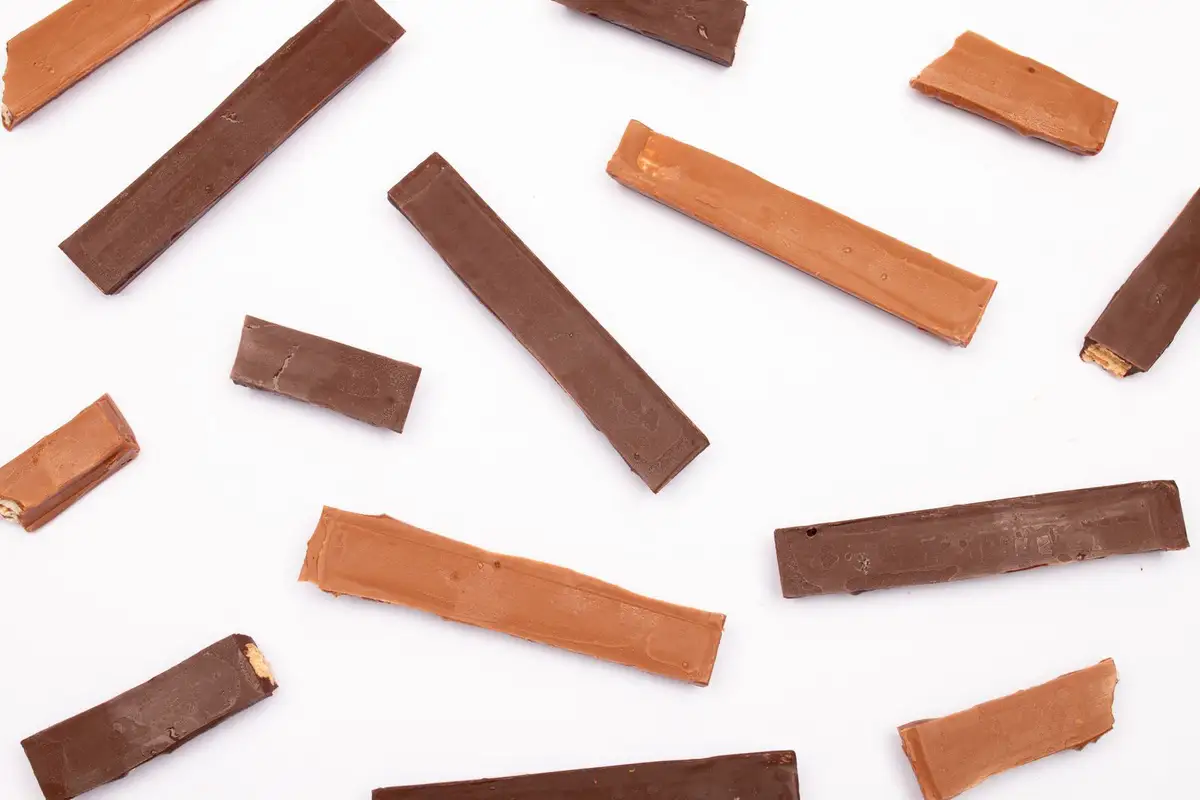
Every few weeks someone brings a bar back to our counter in White Town, worried that it has gone off because the surface has turned grey or chalky. It is almost always bloom, and the chocolate is safe to eat. It has simply lost its gloss.
There are two kinds. Fat bloom shows as soft grey streaks or a dull swirl. It happens when a bar gets warm, perhaps in a car or on a sunny windowsill, and some of the cocoa butter melts and sets again on the surface in an unstable form. Sugar bloom looks like a dry, dusty white coat that feels rough. It happens when a cold bar meets warm, humid air, as when it comes straight out of a fridge in a Puducherry June. Moisture condenses on the surface, dissolves a little sugar and leaves it behind as fine crystals when it dries.
Bloomed chocolate tastes much the same, though the texture is a little crumbly and it melts less smoothly on the tongue. You can use it for baking or for drinking chocolate without any loss.
To avoid bloom, keep bars at 16 to 20 °C in a closed cupboard away from the stove and outside walls. If you must use the fridge in summer, wrap the bar tightly in its foil and a zip bag, and let it come to room temperature for an hour before you open it. That way the condensation forms on the bag, not on your chocolate.
Keep reading
What 55%, 72% and 85% really tell you, and why two bars with the same number can taste very different.
Banana leaves, wooden boxes and a farmer who turns the beans by hand. The step that decides flavour.
Ordering dates, gift boxes and shipping in the busiest two months of our year in Puducherry.