Setting up a violin for Carnatic music
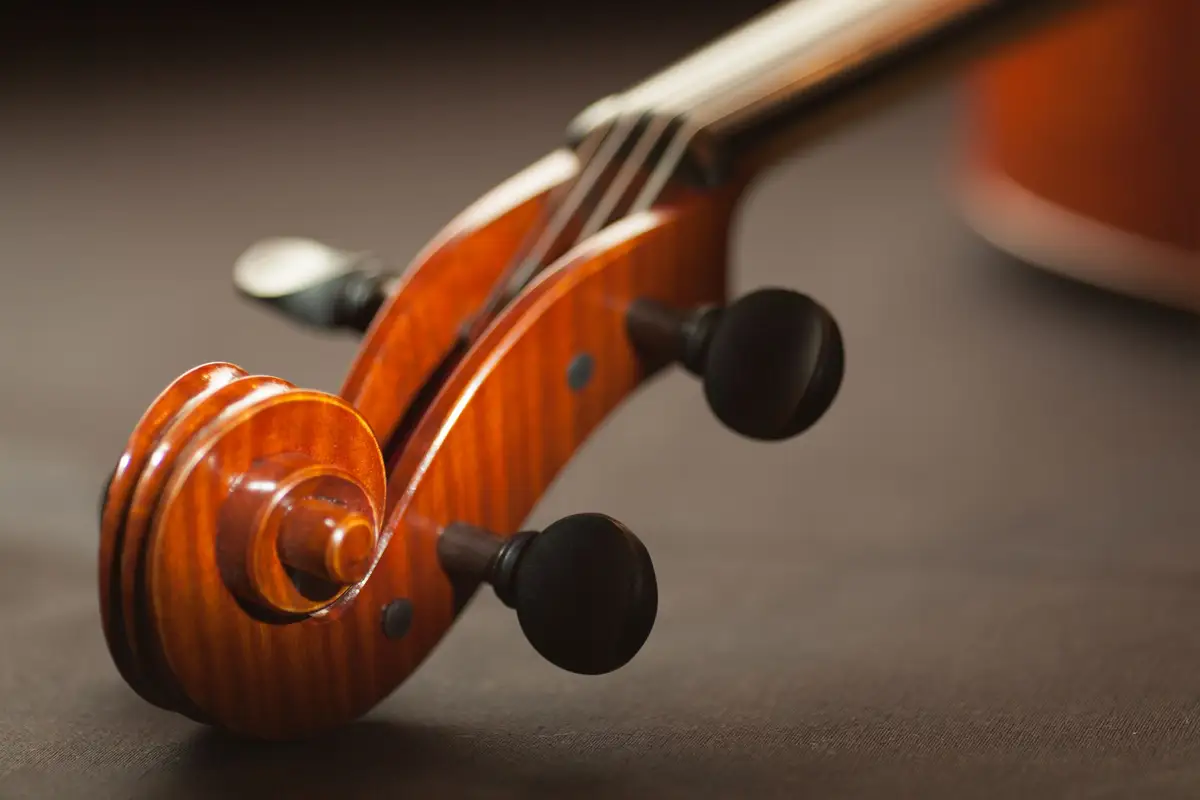
Why a Western violin straight from the box is hard to play in Carnatic style, and the four changes we make.
Every instrument is tuned and played for you before it leaves · Insured shipping across India
41 South Main Street, near Ayyankulam, Thanjavur 613009
Mon–Sat · 9.30 am – 7.30 pm · Sun by appointment
Skins, straps and the black sadham each have a price. A line-by-line look at our ₹4,500 re-skinning charge.
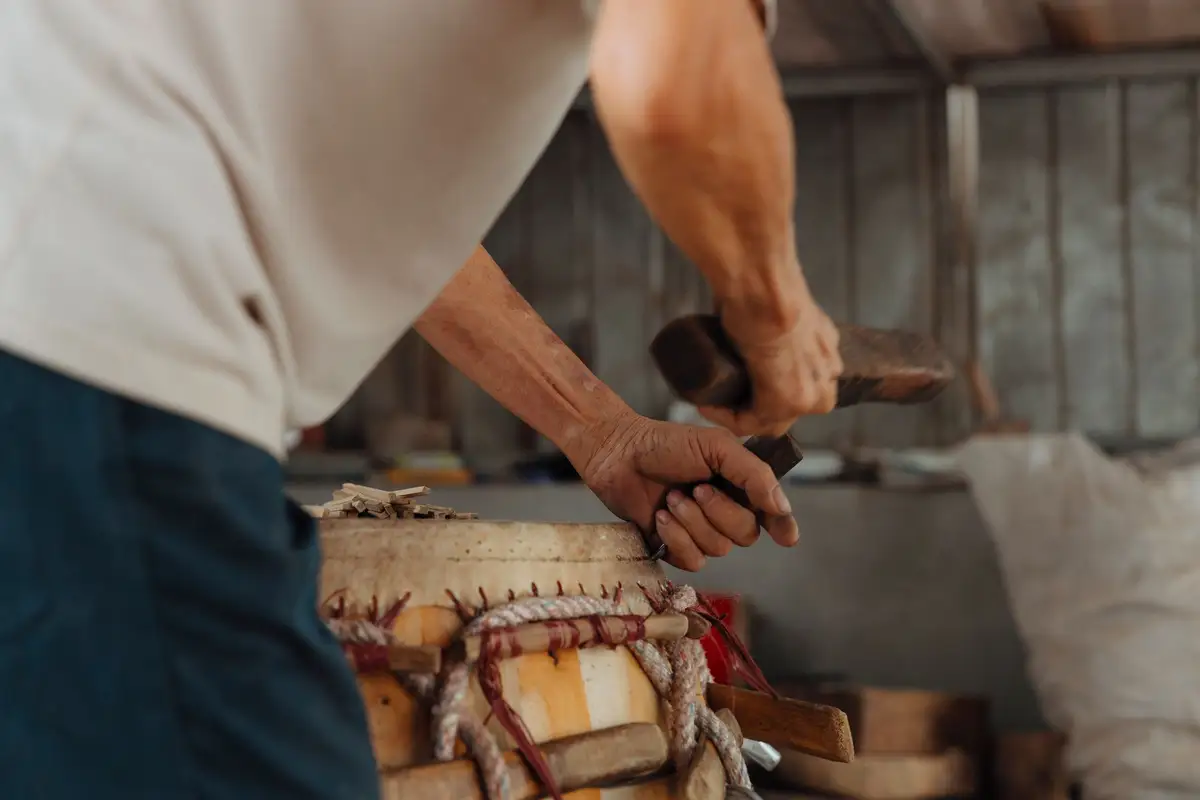
A mridangam that is played every day needs new skins every two to four years. When we quote ₹4,500 for a standard re-skinning, families sometimes ask why a pair of skins costs so much. Here is where the money goes.
The right head is made of three layers of goat skin, cut and stretched by hand, with a ring of thinner skin around the edge. The left head is buffalo skin. Good hides are bought from a few suppliers near Kumbakonam, and about a third of every batch is rejected for thin patches or scars. The skins alone are about ₹1,600.
The leather straps that lace the two heads together are cut from a single long hide, roughly ₹700 for a full set. The sadham, the black disc on the right head, is a paste of rice, iron filings and manganese. Our maker lays it in about eleven thin coats, rubbing each one smooth with a stone, and lets them dry between coats.
The rest is time. Removing old skins, cleaning the shell, lacing, tightening and tuning takes about two working days spread across ten, because the skins must dry and settle before the final tuning. If only one head needs replacing, the charge is ₹2,600 for the right head or ₹1,900 for the left. We always look first and tell you which one is worth doing.
Keep reading
Why a Western violin straight from the box is hard to play in Carnatic style, and the four changes we make.
The Margazhi concerts begin in December. Our order book fills in August. A month-by-month guide to timing.
What happens when you book an hour to play, who you will meet, and what you can bring with you.