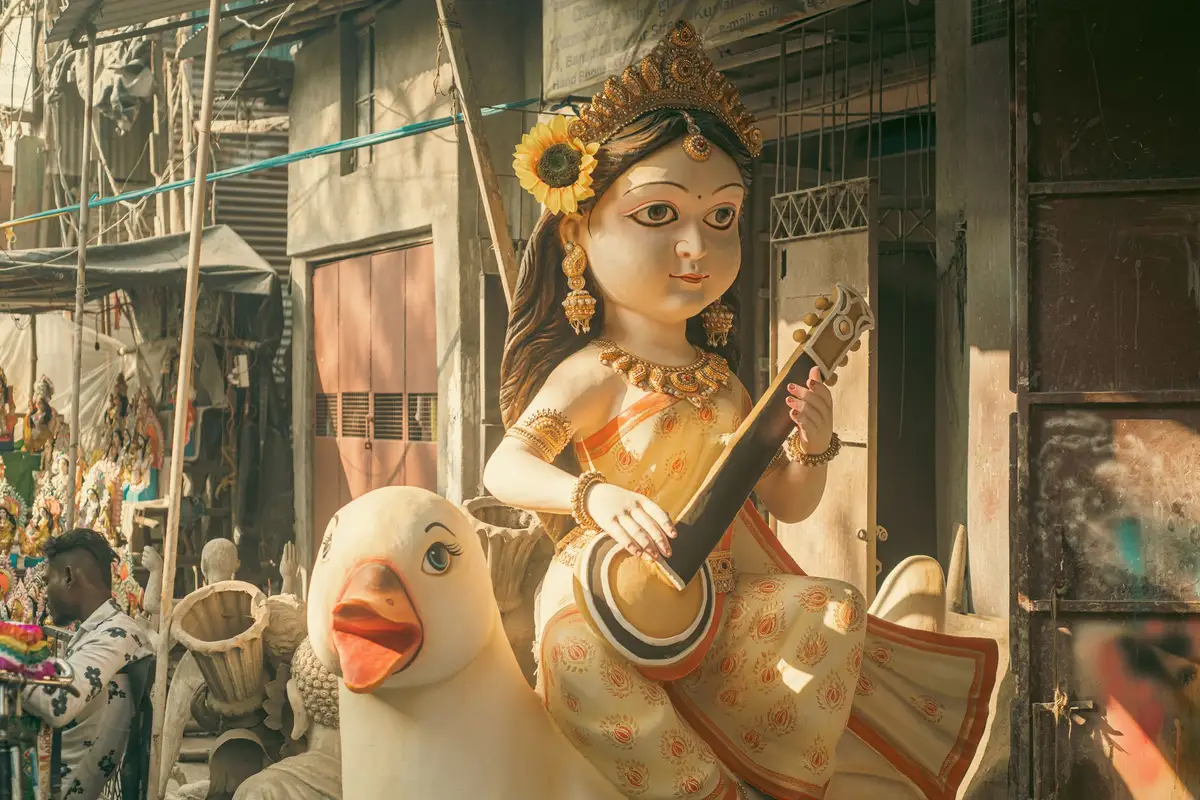
Is a heavier veena a better veena?
Weight is often taken as a sign of quality. It tells you something about the wood, but much less about the sound.
Every instrument is tuned and played for you before it leaves · Insured shipping across India
41 South Main Street, near Ayyankulam, Thanjavur 613009
Mon–Sat · 9.30 am – 7.30 pm · Sun by appointment
What happens when you book an hour to play, who you will meet, and what you can bring with you.
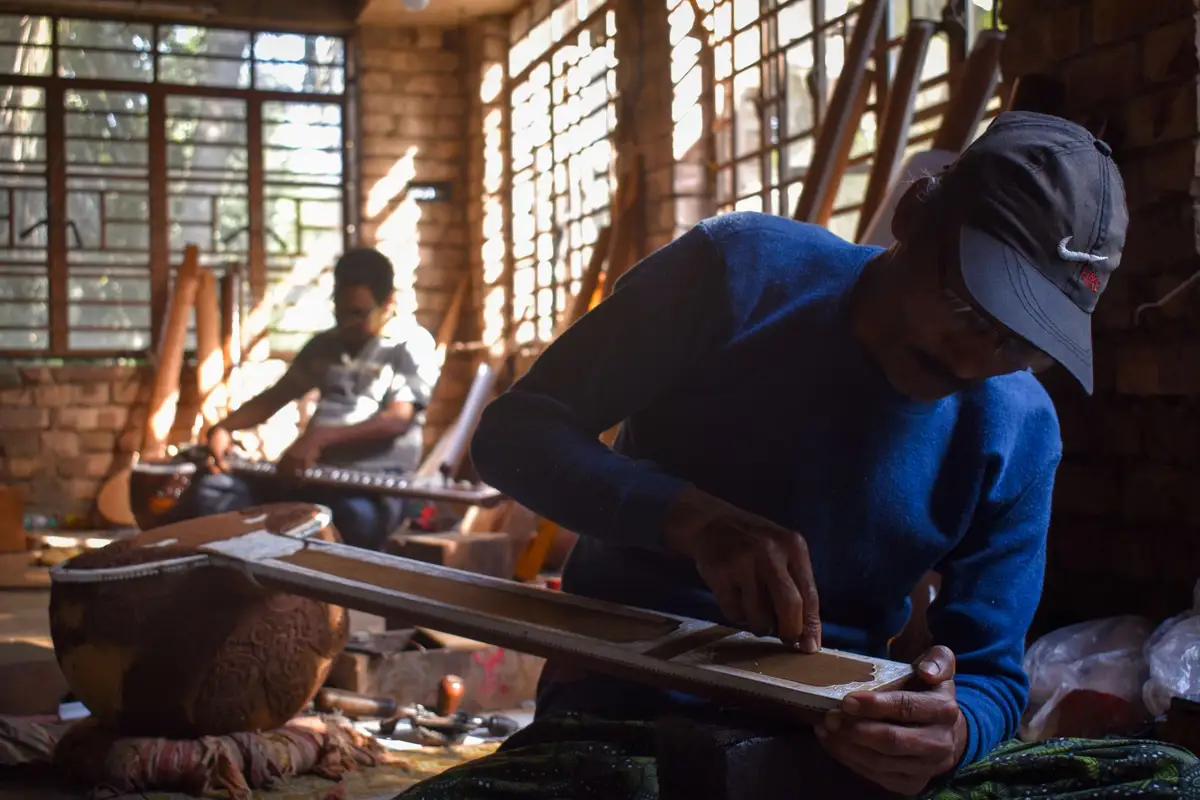
Many people visit us before buying, and we encourage it. Here is what to expect. You will be met in the shop at the front by one of the family, who will ask what you play, your teacher’s style if you have one, and your shruti. Then we take you to the playing room, a small, quiet room off the courtyard with a mat on the floor and a few instruments laid out for you.
For a veena, we usually bring out three or four at a time: perhaps two ottu veenas, one ekanda and a student veena. Play the same phrase on each. One of our makers will sit in and can lower a fret or adjust the jivari while you listen, so you hear what the instrument can become, not just how it is today.
For percussion, our mridangam maker will tune two or three shells to your shruti in front of you. You are welcome to play a short korvai on each. Afterwards, if you like, we walk you through the workshop and the wood store. You can see logs in their first, second and third years, and pick out the length your veena might come from.
An hour is usually enough. There is no charge and no obligation to buy that day. Bring your own instrument if you want a quick check, and a recording of your playing if you are buying for someone else.
Keep reading
Weight is often taken as a sign of quality. It tells you something about the wood, but much less about the sound.
If you come to Thanjavur to choose an instrument, give yourself a free morning. A short walk through the town’s music history.
Weight, fret height and size matter more than carving for a beginner. Here is what to check before you buy.