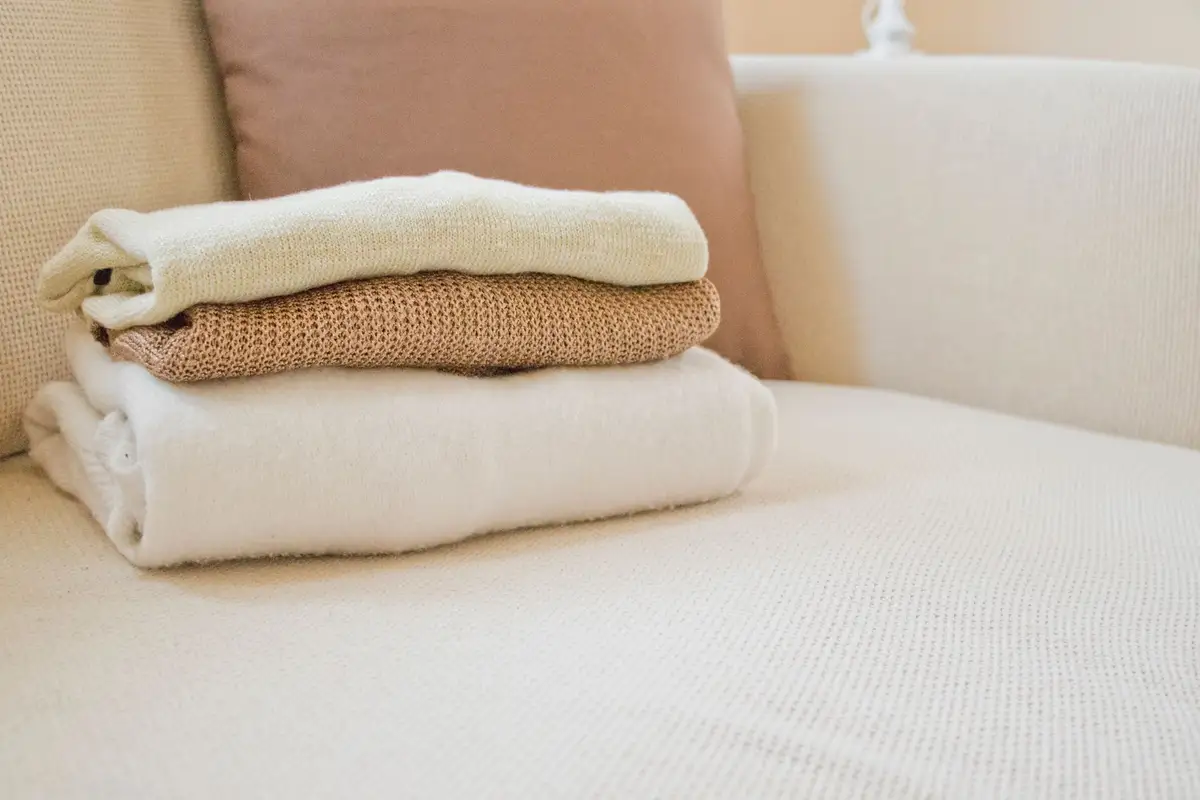
Storing shawls through the summer
Clean, fold, breathe: how to keep moths and damp away from April to October.
Shawls shipped across India in 3–5 days · Free monogram embroidery on stoles
22 Katra Jaimal Singh, near Hall Bazaar, Amritsar 143006
Mon–Sat · 10.30 am – 8.30 pm · Sun 12 – 6 pm
Weight, weave and light: three simple checks you can make at any counter before you pay.
Most people are told to burn a thread or pull a shawl through a ring. Neither tells you much. Many fine wools pass the ring test, and no shop will let you burn its stock. There are better checks.
Start with weight. A plain hand-woven pashmina shawl of 200 × 100 cm weighs between 200 and 280 g. Much lighter and it may be a very loose weave or a blend; much heavier and it is probably wool. We write the weight on every tag so you can check it on a kitchen scale at home.
Then hold it up to a window. Hand-woven pashmina shows small irregularities in the weave, slightly thicker and thinner threads, because the yarn is spun by hand. A perfectly even grid usually means machine-spun yarn. That is not wrong, but it should not cost the same.
Finally, feel it against your neck rather than your hand. Pashmina feels warm almost at once and has no prickle at all. Wool, even fine merino, gives a faint itch on the neck after a minute. Fibre blends often feel slippery and cool, because of the silk or viscose in them.
If a seller will not tell you the weight or let you see the shawl in daylight, walk on. In our kothi you can sit by the window and take as long as you like.
Keep reading
Clean, fold, breathe: how to keep moths and damp away from April to October.
From goat to shawl: an honest breakdown of the ₹18,500 on our plain natural pashmina.
Colour, weight and embroidery: what to decide first when a shawl is going to the bride’s family.