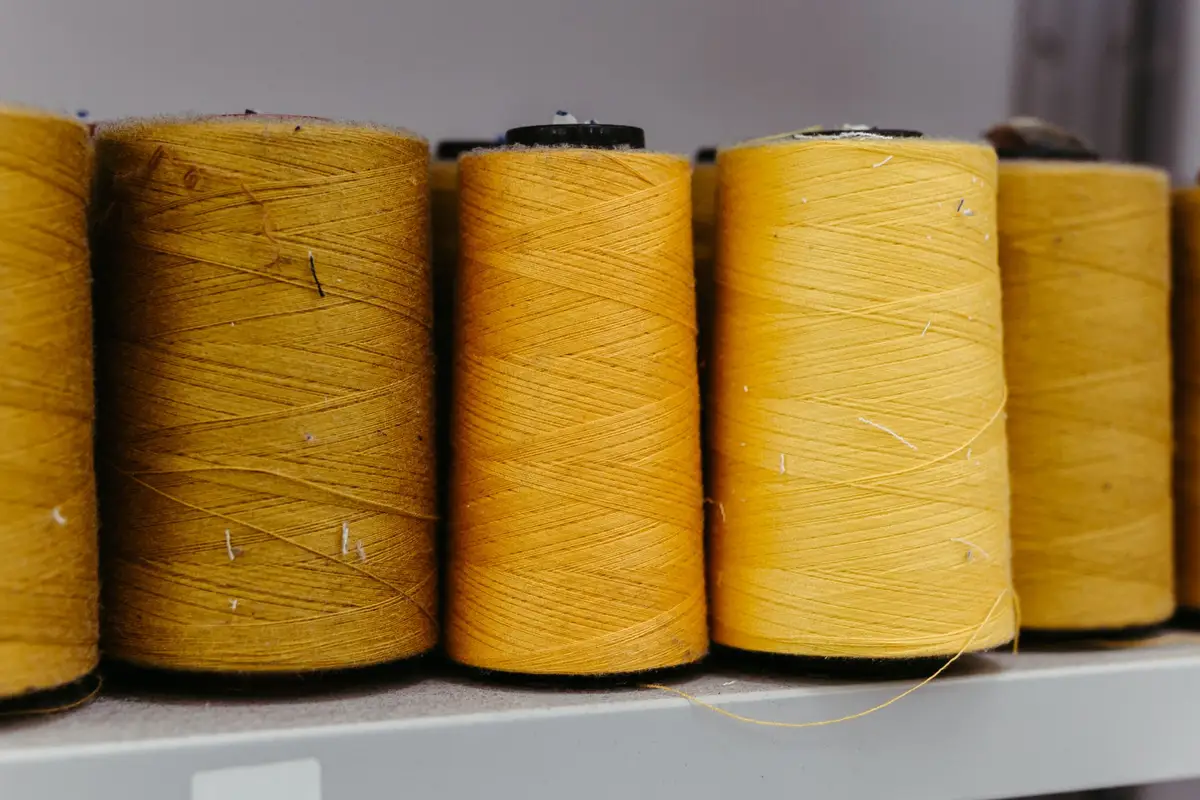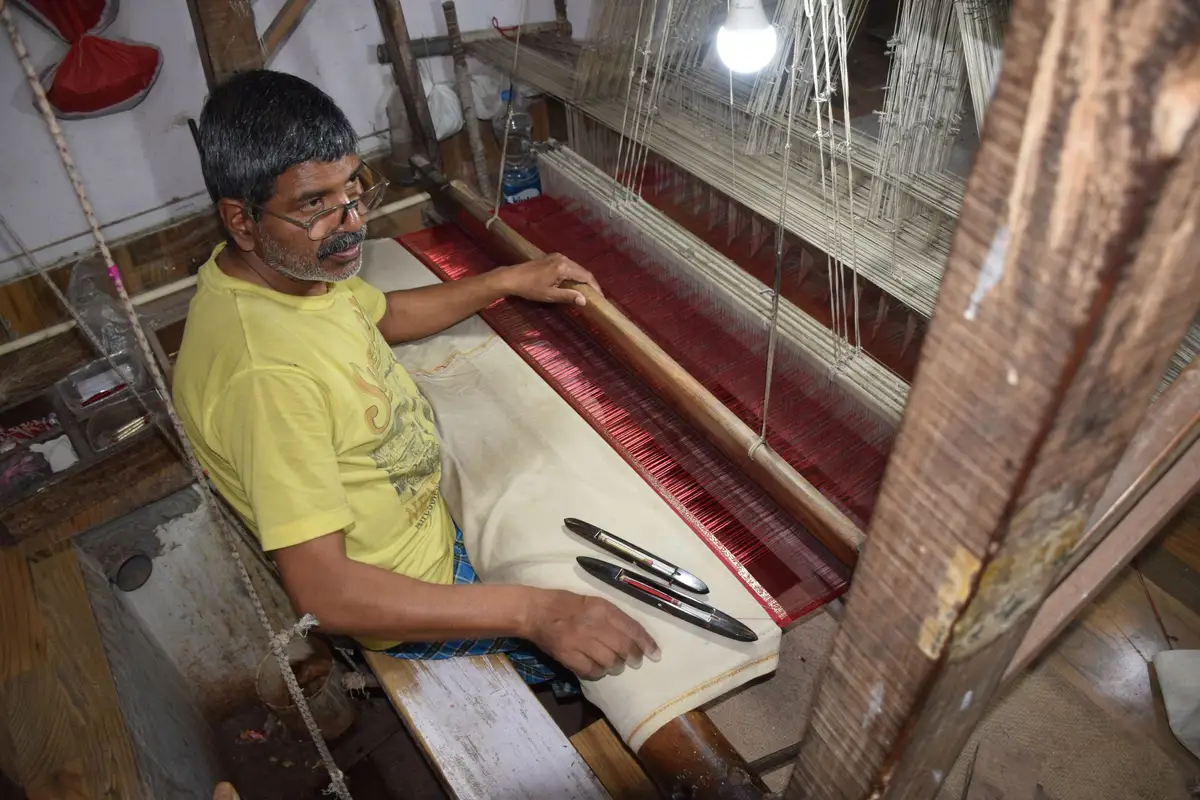
A day trip to the weaving towns near Coimbatore
Somanur, Avinashi and Perur: where Kovai cotton is woven and what to see in a single day.
Free shipping across India on orders above ₹2,999 · Cash on delivery available
14 Cross Cut Road, Gandhipuram, Coimbatore 641012
Mon–Sat · 10 am – 8.30 pm · Sun 11 am – 6 pm
The two weeks of work that happen before the weaver throws the first shuttle, explained step by step.
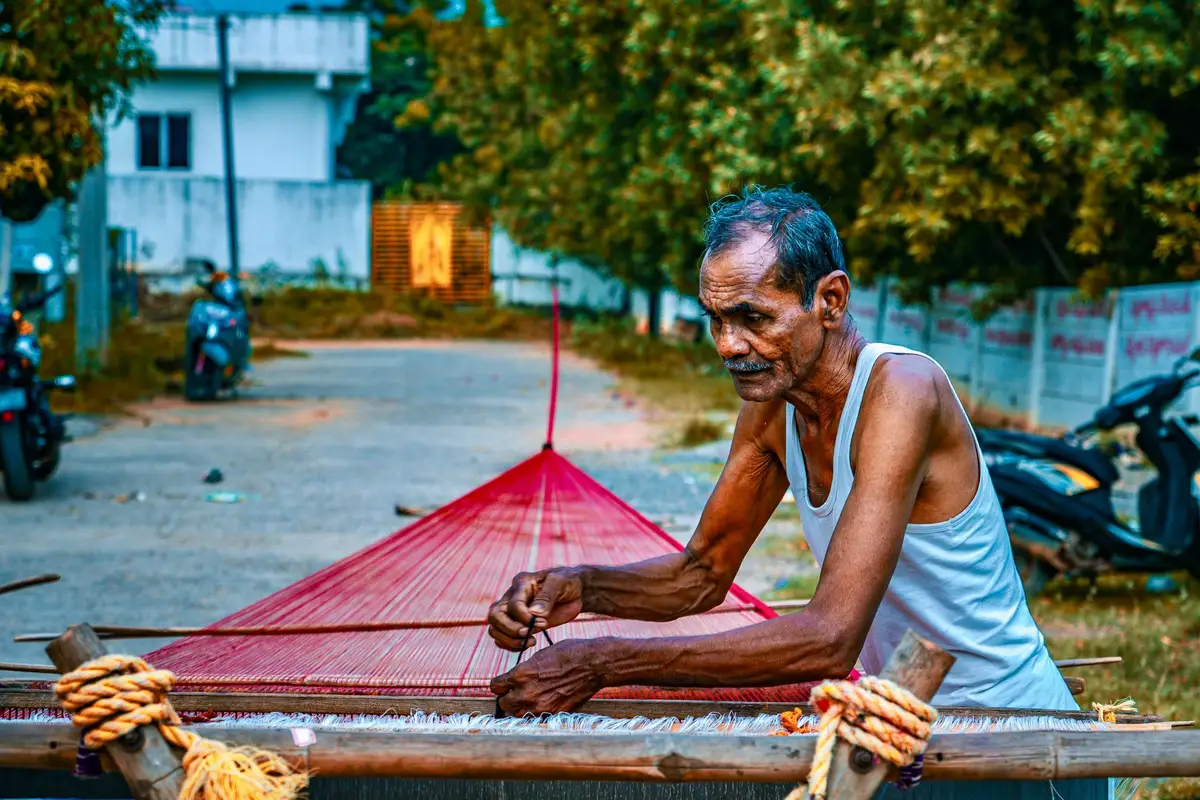
When people picture a saree being made, they picture the loom. But at the weaving families we work with near Kanchipuram, nearly two weeks of work happens before the first line of cloth is woven.
It starts with the raw silk, which arrives as skeins of twisted mulberry yarn. The yarn is boiled with soap and soda to remove the sericin gum, which leaves it soft and lustrous. It is then dyed in large copper vessels, rinsed and dried in the shade. A border colour and a body colour are dyed separately, often by different people.
Next comes warping. For a 6.3 m saree, the warp is stretched along a lane outside the house, often 50 m long, so that several sarees can be woven from one warp. Two people walk the yarn up and down the lane between pegs, counting threads; a typical body has about 2,400 warp threads. Early morning is the time for this, before the street gets busy and the sun gets strong.
The warp is then rolled onto the loom beam, and each thread is passed by hand through the heddles and the reed. This piecing step, called pinnal, takes two people three to four days. A single crossed thread shows as a fault across the whole length, so it cannot be hurried. Only then does the weaving begin. When you see 18 days on the loom on our tag, remember that the saree had already been in the family’s hands for two weeks before that.
Keep reading
Somanur, Avinashi and Perur: where Kovai cotton is woven and what to see in a single day.
Silk, zari, dyeing, weaving days and our margin: an honest breakdown of one bestseller.
How the free 20-minute call works, what to keep ready and how to see true colour on a phone screen.