Your first time grinding your own grain with us
What to bring, how long it takes and what it costs to use our chakki.
Ground to order every morning · Indore delivery the same evening · Flours shipped across India
22 Jawahar Marg, near Sanyogitaganj Mandi, Indore 452007
Mon–Sat · 7 am – 8 pm · Sun 7 am – 12 noon
A common worry, answered: why whole stone-ground flour looks different.
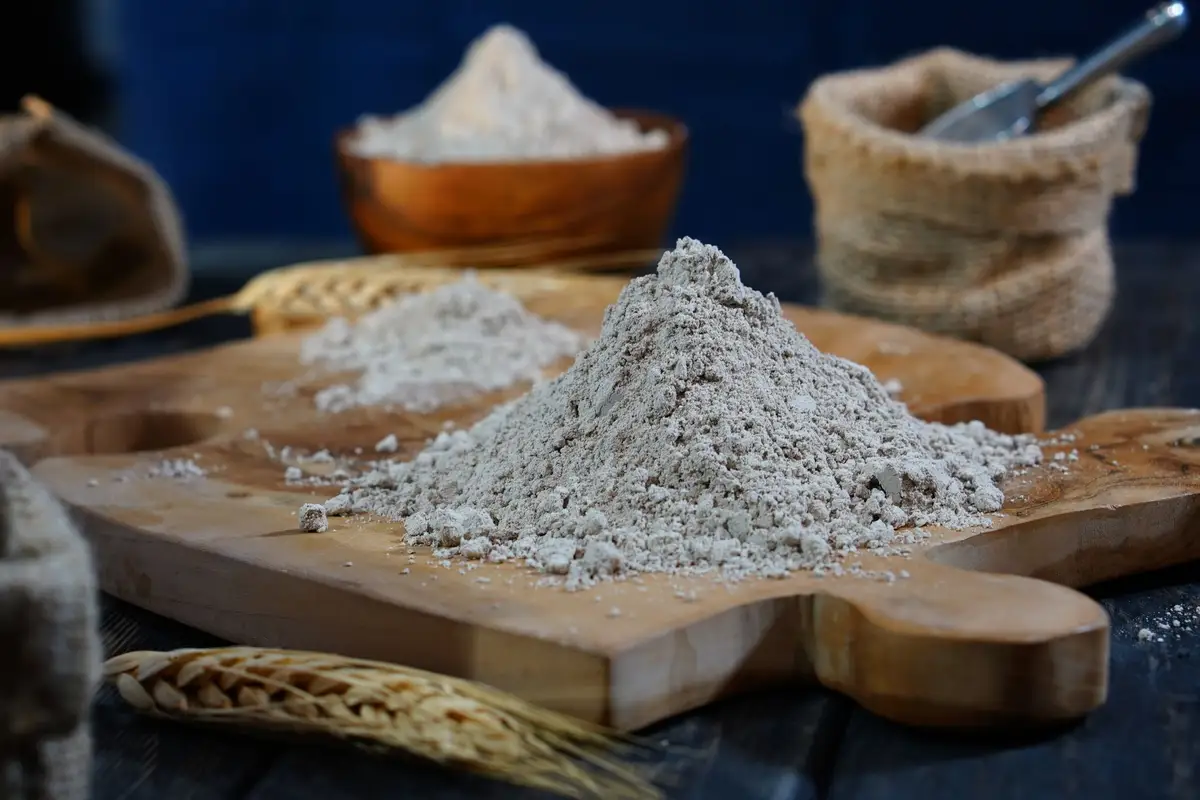
New customers sometimes call us after their first bag and say the atta looks darker than they expected, or that the rotis are a little browner. They want to know if something is wrong with the wheat. Usually the answer is the opposite.
Wheat grain has three parts: the white starchy centre, the germ, and the brown bran on the outside. Many packaged attas are milled on fast steel rollers and part of the bran is sifted out, so the flour looks whiter. Our atta keeps all three parts, so it carries small flecks of bran and a slightly creamy brown colour.
Colour also changes with the harvest. Sharbati from a dry year is more golden; from a wet year, a little paler. Within one season, it stays steady.
What should worry you is not colour but smell and feel. Good atta smells sweet and clean, like wheat. If it smells musty, bitter or of kerosene, return it. If it feels gritty between your teeth, the wheat was not cleaned well. In more than forty years we have learned to check every sack by hand before it is ground. If a bag ever seems wrong, send us a photo on WhatsApp and we will replace it.
Keep reading
What to bring, how long it takes and what it costs to use our chakki.
Farm price, cleaning, milling and the bag: an honest breakdown.
Jowar, bajra and ragi behave differently from wheat. A few things that help.