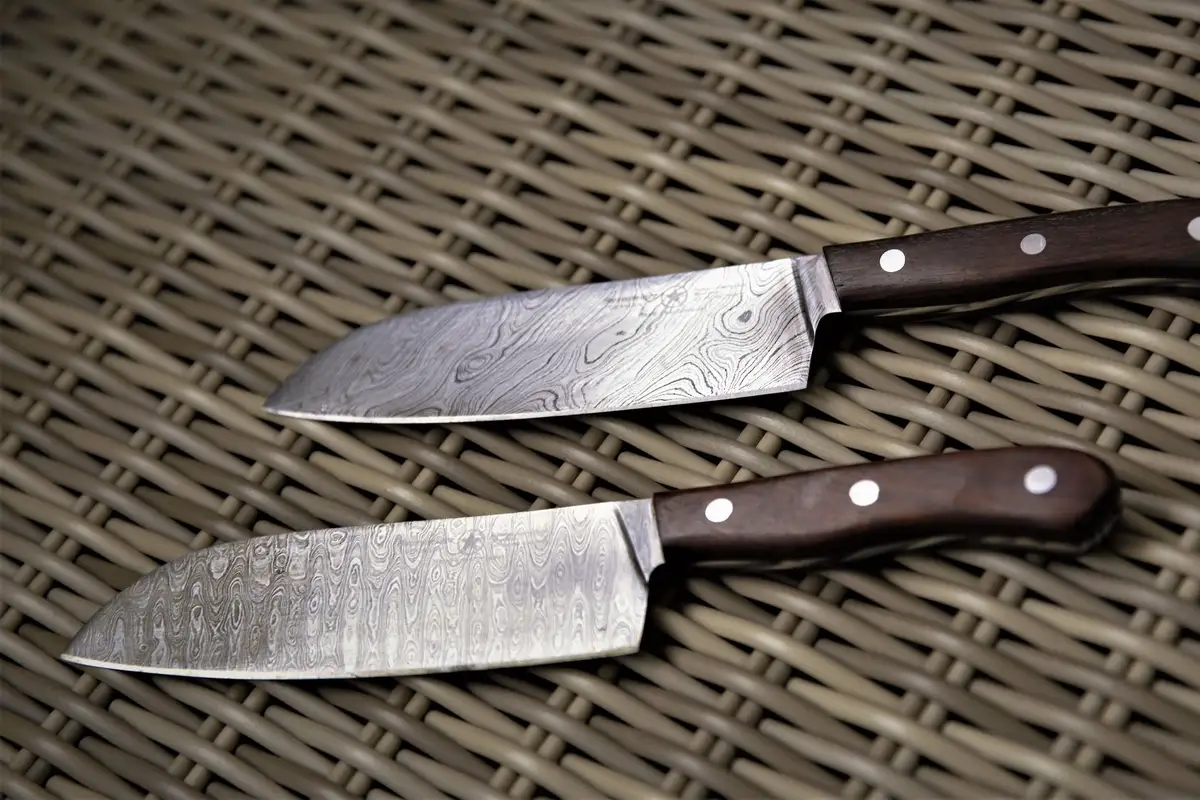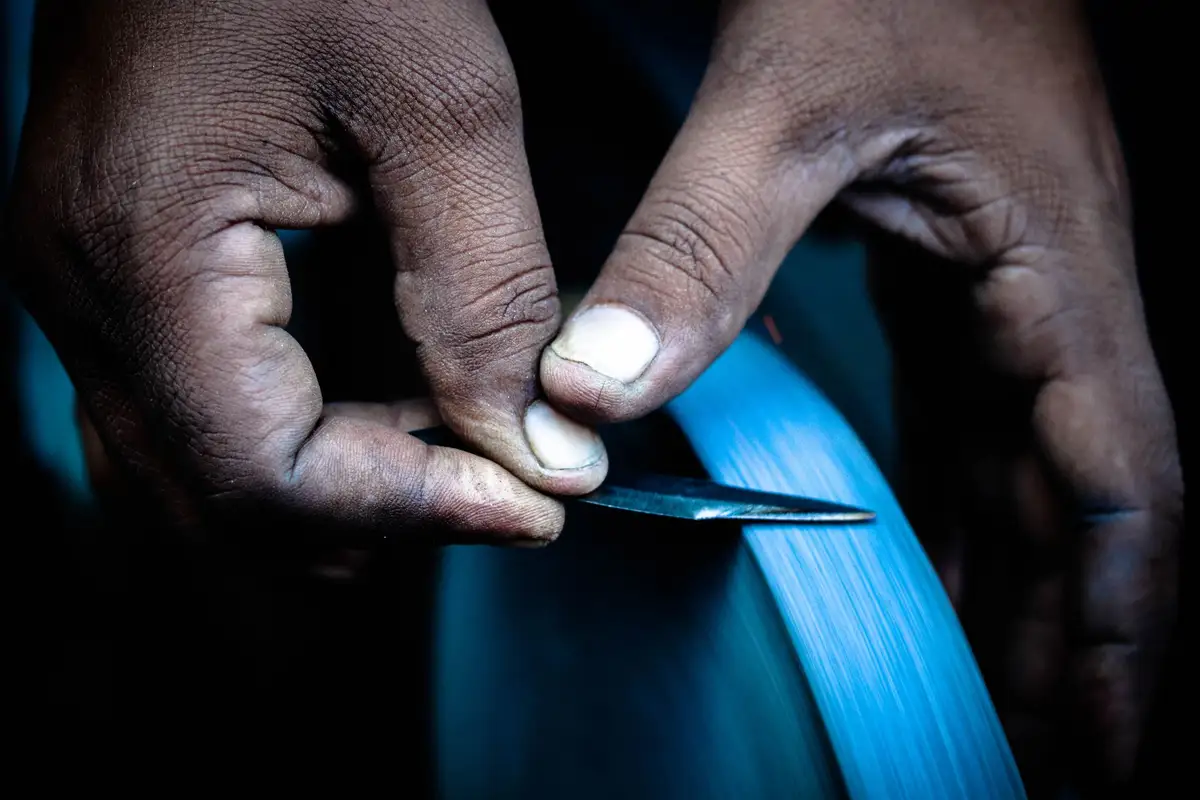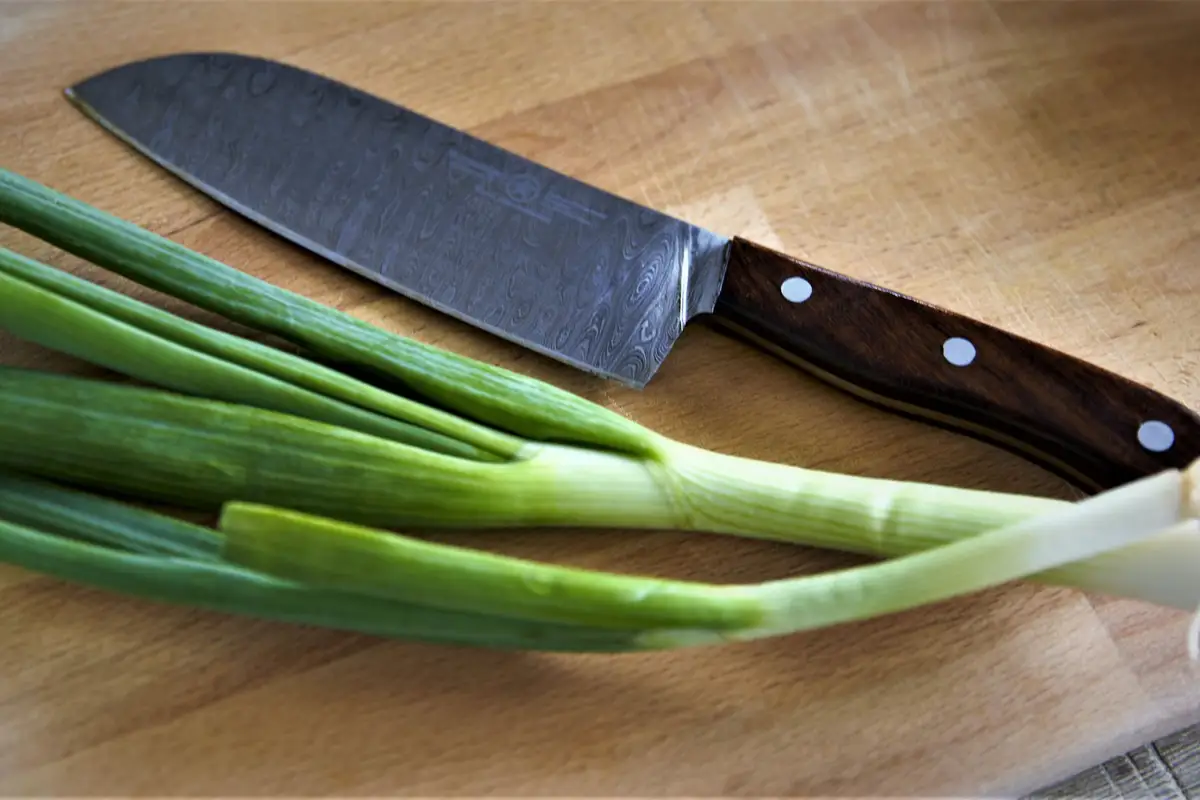
Caring for a carbon steel knife
Wipe, dry, oil: the three habits that keep carbon steel sharp and free of rust for decades.
Every knife forged and sharpened by hand in Ranchi · Free re-sharpening for the first year
Plot 14, Tupudana Industrial Area, Hatia, Ranchi 834003
Tue–Sun · 10 am – 6 pm · Forge open Sat 8–11 am
Why we use Jharkhand’s own timber, and how a handle is shaped and fitted.
Sal is the tree of Jharkhand. It covers the hills around Ranchi, and its wood is heavy, close-grained and resistant to water: the old railway sleepers across India were sal. It makes a handle that is grippy when wet and does not swell with washing.
We buy sal from timber yards in Ranchi and Khunti, usually offcuts from beams and door frames, and never from trees cut for us. The wood is stacked in the forge’s back room for a year to dry. Rosewood comes the same way, in smaller pieces, and goes on our layered knives because of its deep colour and fine grain.
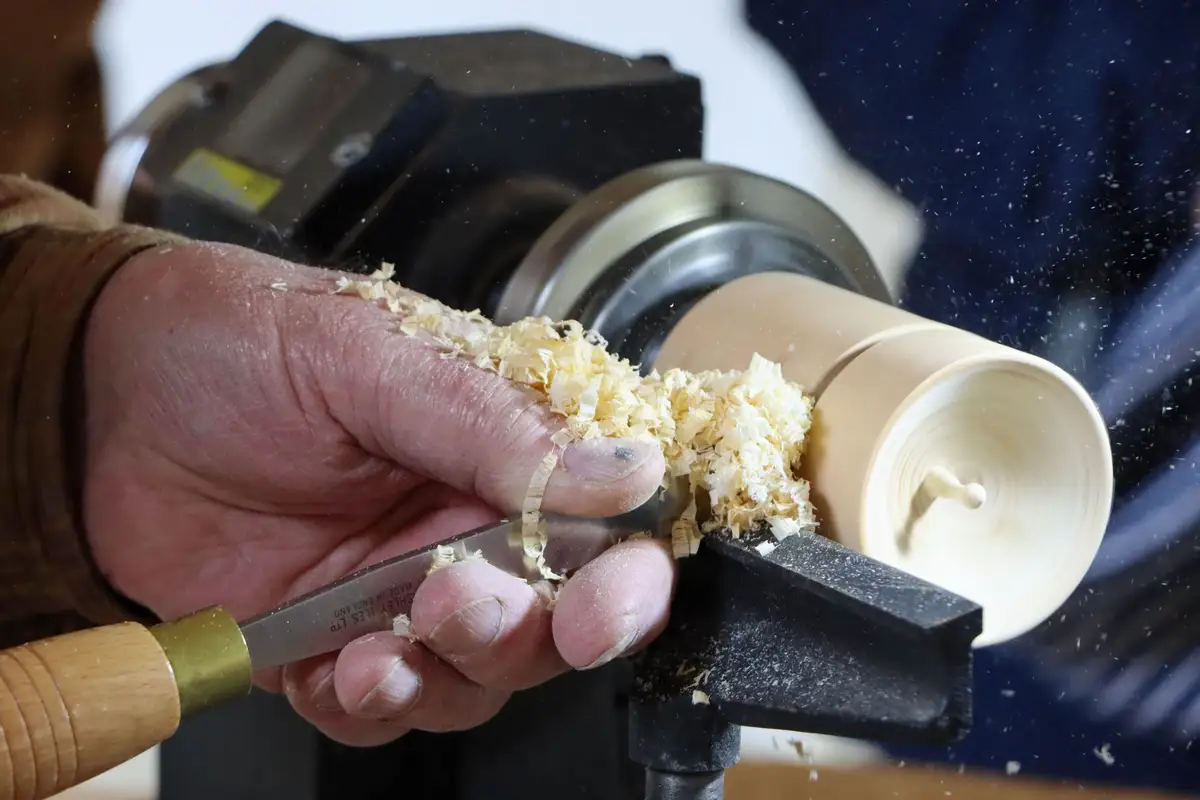
Shaping a handle takes about an hour. Two blocks are cut and drilled, glued around the tang with epoxy, and pinned with brass. Then it is shaped on the belt grinder and by hand with rasps, checked in the hand, sanded smooth and soaked in coconut oil for a day.
A good handle should fill your palm without forcing your fingers apart. If you have very large or small hands, tell us before ordering and we will adjust the thickness free of charge.
Rub the handle with a little coconut oil every few months. If it ever cracks, send it back and we will fit a new one.
Keep reading
Wipe, dry, oil: the three habits that keep carbon steel sharp and free of rust for decades.
Length, shape and steel: what really matters, and what can wait until the second knife.
Soak, angle, raise a burr, polish: the routine we show every visitor to the forge.