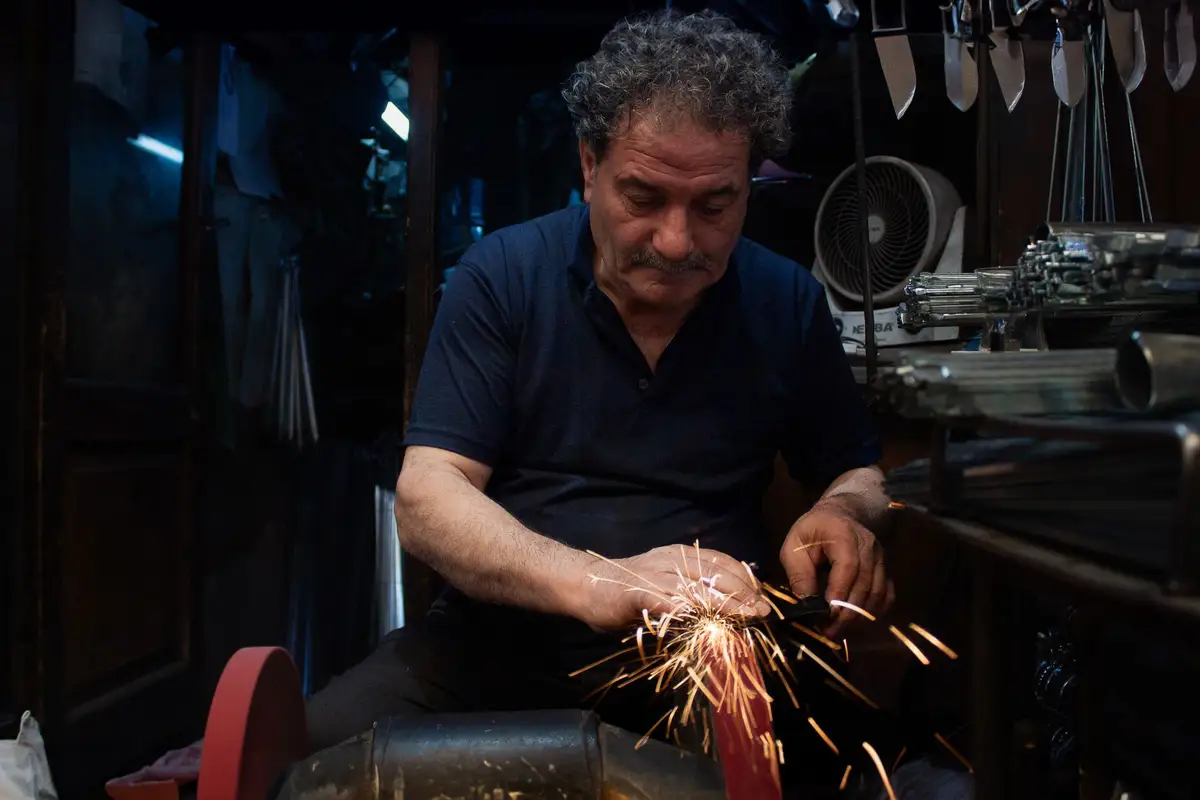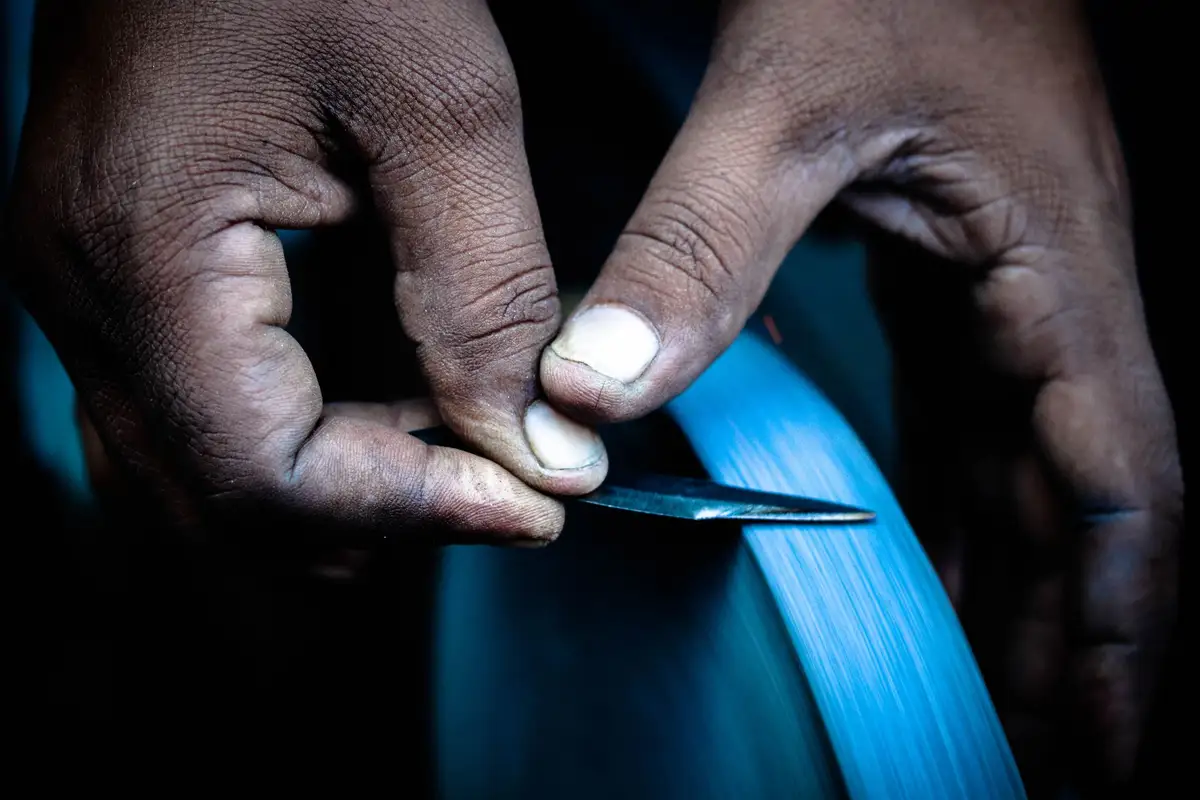
Sharpening on a whetstone, step by step
Soak, angle, raise a burr, polish: the routine we show every visitor to the forge.
Every knife forged and sharpened by hand in Ranchi · Free re-sharpening for the first year
Plot 14, Tupudana Industrial Area, Hatia, Ranchi 834003
Tue–Sun · 10 am – 6 pm · Forge open Sat 8–11 am
Length, shape and steel: what really matters, and what can wait until the second knife.
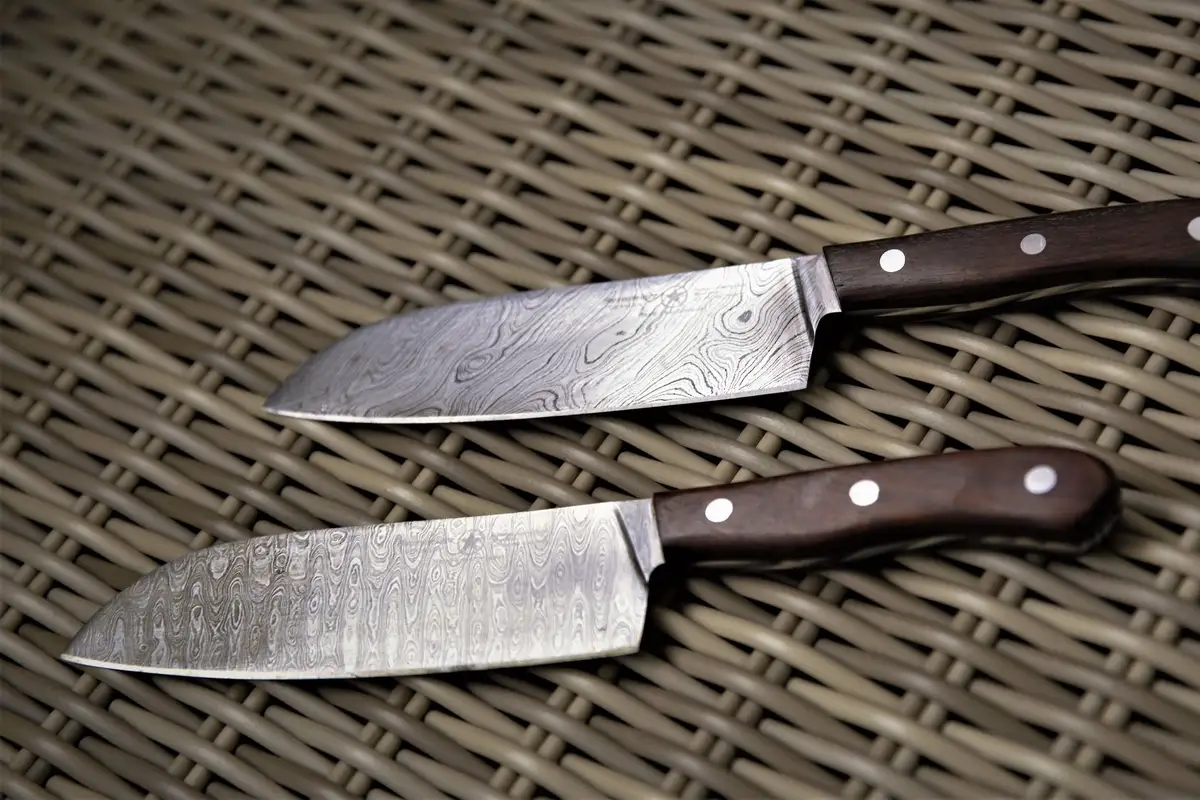
Most kitchens only need two knives: one large, one small. If you are buying one now, buy the large one.
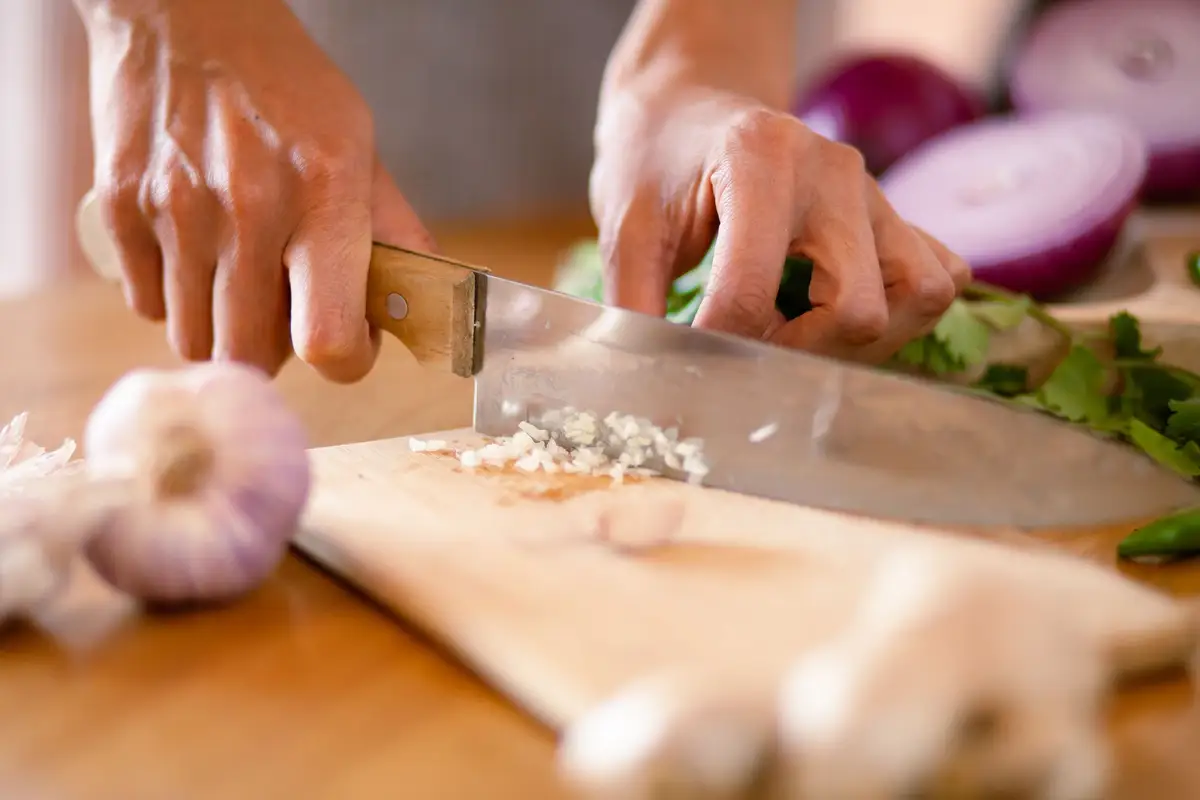
For most Indian home cooks we suggest a 210 mm chef’s knife or our 150 mm sabzi knife. The chef’s knife suits people who chop on a board with a rocking or push cut: onions, cabbage, boneless meat. The sabzi knife suits people who cut quickly and lightly, often holding vegetables in the hand. If you have a small board or small hands, a 170 mm santoku is a good middle.
Steel matters less than people think. Carbon steel is sharper and easier to sharpen, but must be kept dry. Our layered steel looks beautiful and has the same carbon core at the edge. It costs more because of the forging time, not because it cuts better.
Hold the knife if you can. The handle should feel secure with a wet hand, and the balance point should sit near where your fingers pinch the blade. A knife that is too heavy will tire your wrist on a big batch of onions.
The second knife, a petty or paring knife, can come later. Buy a stone or a strop before you buy a third.
Keep reading
Soak, angle, raise a burr, polish: the routine we show every visitor to the forge.
Steel, coal, hours and wood: an honest costing of our 210 mm gyuto.
Big batches of vegetables and fish for the festival weeks: how to get your knives ready.