Quick answer
The best offer depends on your goal. Use a first-order coupon to win new buyers, buy-X-get-Y or bundles to move more units, a free gift or spend-more-save-more to raise order value, free delivery above a threshold to cut abandoned carts, and quantity prices for bulk buyers. Check the margin on every offer before it goes live.
Offers that work start with a goal, not a percentage. If you want new customers, a first-order coupon works. If you want to sell more units, use buy one get one or bundles. To raise the average order, a free gift or “spend more, save more” beats a flat discount. To reduce abandoned carts, free delivery above a threshold is often the most persuasive offer of all. Whatever you choose, work out the margin first, because a discount that looks small can wipe out the profit on an order.
Why do so many store discounts lose money?
Many small sellers discount by habit: a festival comes, they put 20% off everything, and orders go up. What often goes unnoticed is that their margin after shipping, packing and payment fees was only 25% to begin with, so most of the profit went to the discount. More orders at almost no profit is just more work.
A quick check before every offer:
- What is my profit on this product now, after all costs?
- How much does the offer cost me per order?
- How many extra orders, or how much bigger an order, do I need for it to be worth it?
The free discount calculator and profit margin calculator make this quick. Our post on profit per order walks through the full sum.
A worked example
Say you sell a cotton kurta at ₹1,000 and, after the product, packing, shipping and payment fees, you keep ₹250. A 20% coupon takes ₹200 off, leaving you ₹50 per order. To earn the same ₹250 profit you made from one full-price order, you now need five discounted orders. Compare that with a free gift that costs you ₹60, offered on orders above ₹1,500: a customer adding a second item at full margin leaves you far better off, even after the gift. The numbers are illustrative, but the pattern holds for most small stores.
Which offer should you use for which goal?
| Your goal | Offer that fits | Example |
|---|---|---|
| Win first-time buyers | First-order coupon | 10% off your first order, up to ₹200 |
| Move more units | Buy X get Y | Buy 2 kurtis, get a dupatta free |
| Raise the order value | Spend more, save more | ₹100 off above ₹1,500; ₹250 off above ₹3,000 |
| Raise the order value, simply | Free gift above an amount | Free scented candle on orders over ₹999 |
| Cut abandoned carts | Free delivery above a threshold or a free-delivery coupon | Free delivery above ₹799 |
| Sell slow items with bestsellers | Bundle | Saree, blouse piece and fall at one price |
| Bulk or trade buyers | Quantity prices | ₹45 each, ₹40 each for 10+, ₹36 each for 50+ |
| Clear old stock | Coupon limited to one collection | 30% off the summer collection |
How do buy one get one offers work best?
Buy X get Y (BOGO when X and Y are one each) is powerful because shoppers feel they get something free, and you move more stock. It works best when:
- The free item costs you little but has good perceived value, such as a matching accessory or a smaller size.
- The products are things people use up or buy in sets: soaps, socks, snacks, diyas.
- You limit it to selected products so your best margins are not affected.
“Buy 2 get 1 free” is a 33% discount on three items, which is often more generous than it sounds. Do the sum before you launch it.
Are free gifts better than discounts?
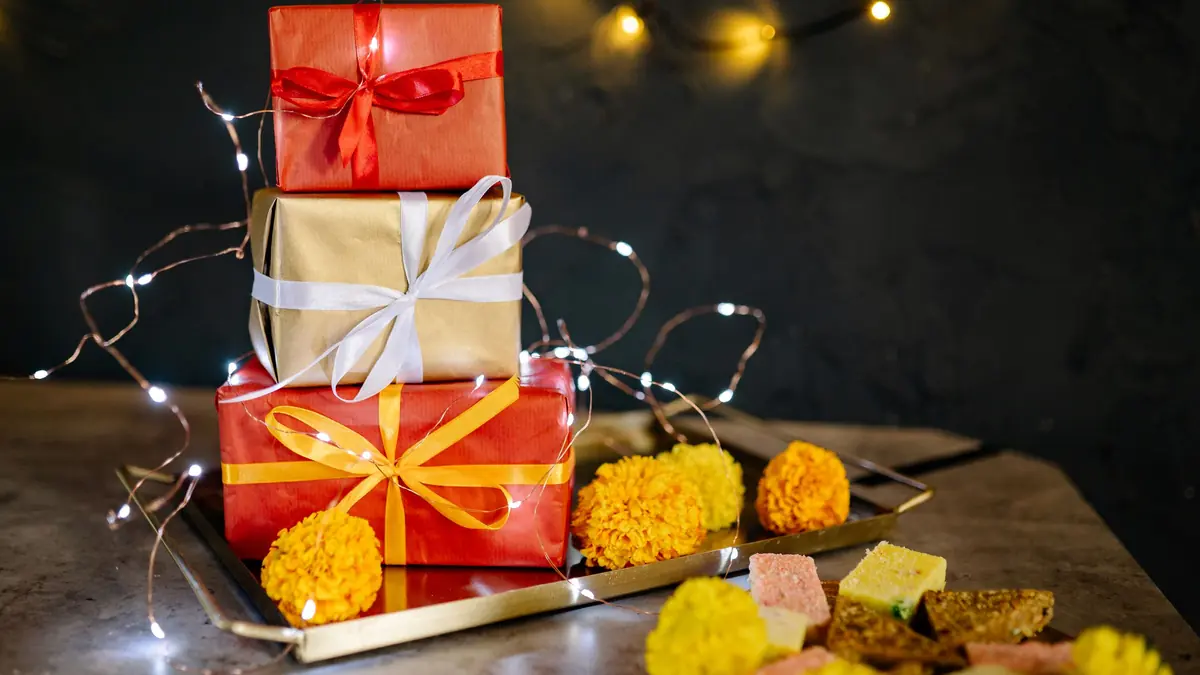
Often, yes. A free gift has a fixed cost to you (what the gift costs), while a percentage discount grows with the order. Gifts also feel personal and get photographed and shared. Good free gifts are small, relevant and slightly special: a sample of a new product, a handmade bookmark with books, a cloth pouch with jewellery. Set them to trigger above a cart value that is higher than your current average order, so the gift pulls orders upward.
How do bundles and quantity prices help?
Bundles solve two problems at once: they raise the order value and they move items that do not sell well alone. Make bundles that make sense together, such as a skincare routine, a puja kit or a lunchbox set, and price them a little below the separate items. Bundles also save on shipping per item, which is often where your real saving comes from.
Quantity prices (price breaks) suit customers buying for an office, a function or a shop: return gifts for a wedding, uniforms for a school, trays of sweets for Diwali. Show the breaks clearly on the product page.
Should coupons combine with other offers?
Decide this upfront. If a customer can use a 15% coupon on top of a buy-2-get-1 offer and free delivery, your “small” offers can stack into a big loss. A common rule: automatic offers (like free gifts or quantity prices) apply always, and coupons do not combine with them, except perhaps free-delivery coupons.
Also set limits on coupons: an expiry date, a minimum order, a maximum discount for percentage coupons, and a maximum number of uses for codes you share publicly.
What offer types does UpMinutes support?
All of the above are built into UpMinutes, with no apps to add:
- Coupons: percentage with a cap, fixed amount, free delivery, limited to a collection, with start and expiry dates, maximum uses and a minimum order.
- Automatic offers: buy X get Y, spend more save more, free gift, bundles and quantity prices.
- A setting for whether coupons combine with automatic offers.
- A countdown on offers that end within a week, if you switch it on.
- A sign-up popup with an optional coupon, for collecting newsletter subscribers.
- An abandoned-cart reminder email that can include a coupon.
Gift card amounts do not count towards coupon and free-delivery minimums, so a customer cannot use a gift card purchase to unlock an offer. See features for the full list.
How do you tell customers about an offer?
- Put it on your homepage banner with the end date.
- Show it on product pages where it applies.
- Email subscribers and post on WhatsApp status and your Channel; see WhatsApp marketing without spamming.
- Keep the wording plain: “Buy 2, get 1 free on all cotton socks. Till Sunday.”
How often should you run offers?
If there is always a sale, there is never a sale: customers learn to wait. A sensible rhythm for many stores is one main offer a month, plus festival campaigns and an end-of-season clearance. Keep a welcome coupon running for new subscribers, and save your biggest offers for your biggest moments. Our guides to festive sale planning and end-of-season clearance help you plan these.
An offer checklist
- Goal written down: new buyers, more units, bigger orders or clearing stock
- Margin checked after the offer, including shipping and fees
- Limits set: expiry, minimum order, cap, maximum uses
- Combination rule decided
- Offer tested with a real cart before announcing
- Results noted afterwards: orders, average order value and profit
Frequently asked questions
What discount percentage should a small online store offer?
There is no standard figure. Start from your margin after all costs and choose an offer that still leaves a profit; often a free gift or free delivery works better than a large percentage.
Is buy one get one free a good idea?
It works for low-cost, use-up or matching items and for clearing stock. Limit it to chosen products, because it is a 50% discount on two items.
Should I give a coupon in abandoned-cart emails?
Try the reminder without a coupon first for some products. If you do add one, keep it small and time-limited so customers do not learn to abandon carts on purpose.
How do I stop customers stacking offers?
Decide whether coupons combine with automatic offers, and set caps, minimum orders and use limits on every code.