Zardozi, gota patti and dabka: a guide to Jaipur embroidery
Three kinds of handwork you will hear about in a consultation, and what each adds.
Bookings open for the November–February wedding season · First consultation free
C-42 Sardar Patel Marg, C-Scheme, Jaipur 302001
Tue–Sun · 11 am – 7.30 pm · by appointment
Six months is the right time to start. Here is what happens in each of them.
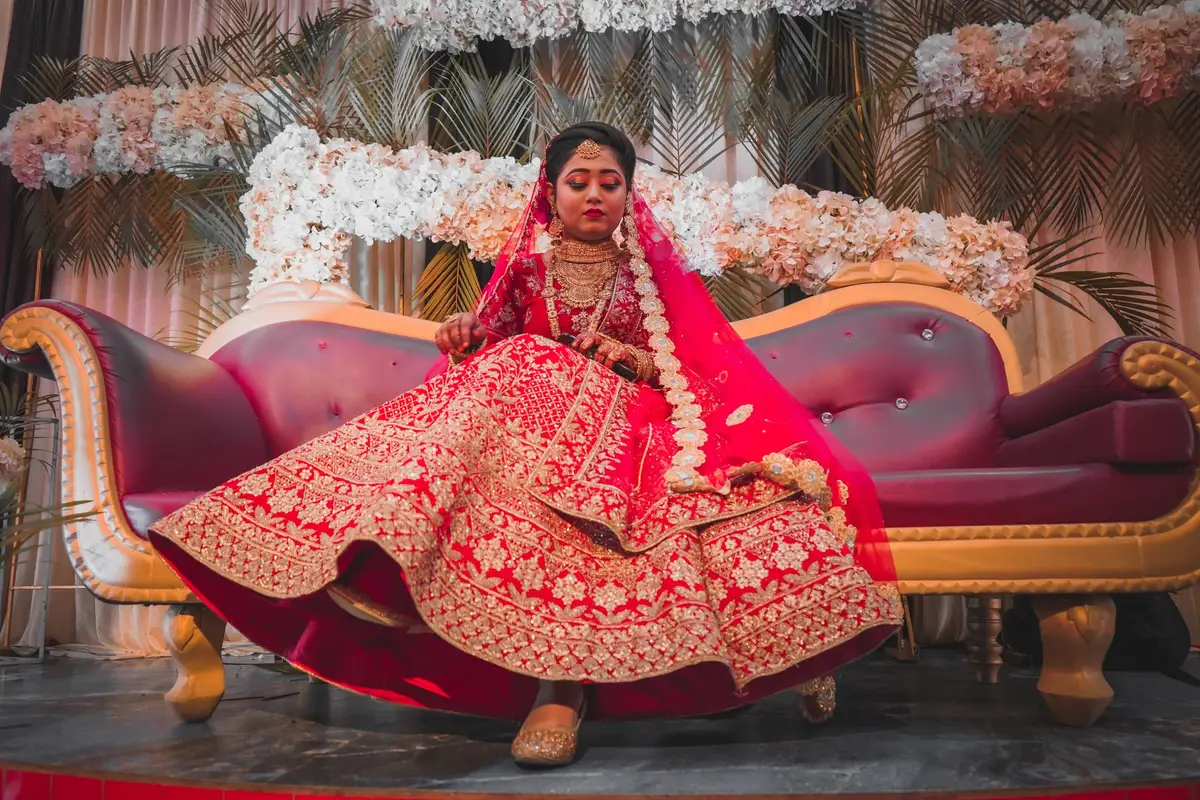
A made-to-order bridal lehenga takes between ten and fourteen weeks to make. Add time for deciding, and six months before the wedding is the right moment to begin.
Six months out, collect references and set a budget. Book a design consultation and bring your pictures, your colour ideas and anyone whose opinion matters. In the consultation, we drape fabrics on you in daylight and sketch the outfit together.
Five months out, the design is final and the fabric is ordered or dyed. Embroidery begins once the pattern is traced onto the fabric, usually within two weeks.
Three months out, you come in for the first fitting of the blouse and skirt base, before the embroidery is attached. This is the fitting where shape and length are decided.
Six weeks out, the second fitting, with most embroidery complete. Bring the shoes you will wear, so we can set the hem. Two weeks out, the final fitting and press. Then we steam and pack it for the day.
Keep reading
Three kinds of handwork you will hear about in a consultation, and what each adds.
Weight, lining and blouse fit decide whether you enjoy your wedding or count the hours.
Air it, fold it in muslin and refold it every few months: how to keep zardozi bright for years.