Choosing a lehenga you can move in
Weight, lining and blouse fit decide whether you enjoy your wedding or count the hours.
Bookings open for the November–February wedding season · First consultation free
C-42 Sardar Patel Marg, C-Scheme, Jaipur 302001
Tue–Sun · 11 am – 7.30 pm · by appointment
Three kinds of handwork you will hear about in a consultation, and what each adds.
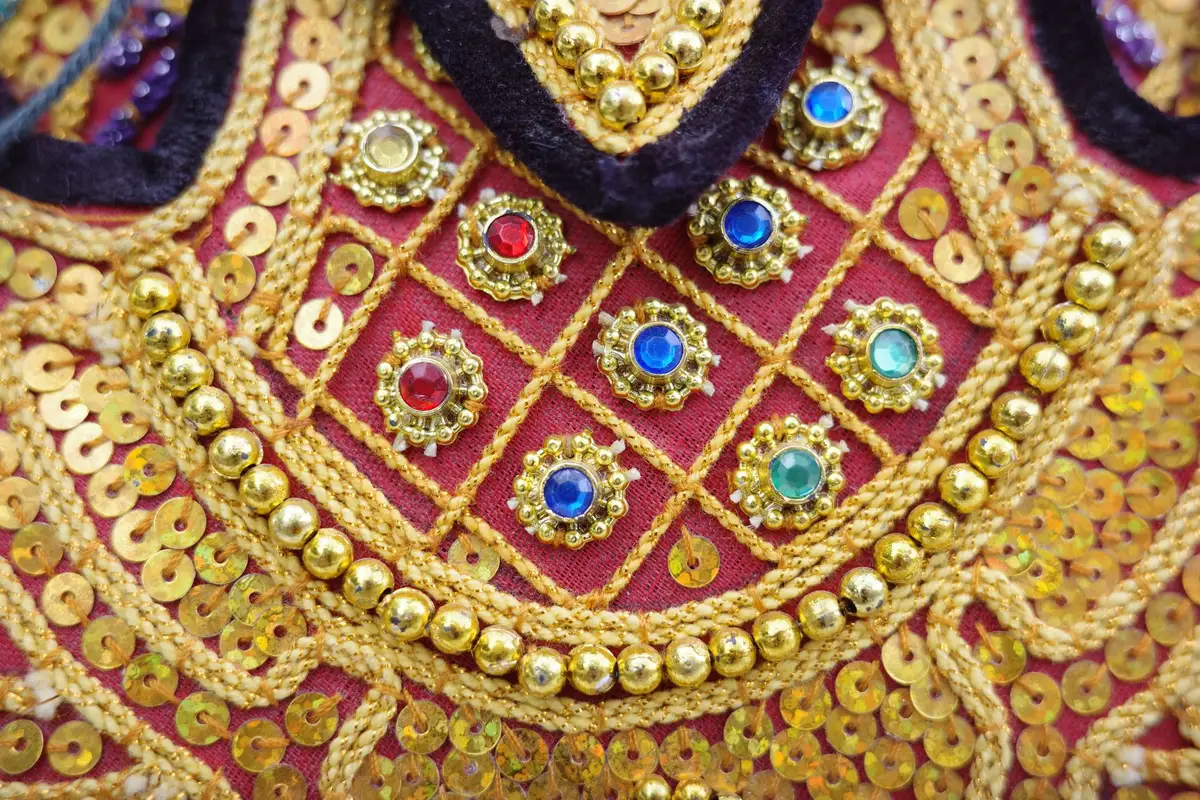
Most bridal wear is defined by its embroidery. Knowing the names helps you ask for exactly what you want.
Zardozi is embroidery with metal thread, sequins and small beads, worked on a wooden frame with a hooked needle. It is dense, raised and heavy, and it catches light beautifully. It takes the longest of all: a full bridal lehenga can take four karigars five weeks.
Dabka is a fine coiled metal wire, cut into tiny lengths and stitched down like beads. It gives a textured, three-dimensional finish and is often combined with zardozi in borders and motifs.
Gota patti is Jaipur’s own. Strips of gold or silver ribbon are folded into shapes such as leaves, flowers and birds, then appliquéd onto the fabric. It is lighter than zardozi and less expensive, which makes it a favourite for sangeet and mehendi outfits.
In a consultation, we show you samples of each on your chosen fabric, so you can see and feel the difference before deciding.
Keep reading
Weight, lining and blouse fit decide whether you enjoy your wedding or count the hours.
Air it, fold it in muslin and refold it every few months: how to keep zardozi bright for years.
How skin tone, the time of your ceremony and the venue’s light should guide the colour you choose.