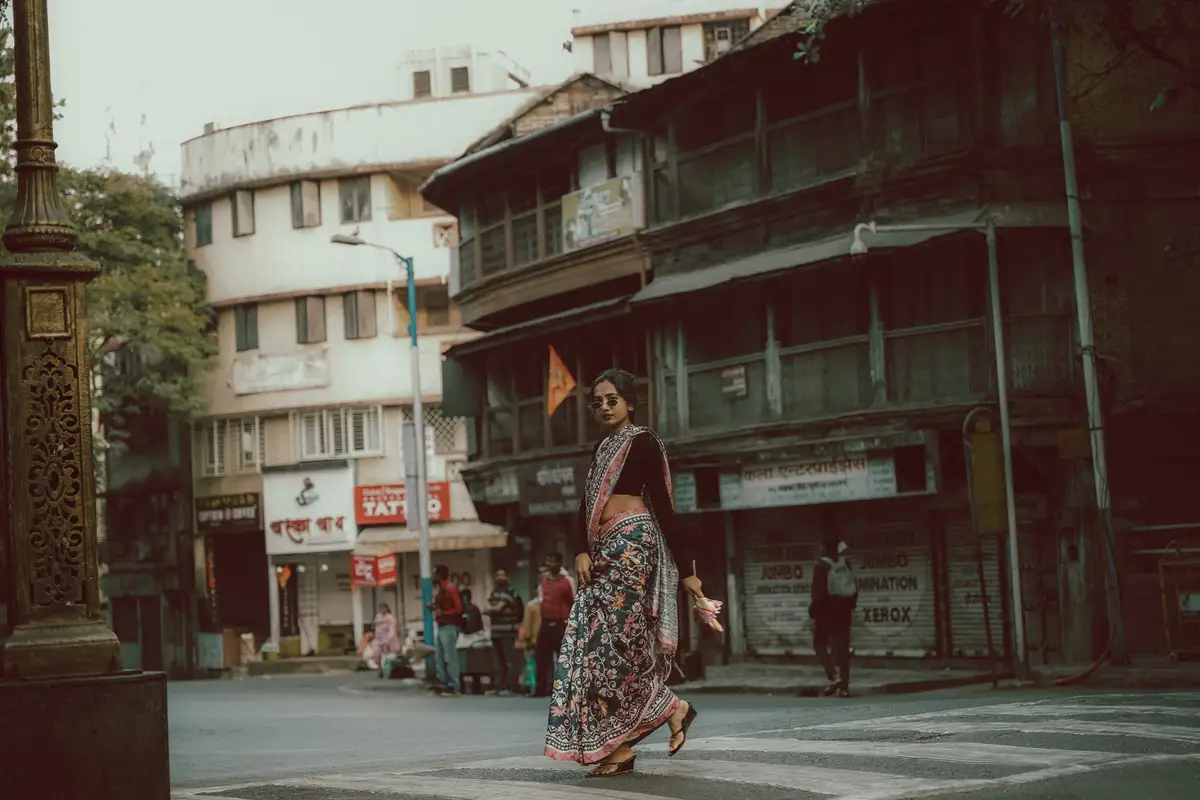
A shoe lover’s walk along Laxmi Road and Kasba Peth
Our street is one of the oldest shopping streets in Pune. A morning route through it, with places to eat and things to see.
Free resizing within 15 days · Delivery across Maharashtra in 2 days
17 Laxmi Road, Kasba Peth, Pune 411011
Mon–Sat · 10.30 am – 8.30 pm · Sun 11 am – 4 pm
Before a Kolhapuri is cut, its buffalo hide spends about six weeks in pits of babul bark. Here is what happens in that time.
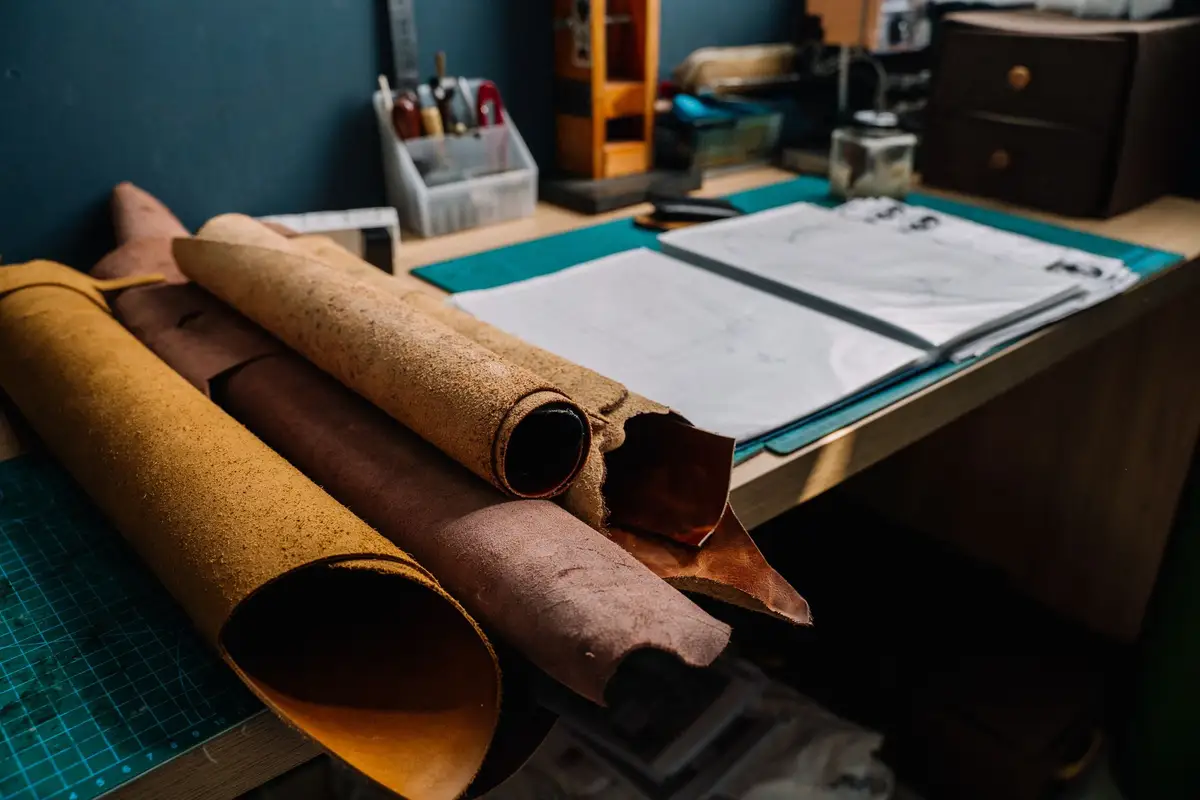
Every classic Kolhapuri we sell starts at a small tannery outside Kolhapur run by the Mane family, who have supplied us since 1994. They tan buffalo hides with the bark of the babul tree, the same way the sandal has been made for generations.
The hides are first soaked in lime water for about ten days to loosen the hair, which is then scraped off by hand. They are washed and placed in pits filled with crushed babul bark and water. Every few days they move to a stronger pit. The tannins in the bark slowly replace the water in the hide and turn it a warm reddish brown. This takes five to six weeks, against a day or two for chrome tanning.
The tanned hides are dried in the shade, oiled and hammered flat on a stone. Then they come to our bench in Pune, where Vilas and Sunita cut soles, straps and the plaited toe ring by hand. A single hide gives about 18 pairs.
Bark tanning is slow, and the leather is stiff at first and colours wet feet for a few weeks. We still prefer it. It breathes in the heat, it moulds to the foot, and the leftover bark goes back to the fields as compost. Nothing in the process needs chrome salts, which is why we name the tannage on every pair.
Keep reading
Our street is one of the oldest shopping streets in Pune. A morning route through it, with places to eat and things to see.
Many customers switch to synthetic shoes in April to stay cool. Here is why that often has the opposite effect.
Leather, bark, thread, three days of hand work and a shop on Laxmi Road. An open breakdown of where the money goes.