Arabica, robusta and chicory: reading a filter coffee blend
What each part of a South Indian filter blend does, and why the percentages on the bag matter.
Roasted every Monday in Coimbatore · Free delivery within the city
9 Race Course Road, Coimbatore 641018
Café daily · 7 am – 9 pm · Roasting Mondays
From the 6 am warm-up to the last bag sealed: what happens on the day your coffee is roasted.
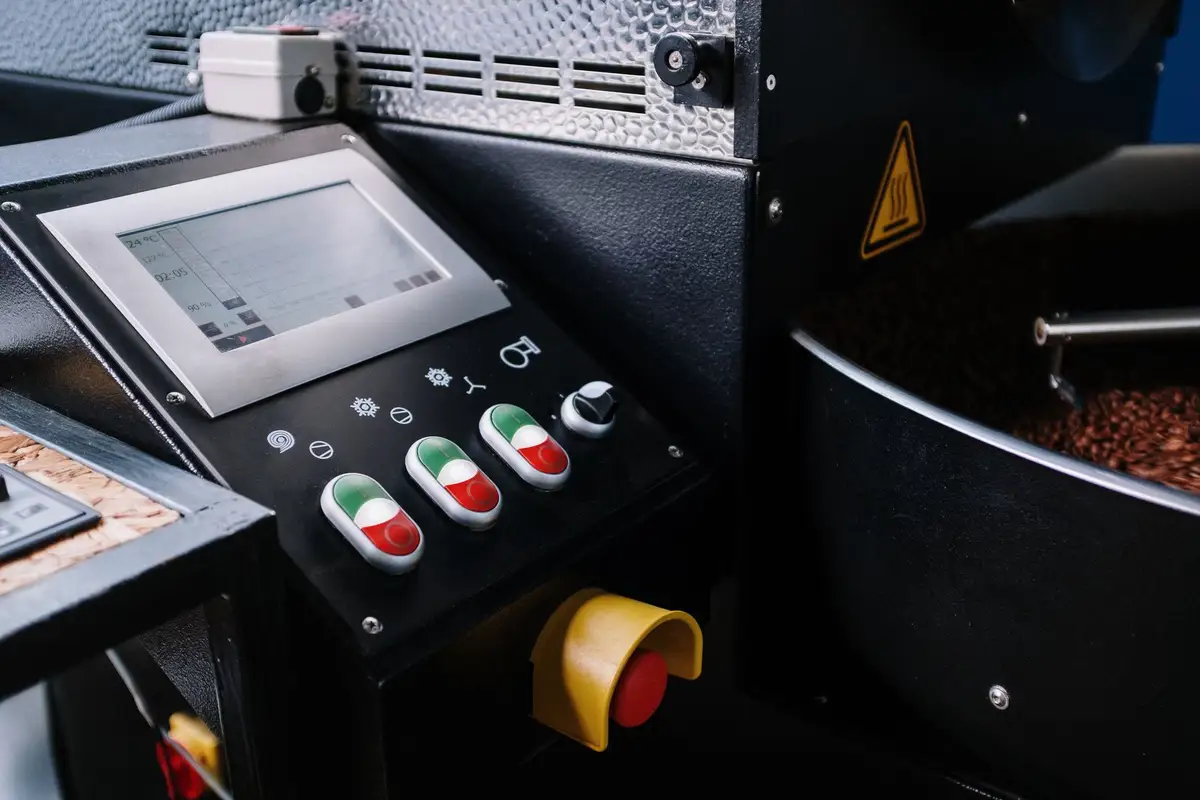
The café opens at 7 am every day, but on Mondays the back room starts earlier. Our roaster, Dinesh, switches on the 12 kg drum roaster at 6, and it takes about forty minutes to heat evenly before the first batch goes in.
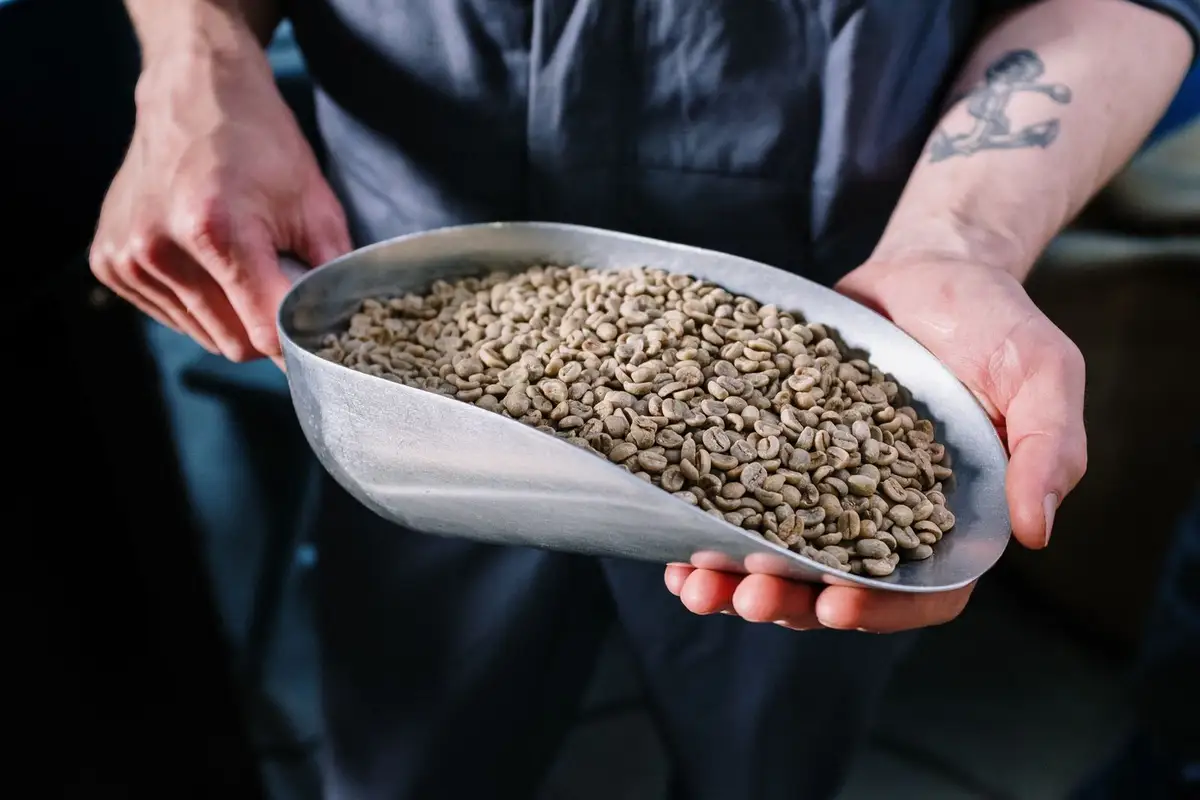
Each batch begins with green coffee weighed out from jute sacks: pale, grassy-smelling beans with almost no coffee aroma yet. They drop into the hot drum at about 200 °C. For the first five minutes, the beans dry out and turn yellow, and the room smells of bread. Around the ninth minute comes first crack, a popping sound like popcorn, when steam bursts out of each bean. Dinesh listens for it and writes down the time. From there, a filter roast for our house blend runs another two minutes; an espresso roast goes a little longer. A whole batch takes eleven to fourteen minutes.
The beans drop into a cooling tray where a paddle stirs them while a fan pulls air through. They must cool within four minutes, or they keep roasting in their own heat. Then Dinesh pulls a sample from each batch for the afternoon cupping, where three of us taste it to check it matches the last roast of the same coffee.
By 3 pm we have roasted about 180 kg across fourteen batches. Subscription bags are filled, dated and sealed by evening, and they leave on Tuesday for Coimbatore homes and the rest of India.
Keep reading
What each part of a South Indian filter blend does, and why the percentages on the bag matter.
Bag, tin, jar or fridge: what air, light, heat and moisture do to roasted coffee, and how to store it well.
What we do on the estates between December and February, and how to see a coffee harvest on a weekend from the city.