Choosing a khadi saree for an Ahmedabad summer
Yarn count, weight and border: what to look at before you buy a saree you will wear in May.
Hand-spun and handwoven · 10% off every Gandhi Jayanti week · Ships across India
41 Ashram Road, Navrangpura, Ahmedabad 380009
Mon–Sat · 10 am – 8 pm · Sun 10 am – 1 pm
How a hank of yarn is spun, counted and paid for before it becomes cloth.
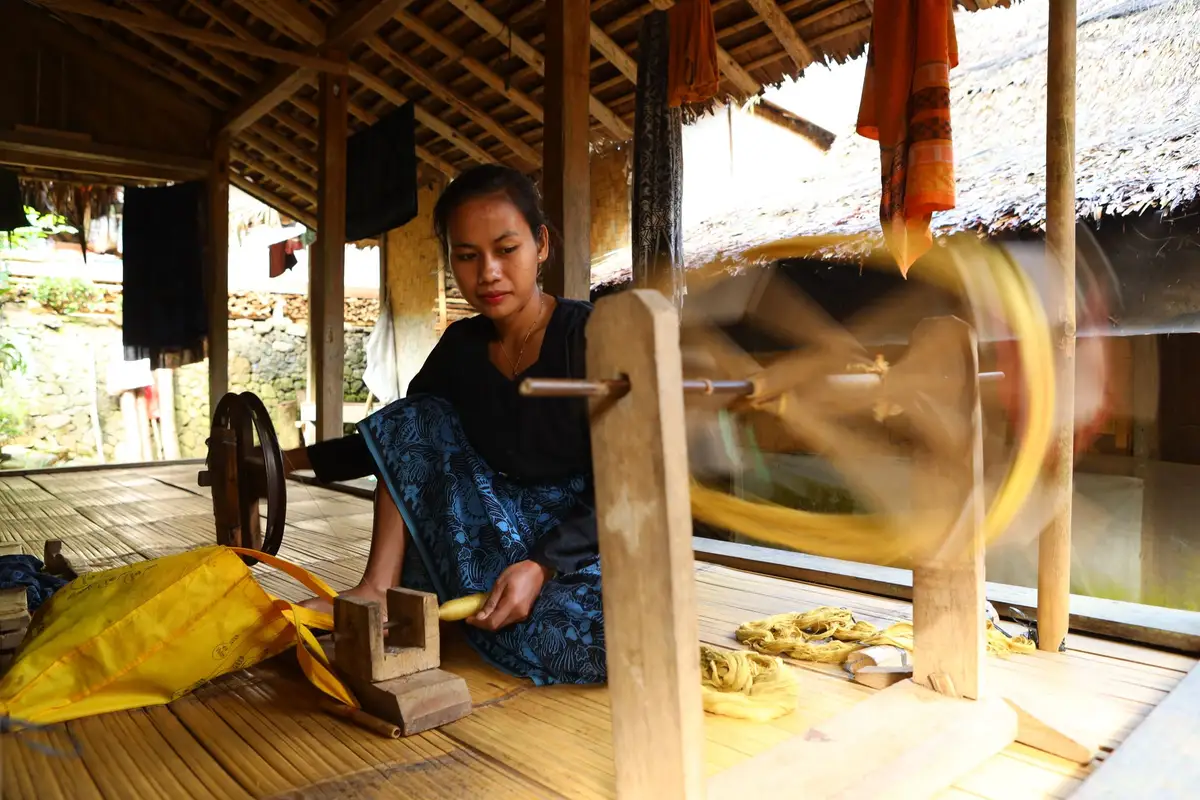
The spinners we buy from in Surendranagar district start early, before the heat. Most are women, and most spin at home between other work, on an eight-spindle Ambar charkha that we help them buy.
Cotton arrives as puni, soft rolls of carded fibre. The spinner draws the fibre out as the spindles turn, twisting it into yarn. A skilled spinner produces about four hanks a day; each hank is a measured length of yarn, wound and tied.
On Mondays our buyer, Dakshaben, visits each village. She checks the count and evenness of each hank, weighs it, and pays in cash or by UPI on the spot. We pay per hank, at a rate fixed for the year in January.
The yarn then goes to weavers in Gujarat, Andhra Pradesh and Bengal, depending on the cloth we need. A saree takes a weaver four to six days. From charkha to shelf, a piece of our khadi has usually travelled through ten pairs of hands. We think that is worth knowing.
Keep reading
Yarn count, weight and border: what to look at before you buy a saree you will wear in May.
The 10% discount runs from 2 to 8 October. Here is how to shop it without the queues.
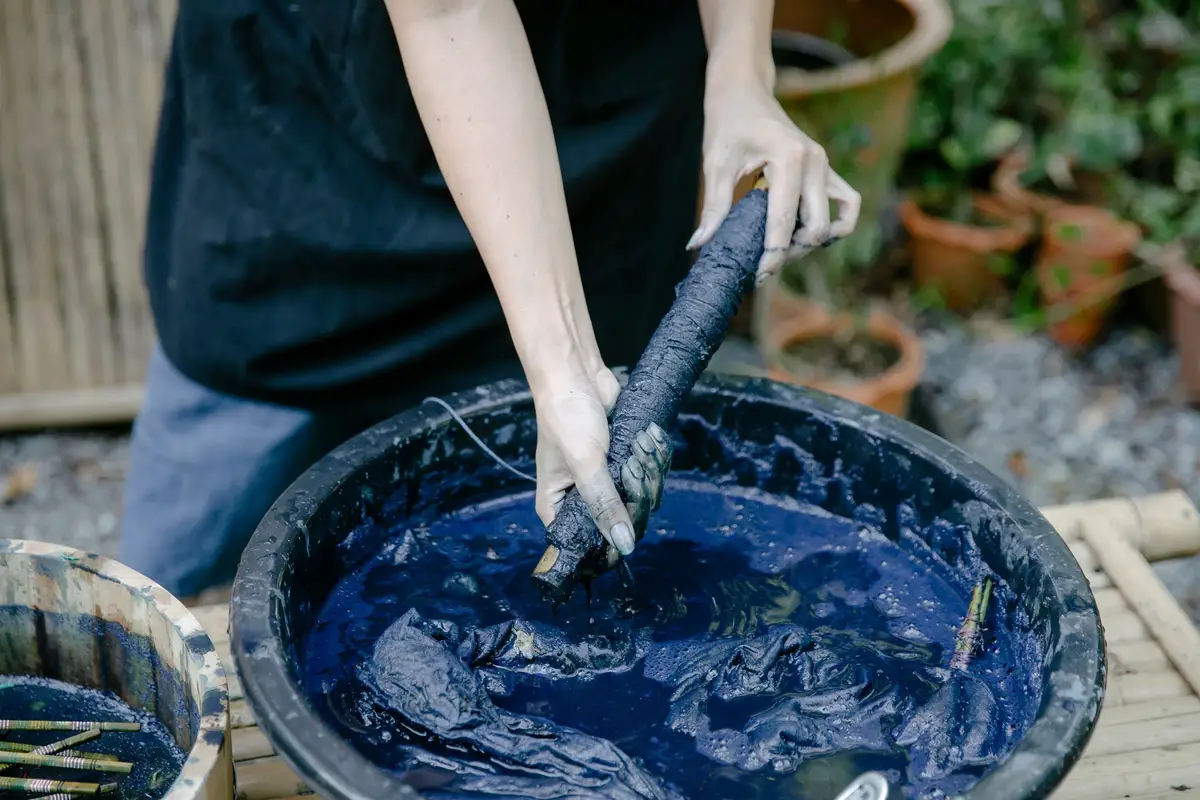
How our indigo khadi gets its colour, one dip at a time, in a village near Bhuj.