What to expect during Gandhi Jayanti week at the bhandar
The 10% discount runs from 2 to 8 October. Here is how to shop it without the queues.
Hand-spun and handwoven · 10% off every Gandhi Jayanti week · Ships across India
41 Ashram Road, Navrangpura, Ahmedabad 380009
Mon–Sat · 10 am – 8 pm · Sun 10 am – 1 pm
Yarn count, weight and border: what to look at before you buy a saree you will wear in May.
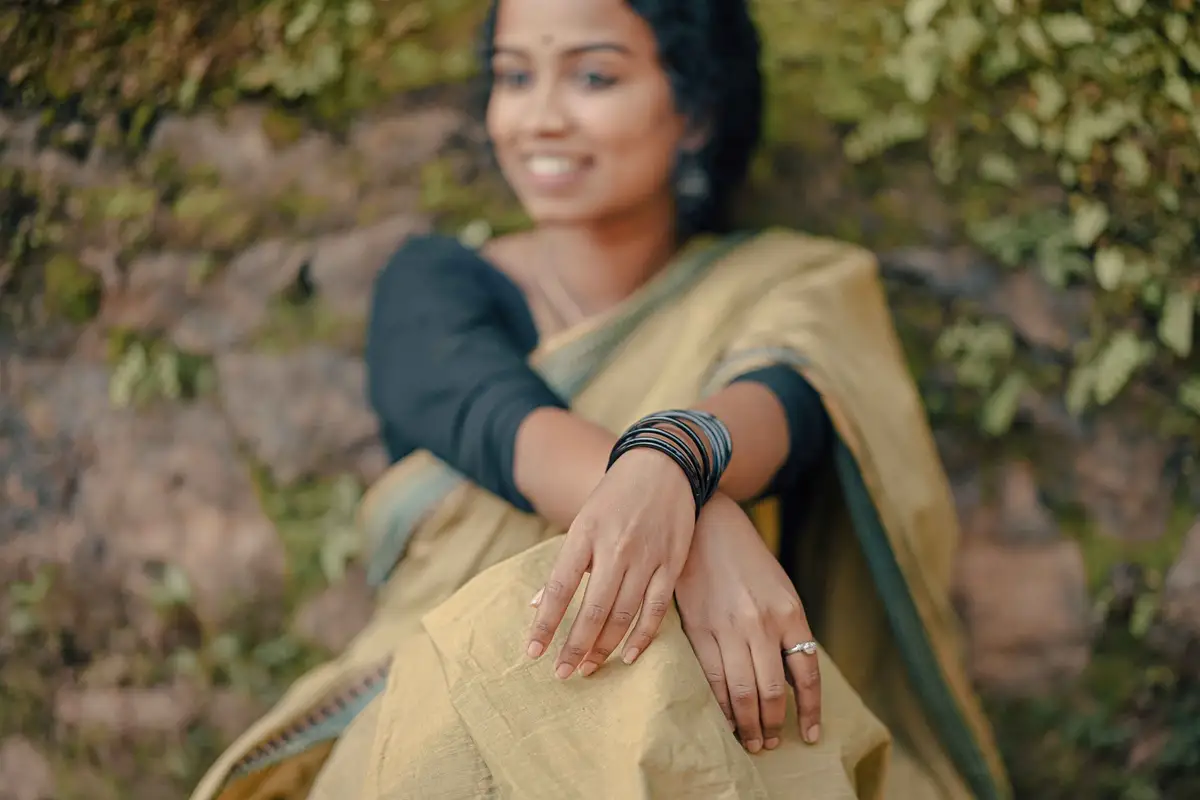
From April to June the afternoon temperature in Ahmedabad sits above 40 °C, and the wrong saree feels like a blanket by noon. Khadi is a good choice for this heat, but not every khadi saree is light.
Start with the count. The count tells you how fine the yarn is; the higher the number, the finer and lighter the cloth. Our everyday white sarees are woven from 40s to 60s count yarn and weigh around 650 g. The aqua saree in 100s count weighs under 450 g and folds small enough for a handbag. For long summer days, 80s count and above is the comfortable range.
Next, hold the saree up to the window. A summer saree should let light through evenly. If you see thick bands where the weaver packed the weft tightly, it will be warmer to wear. A loose weave is cooler, but it creases more, so expect to iron it. Look at the border too. A heavy zari or a thick woven border adds weight at the hem and can feel hot around the ankles. A thin stripe or a plain red border, like the one on our Ponduru saree, keeps the drape light.
Finally, think about colour. Undyed and white khadi reflect the sun; deep indigo absorbs it. Many of our customers keep indigo for the monsoon and winter, and wear white and pale aqua from March onwards. Prices for fine summer sarees start at ₹3,850 and go up with the count.
Keep reading
The 10% discount runs from 2 to 8 October. Here is how to shop it without the queues.
How our indigo khadi gets its colour, one dip at a time, in a village near Bhuj.
Metres, tailoring and buttons: the real cost of a khadi kurta made from fabric by the metre.