How much khadi do you need for a kurta, and what it costs
Metres, tailoring and buttons: the real cost of a khadi kurta made from fabric by the metre.
Hand-spun and handwoven · 10% off every Gandhi Jayanti week · Ships across India
41 Ashram Road, Navrangpura, Ahmedabad 380009
Mon–Sat · 10 am – 8 pm · Sun 10 am – 1 pm
How our indigo khadi gets its colour, one dip at a time, in a village near Bhuj.
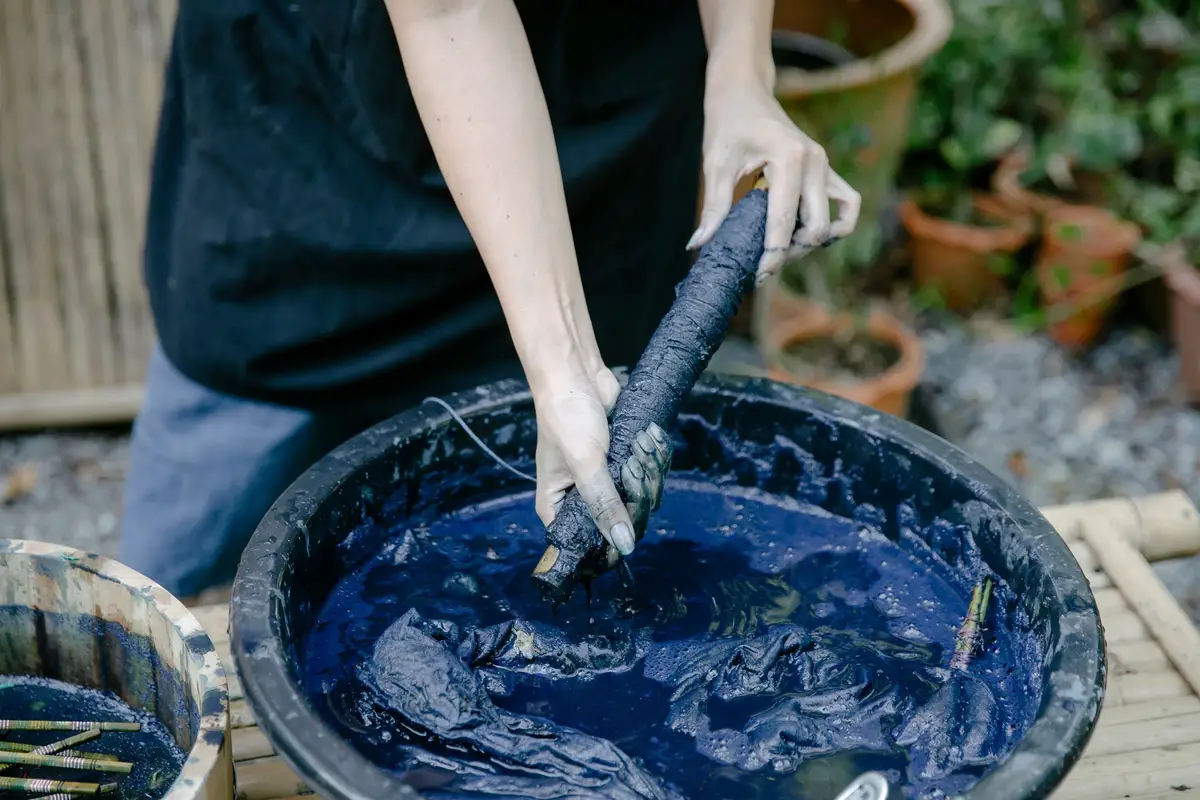
Our indigo khadi is dyed by a family workshop in Ajrakhpur, a village of block printers and dyers about 15 km from Bhuj. We send them undyed hand-spun cloth in bolts of 30 metres, and it comes back three to four weeks later in shades from sky blue to almost black.
The vat is the heart of it. Natural indigo does not dissolve in plain water, so the dyer sets a fermentation vat: indigo powder, lime, jaggery and water in a deep clay or cement pit. Over about ten days the bacteria in the vat turn the indigo into a form that can soak into cotton. A healthy vat smells earthy and has a coppery film on top.
Cloth goes into the vat yellow-green and comes out the same colour. Only when it meets the air does it turn blue, over a minute or two, as the indigo oxidises. Each dip adds a little depth. A pale shade takes three or four dips; our darkest indigo takes twelve, with drying in between. After the last dip the cloth is washed several times in running water to remove loose dye and lime, then dried on the ground in the sun. This is why our indigo still bleeds slightly in your first wash: no washing at the dyer removes every trace.
A vat lasts many months if it is fed and stirred daily. The dyer, Ismailbhai, tests it each morning by dipping a strip of cotton and timing how fast it turns blue.
Keep reading
Metres, tailoring and buttons: the real cost of a khadi kurta made from fabric by the metre.
Common doubts we hear at the counter about hand-spun cloth, and what actually happens when you wear it.
A half-day route through the Ahmedabad of Gandhi and the charkha, ending at our shop.