Storing khadi sarees through the monsoon
Folds, airing and neem leaves: how to keep hand-spun sarees fresh from June to September.
Hand-spun and handwoven · 10% off every Gandhi Jayanti week · Ships across India
41 Ashram Road, Navrangpura, Ahmedabad 380009
Mon–Sat · 10 am – 8 pm · Sun 10 am – 1 pm
A half-day route through the Ahmedabad of Gandhi and the charkha, ending at our shop.
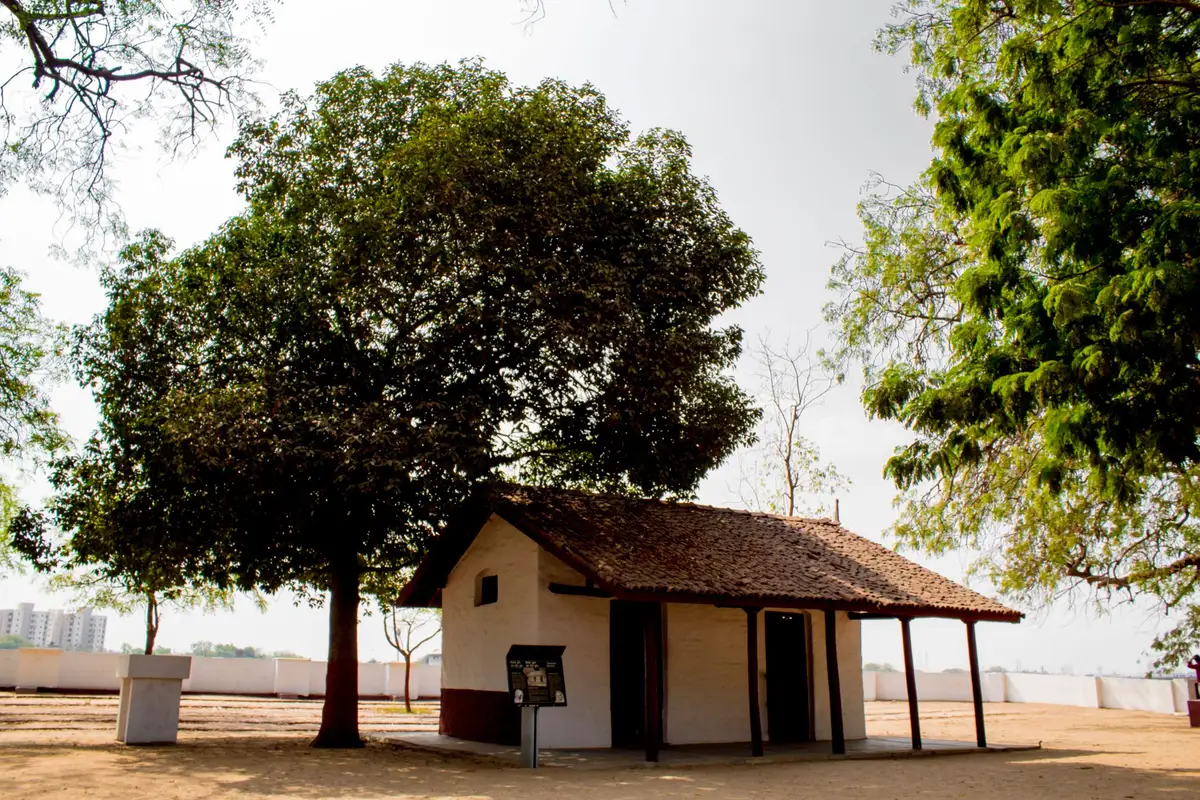
Many visitors to Ahmedabad want to see where the khadi movement began, then buy some cloth to take home. This half-day walk links the two, and it is best started early, before 9 am in summer.
Begin at the Sabarmati Ashram on the west bank of the river. Look for the room with the spinning wheels, and the simple living quarters that open onto the riverbank. Volunteers sometimes demonstrate spinning, and it is worth watching a skilled hand draw a thread from a roll of cotton before you see what we sell.
From the ashram, walk or take an auto south along the Riverfront promenade. The paved walk is shaded in parts and gives you a view of the old city across the water. Early mornings have joggers, families feeding pigeons and the smell of chai from the stalls near the bridges.
Cross towards Navrangpura and Ashram Road. The road takes its name from the ashram, and in the decades after 1947 it was lined with khadi bhandars. A few remain. Ours is at number 41, opened in 1962 by our grandfather, who sold cloth from a single wooden counter that still stands near the door. Inside, ask to see the bolt register. Every bolt of khadi we stock is logged with the village where its yarn was spun and the weaver who wove it. It takes about four hours from the ashram gate to our shop, including breakfast.
Keep reading
Folds, airing and neem leaves: how to keep hand-spun sarees fresh from June to September.
Three cloths that can look alike on a shelf, and what to check before you pay.
Cold water, mild soap and a little starch keep khadi soft and crisp for years.