Is Chettinad food too spicy for children?
How spicy our food really is, how we make it milder without changing the masala, and what children usually enjoy.
Lunch 12–3.30 pm · Dinner 7–10.30 pm · Delivery across Tiruchirappalli
22, 11th Cross Road, Thillai Nagar, Tiruchirappalli 620018
Daily · 12 – 3.30 pm · 7 – 10.30 pm
Country chicken takes longer, tastes stronger and costs more. How it changes a Chettinad curry, and when farm chicken is fine.
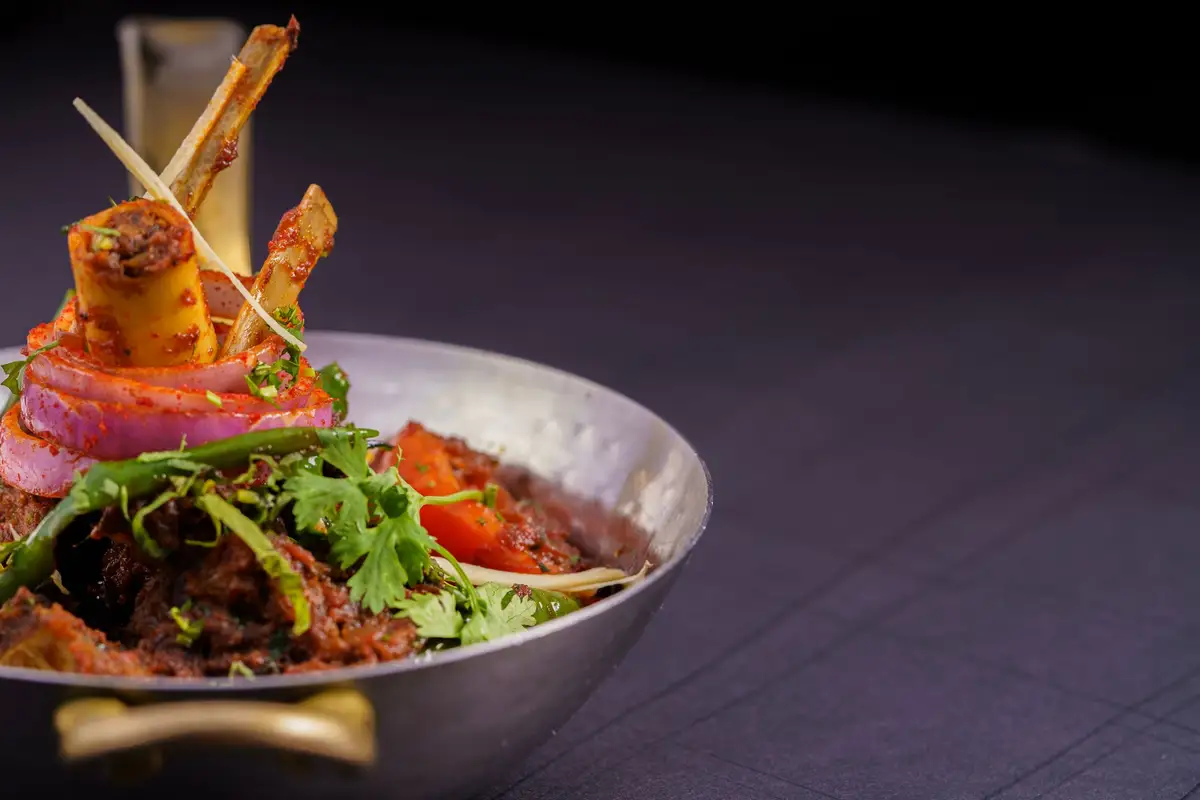
Our menu marks which dishes use nattu kozhi, country chicken, and which use farm chicken. Guests sometimes ask whether the difference is worth the extra ₹100 a plate. In a Chettinad curry, we think it is, and here is why.
Country chickens are raised in open yards on farms near Pudukkottai, scratching for food for five to six months before they are sold. Their meat is leaner and firmer, with a deeper flavour and darker colour. Broiler chickens grow to size in about six weeks, and their meat is soft, pale and mild.
That firmness changes the cooking. A nattu kozhi curry simmers for about an hour and a quarter in our kitchen, so the meat softens slowly and the pepper, fennel and kalpasi masala soaks deep into it. The gravy becomes thick and dark, almost sticky from the bones. A broiler would fall apart in that time, and the gravy would stay thin.
Farm chicken suits dishes that cook fast and need tender meat: chicken 65, pepper fry, biryani and kothu parotta. That is why we use it there, and the menu says so. If you are new to country chicken, expect to chew a little more; that is not toughness but texture. Pieces include bone, as they should. Children who prefer softer meat usually enjoy the pepper chicken fry instead. A plate of nattu kozhi curry costs ₹340 and serves one with rice.
Keep reading
How spicy our food really is, how we make it milder without changing the masala, and what children usually enjoy.
A day of temples in Tiruchirappalli, with notes on timings, crowds and where to rest before a late lunch.
A wooden chekku in a village near Pudukkottai, sesame seeds and palm jaggery: the oil behind every dish we cook.