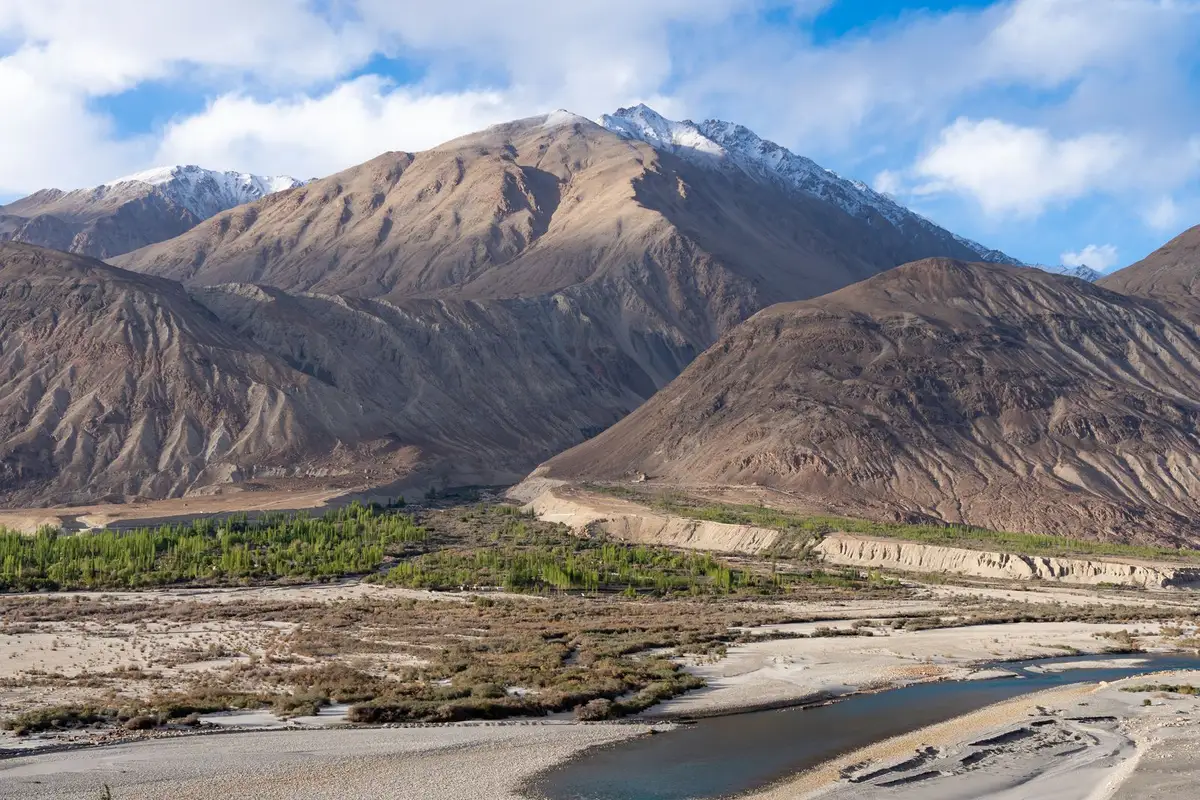
Where the ₹38,500 for a Markha trek goes
Ponies, guides, cooks, food carried up the valley, permits and the winter wages of our team. An open breakdown of one trekker’s price.
Markha Valley departures every Saturday, June to September · Chadar 2027 bookings open
Changspa Road, Leh, Ladakh 194101
May–Oct daily 8 am – 8 pm · Nov–Apr 10 am – 5 pm
Patience, a good scope and a local spotter matter more than luck.
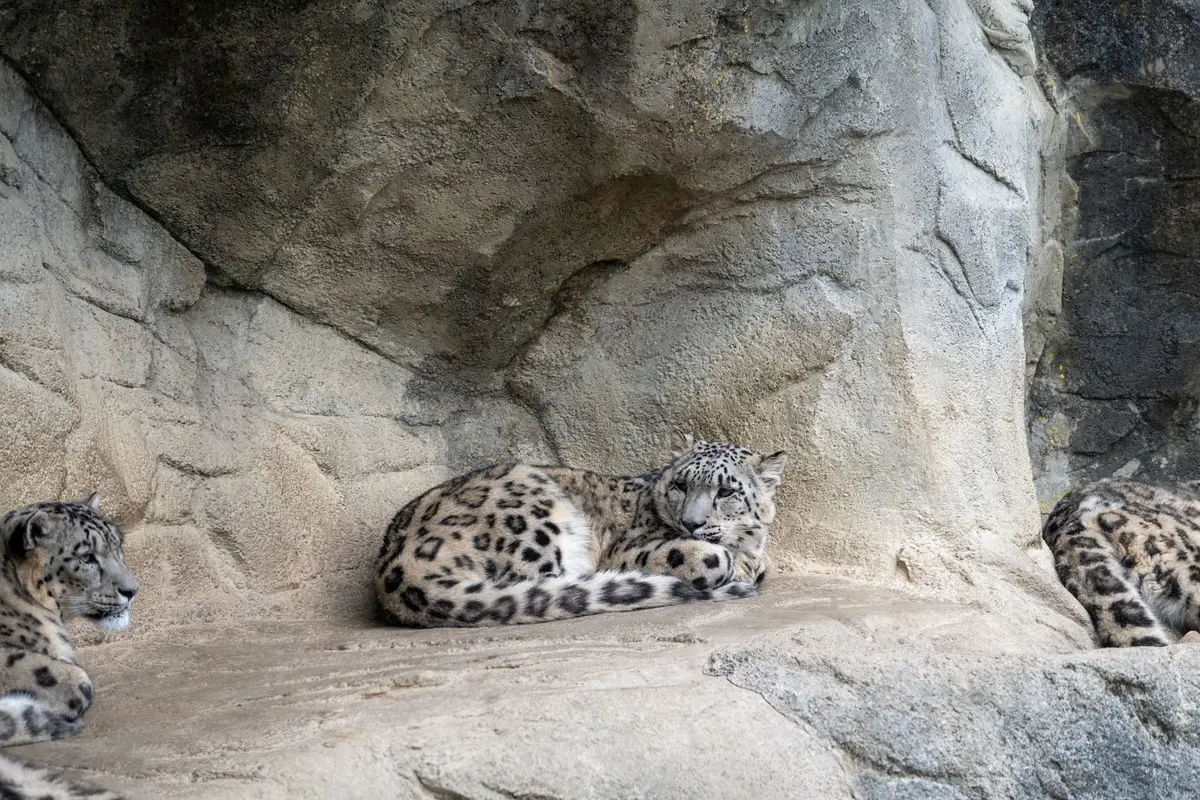
Snow leopards spend summer high in the mountains and come lower in winter, following the blue sheep and ibex they hunt. That is why our trail in Rumbak runs in February and March, when the valley is quiet and cold.
Each day begins before sunrise. We walk to a ridge or a valley junction with our spotter, set up scopes and scan the slopes for movement. Snow leopards are grey and white against grey and white rock, so the spotter looks for prey that seems nervous, fresh tracks or a scrape mark.
Most of the day is spent watching, not walking. Bring patience, warm boots and a flask of tea. Temperatures stay below zero until late morning.
Sightings are likely in a week but never certain. When one happens, it is often at a distance of 500 m or more, so a scope matters more than a camera. We carry two.
Nights are spent in a village homestay heated by a dung stove, and the family’s fees go directly into the village. Part of every booking supports their work protecting livestock from predators.
Keep reading
Ponies, guides, cooks, food carried up the valley, permits and the winter wages of our team. An open breakdown of one trekker’s price.
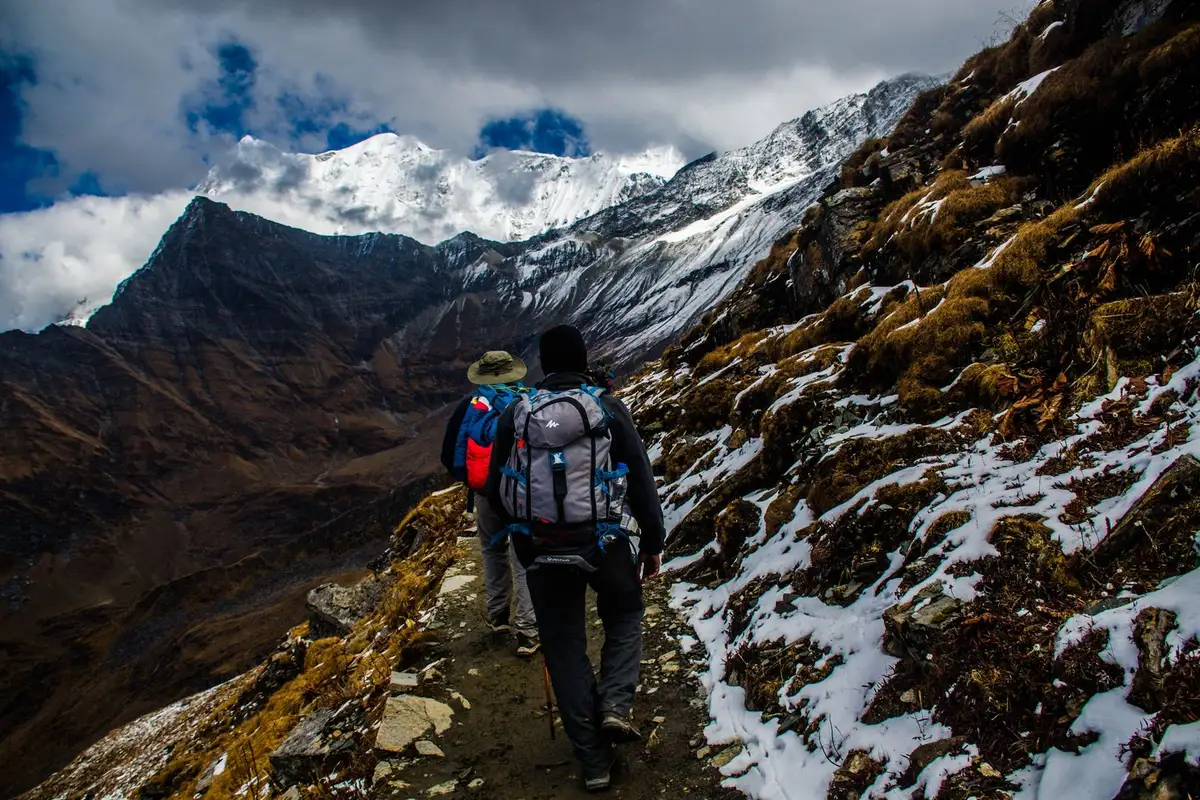
Three trips for three different people. How the height, days, effort and nights compare, and how to pick the right one.
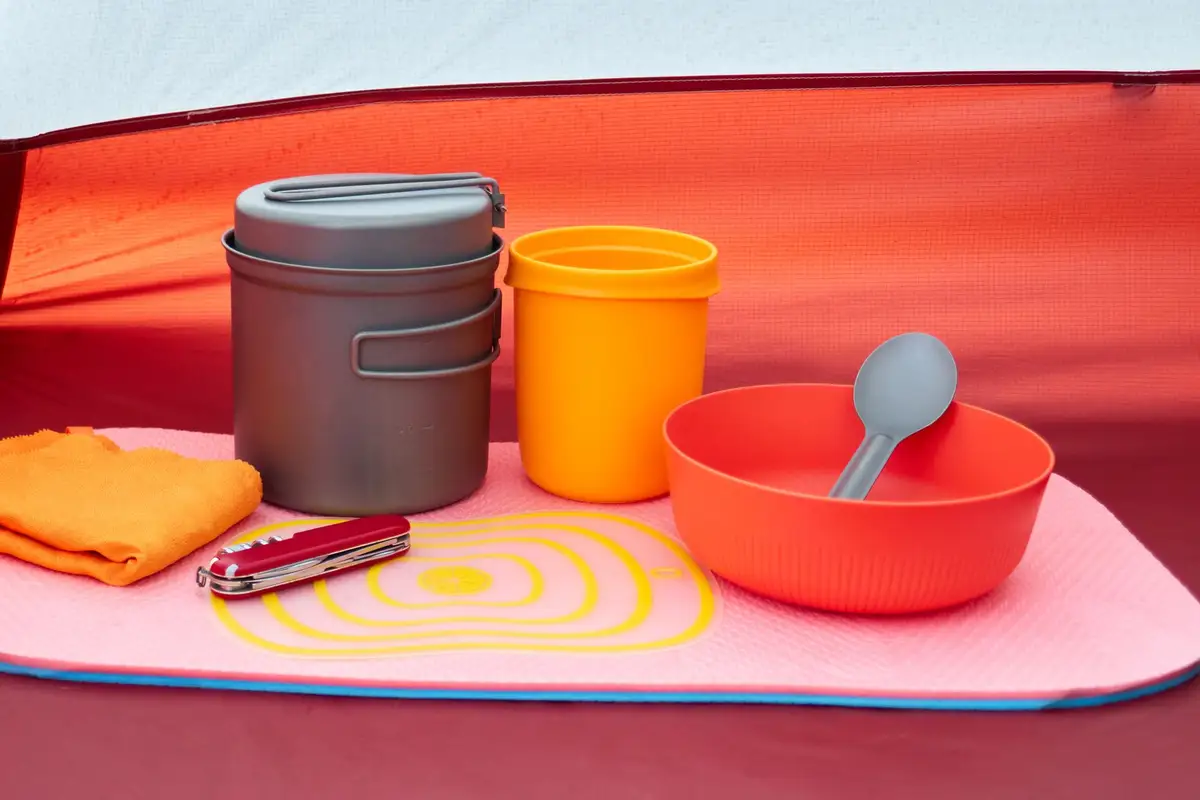
Fresh bread, hot soup and dal that cooks properly at altitude. A look inside the kitchen tent, and what we carry to make it work.