How our cooks feed a group at 4,500 m
Fresh bread, hot soup and dal that cooks properly at altitude. A look inside the kitchen tent, and what we carry to make it work.
Markha Valley departures every Saturday, June to September · Chadar 2027 bookings open
Changspa Road, Leh, Ladakh 194101
May–Oct daily 8 am – 8 pm · Nov–Apr 10 am – 5 pm
Three trips for three different people. How the height, days, effort and nights compare, and how to pick the right one.
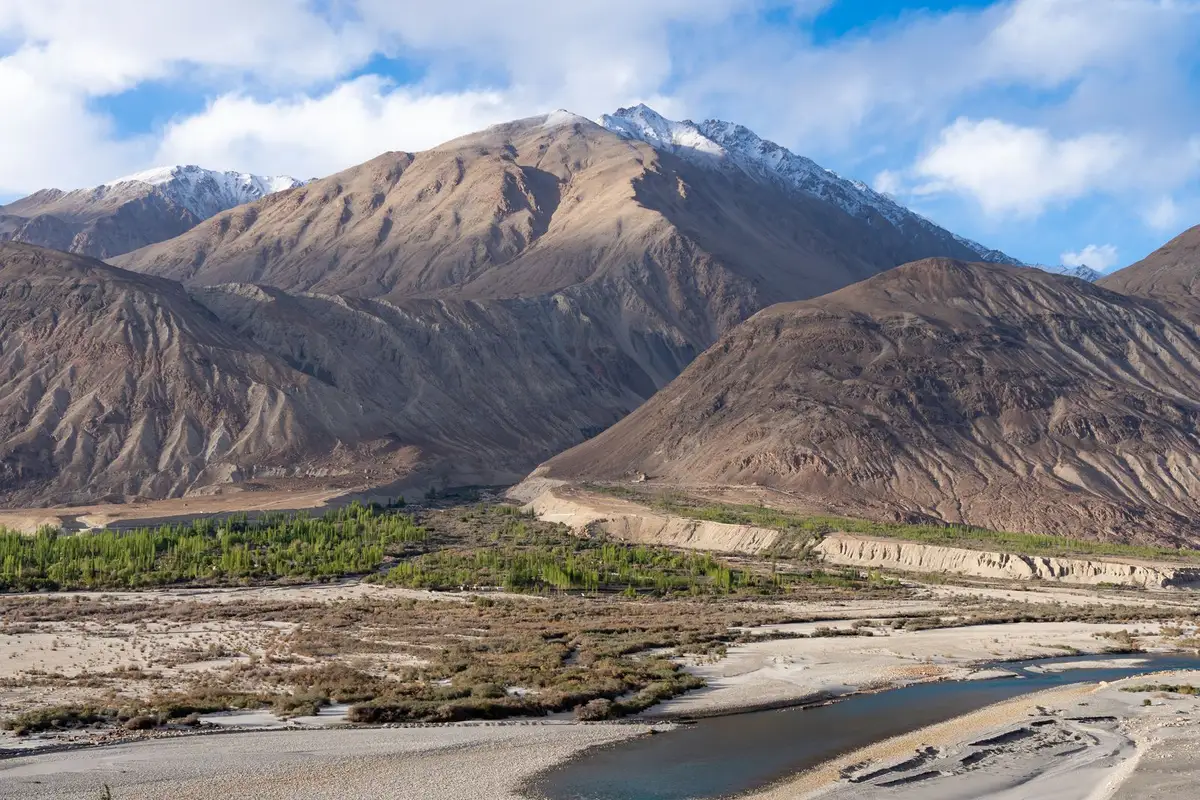
Every spring we get dozens of calls from people planning their first trek in Ladakh. Most have already chosen one, usually the hardest they have heard of. Here is how our three most-asked trips compare, so you can choose the one that suits you.
The Sham valley walk is four easy days on good paths between villages below 4,000 m, with homestays each night and no camping. You walk four to five hours a day through apricot orchards and past monasteries. It suits families with children over ten, older trekkers and anyone who has never walked for several days in a row. It costs ₹16,500.
The Markha valley trek is the classic: eight days, five of them walking, with nights in tents and one homestay, and a crossing of Kongmaru La at 5,150 m on the last walking day. Days are six to seven hours. You need to be fit enough to walk all day, several days in a row, with a light pack. Previous trekking experience helps, but it is not essential if you train. It costs ₹38,500.
Kang Yatse II is a climb, not a trek. It reaches 6,250 m, includes three nights at 5,000 m and a summit day of 10 to 12 hours on snow. You need previous high-altitude experience, ideally a pass above 5,000 m, and a mountaineering basics course is strongly advised. It costs ₹78,000. If you are unsure, start with Markha. Most of our Kang Yatse climbers walked it first.
Keep reading
Fresh bread, hot soup and dal that cooks properly at altitude. A look inside the kitchen tent, and what we carry to make it work.
Your rest days in Leh need not be spent in a hotel room. Gentle walks, monasteries and markets that suit the first 48 hours at 3,500 m.
Monastery festivals with masked dances, the Ladakhi new year in winter and village harvests. How to plan a trek around them.