Storing ghee so it lasts
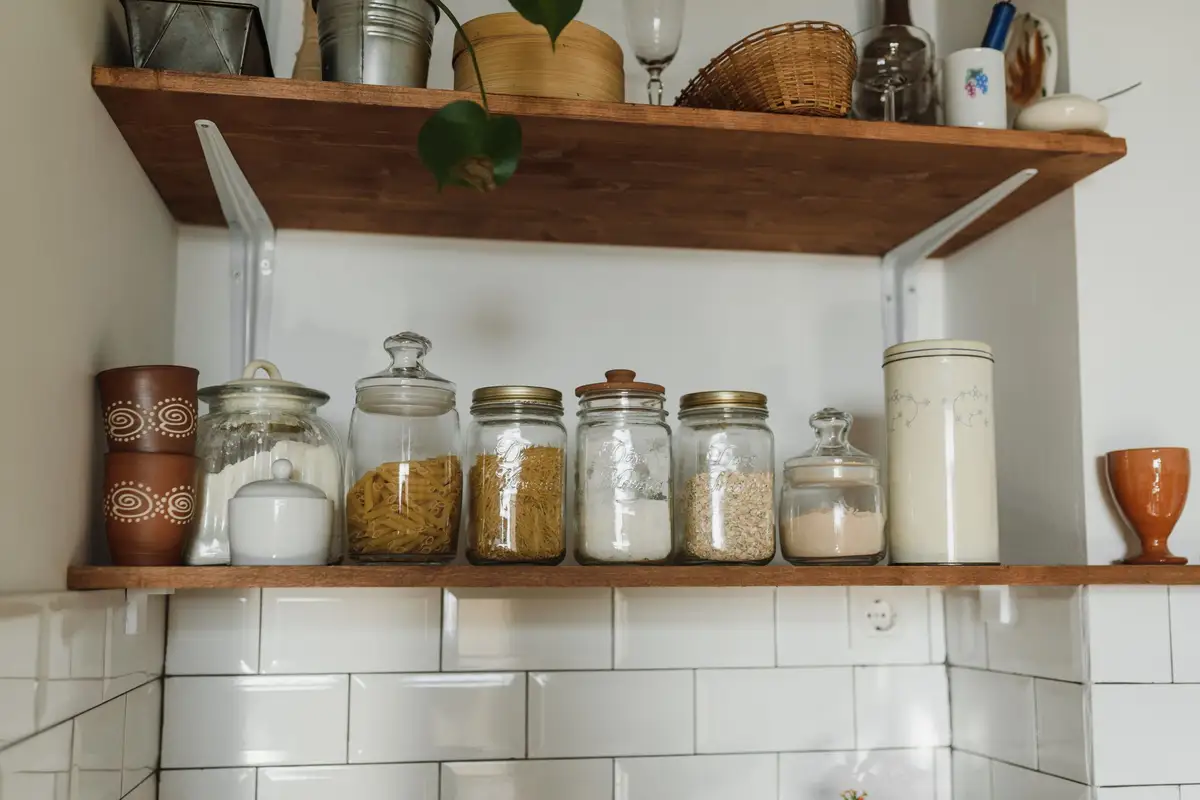
A dry spoon, a closed lid and a dark shelf: the three habits that keep a jar fresh for nine months.
Fresh dairy delivered in Rajkot every morning · Ghee shipped across India
7 Amin Marg, near Kotecha Chowk, Rajkot 360001
Daily · 7 am – 1 pm, 5 – 9 pm · Farm on Sundays
Milk to curd, curd to makhan, makhan to ghee: the two days behind every jar, step by step.
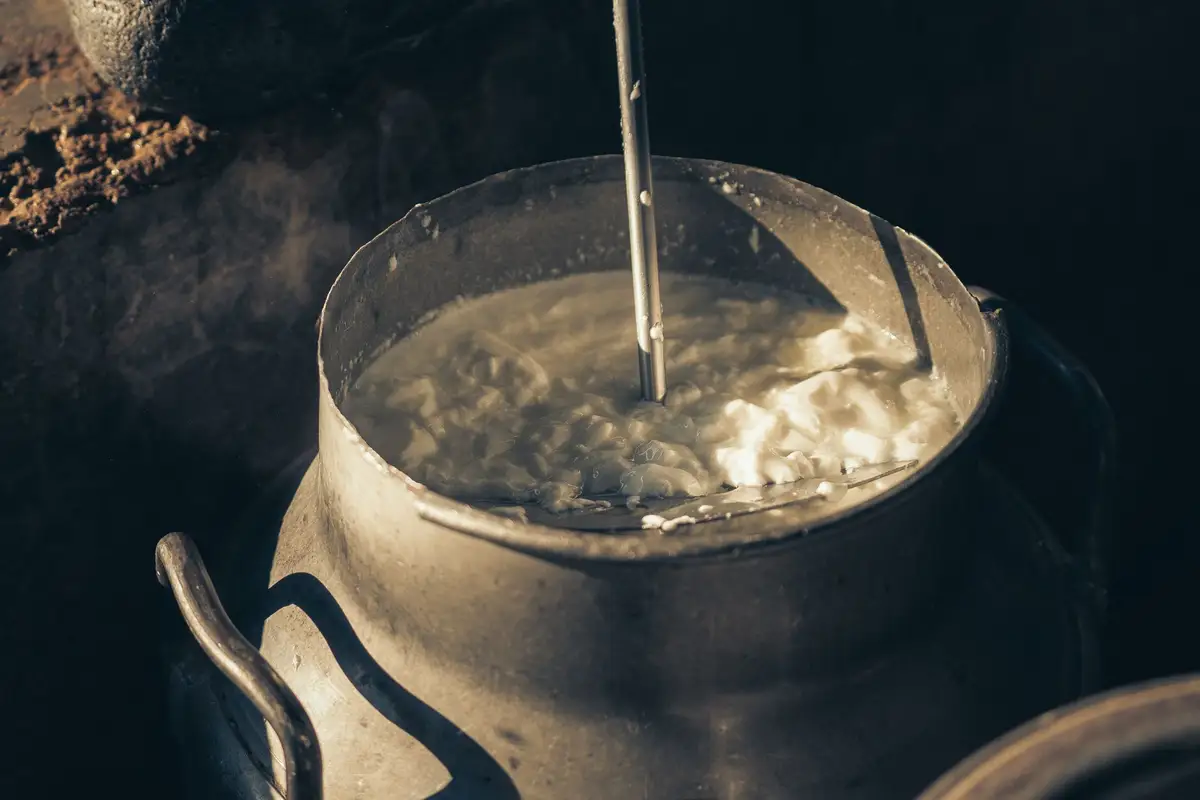
Bilona ghee starts the evening before. Milk from the 5 pm milking is boiled in wide steel pans, cooled until it is just warm to a finger, and a spoon of yesterday’s curd is stirred in. It sets overnight in clay pots in the cool room behind the shed.
At 5.30 am Shardaben and two helpers start churning. The curd is thinned with a little water and churned with a wooden madhani, turned by a rope, until the makhan floats up in soft lumps. That takes about forty minutes a pot. What is left is chaas, which goes into bottles for the morning delivery.
The makhan is washed in cold water and cooked in a heavy iron kadai over a wood fire. For the first hour it bubbles loudly as the water cooks off. Then it goes quiet, the solids sink and turn golden-brown, and the kitchen fills with a smell like roasted nuts. That is the moment to take it off the fire. Five minutes too long and it tastes burnt.
The ghee rests until warm, is strained through muslin and poured into jars. Each jar gets a label with the cooking date in Nilesh’s handwriting. On a good winter day we make about 18 litres. In May, when the cows give less milk, it can be half that.
Keep reading
A dry spoon, a closed lid and a dark shelf: the three habits that keep a jar fresh for nine months.
Twenty-eight litres of milk, two days and a wood fire: an honest breakdown of what goes into one jar.
What a good jar looks like, why colour changes with the seasons, and what the grain does and does not tell you.