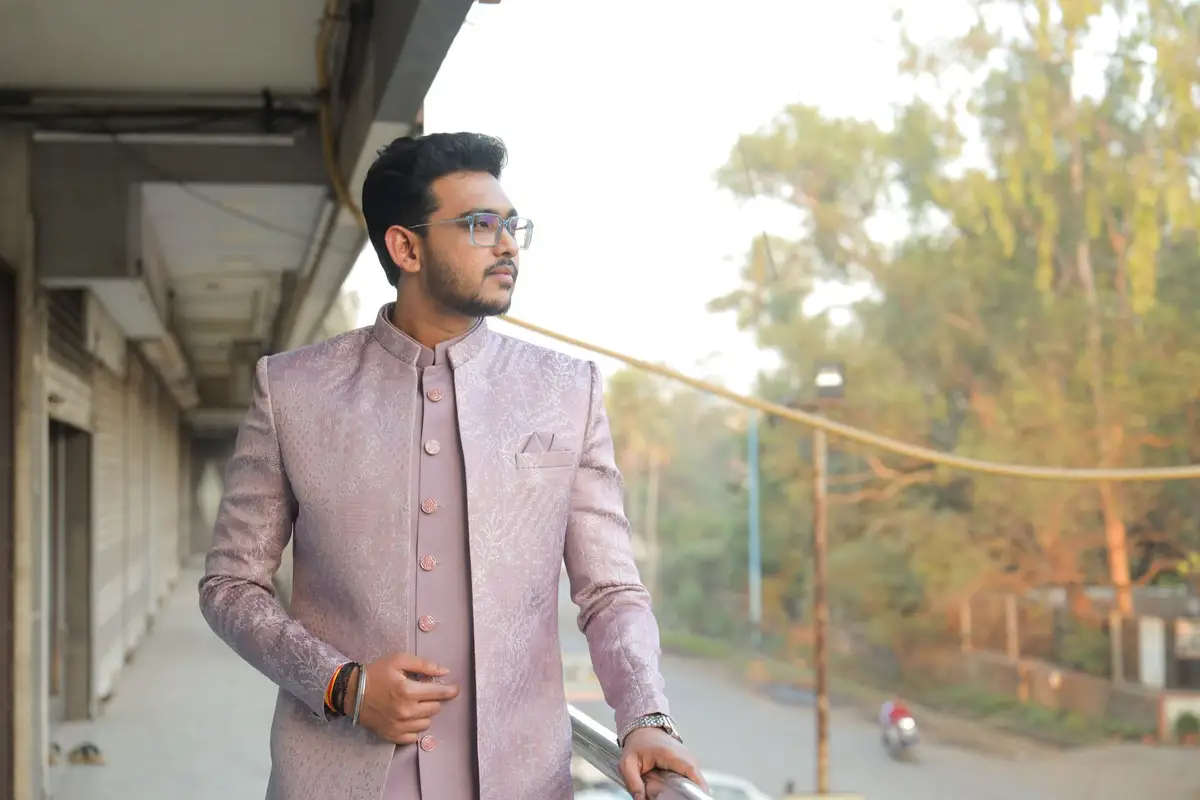
Bandhgala, Jodhpuri or Nehru jacket: how to choose
They look alike on a hanger and wear very differently. A short guide to the three.
Wedding season fittings for November to February are open · Shahpur Jat, by appointment
28 Shahpur Jat, near Asiad Village, New Delhi 110049
Tue–Sun · 11 am – 8 pm · by appointment
A jacket passes through five or six pairs of hands. Here is what each person does.
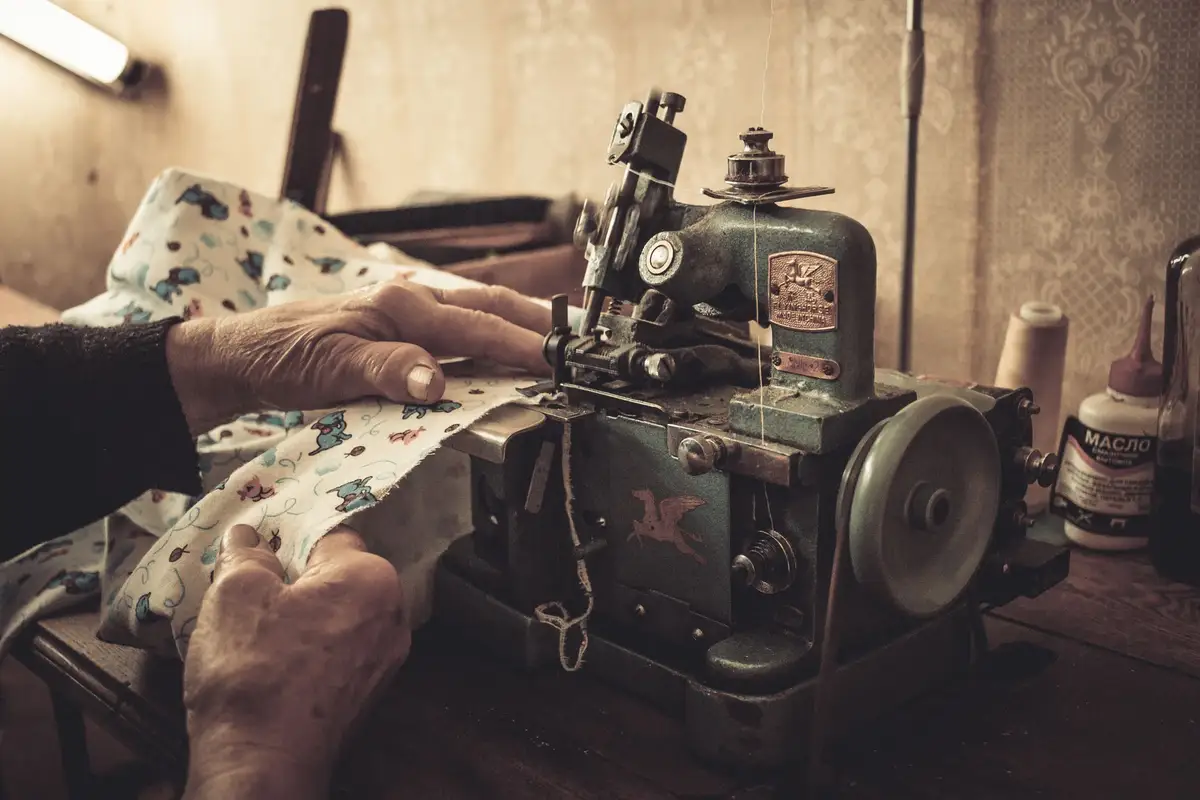
Behind our fitting rooms is a long workroom with a cutting table at one end and a row of sewing tables under the windows. Nine tailors work there, and most jackets pass through five or six of them.
The cutter drafts your pattern in pencil on brown paper, lays it on the cloth and chalks around it, leaving extra inlays at the seams so the jacket can be let out later. He cuts with long shears, one layer at a time, matching checks and stripes across the pockets and back.
The coat maker builds the canvas and pads the lapels by hand, then bastes the jacket together with white thread for the first fitting. After each fitting, he unpicks, reshapes and resews. The trouser maker works alongside, on his own table, and the waistcoat goes to whoever has room that week.
Finishing is done by two tailors who sew the buttonholes, felling and lining by hand. A hand buttonhole takes about twenty minutes. The presser comes last, and good pressing shapes a jacket as much as sewing does. Shirts are made at a separate table by our shirtmaker, who cuts from your shirt pattern and sews with a single needle so the seams stay flat. You are welcome to see the workroom at any of your fittings. Most clients ask to, once.
Keep reading
They look alike on a hanger and wear very differently. A short guide to the three.
Our first shirt order always begins with one shirt you wear, wash and report back on.
Cloth, making, trims and fittings: a breakdown of a ₹68,000 three-piece suit.