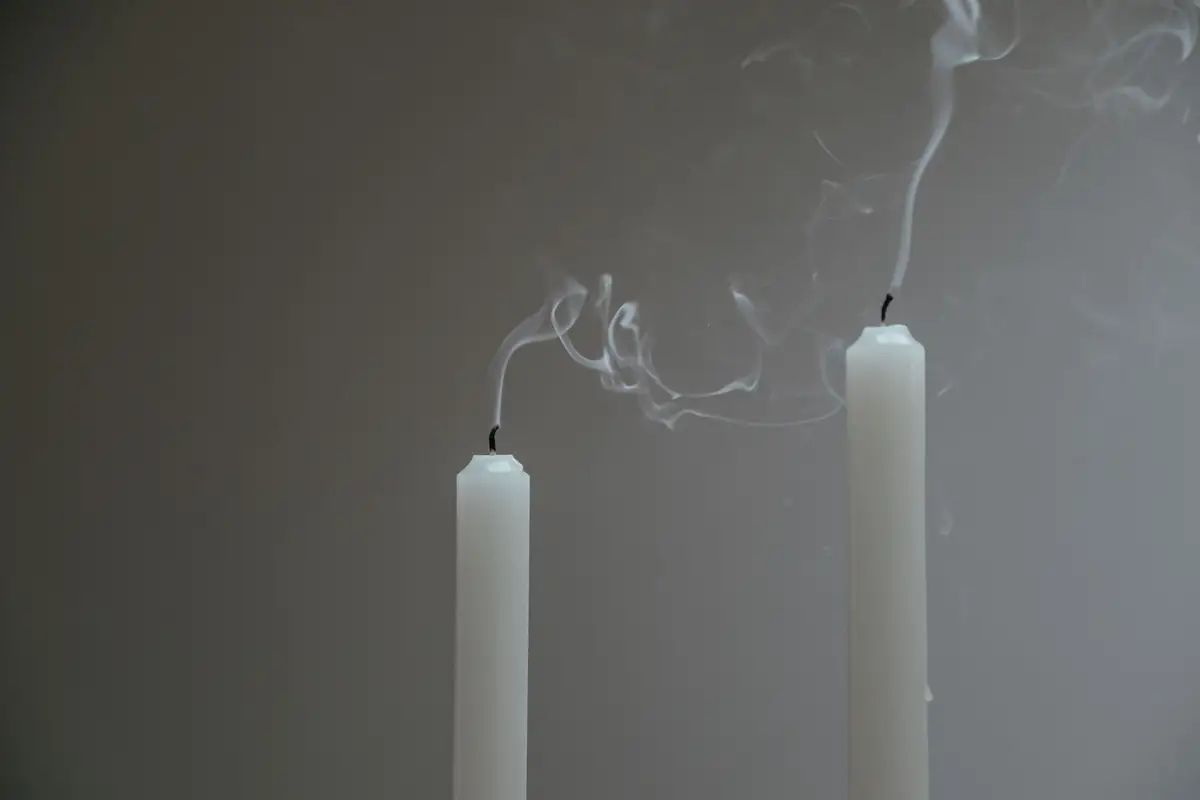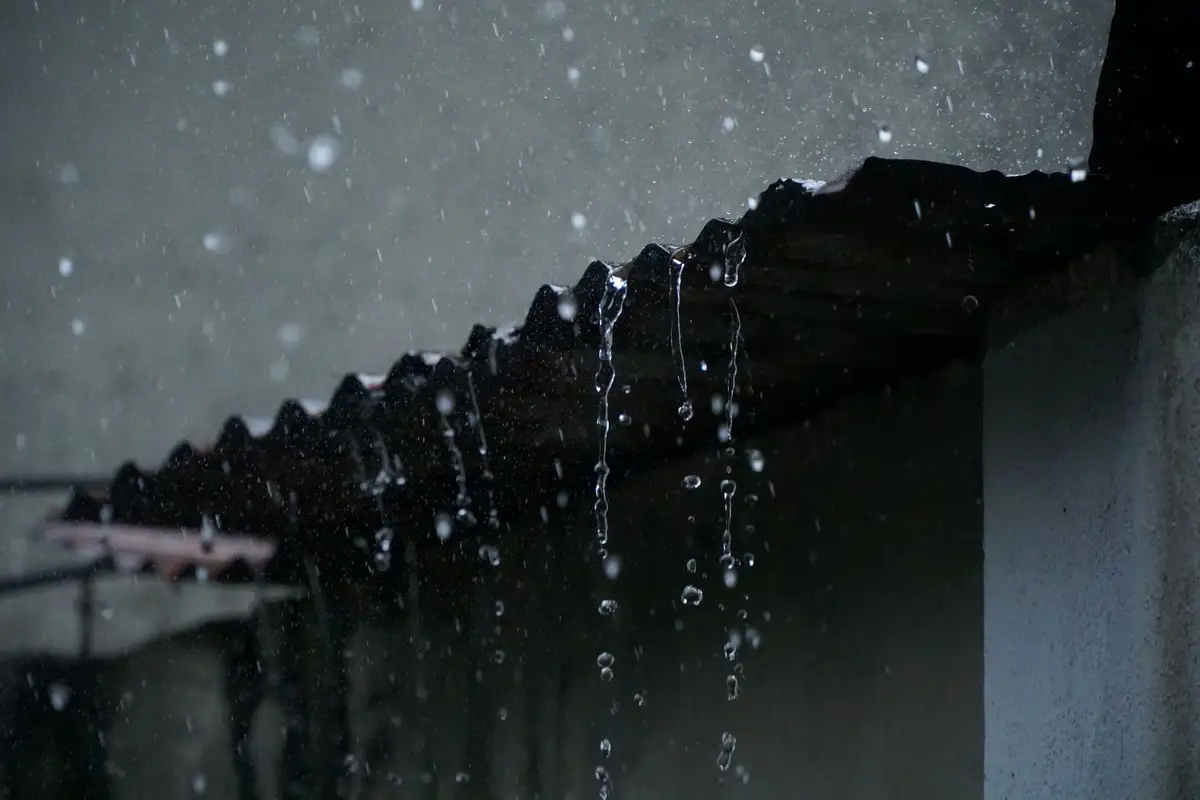
Candles in the Goan monsoon
Damp, mould, soft wax and power cuts: how to store candles, incense and diffusers from June to September.
Saturday candle-making workshops in Assagao · Shipping across India in 3–6 days
House 214, Badem Church Road, Assagao, Bardez, Goa 403507
Tue–Sun · 11 am – 7 pm · Workshops Sat 4 pm
A Tuesday morning at the pouring table: melting, weighing, the two pours and the long wait on the racks.

We pour on Tuesdays and Thursdays, because the studio is closed to visitors until 11 and the morning is cooler. By 7.30 Joanita has the wax melting in a double boiler, two steel jugs of soy flakes that turn clear and smell faintly of warm butter.
While it melts, the jars are washed, dried and warmed on a tray, and a cotton wick is fixed to the centre of each with a dot of glue. Cold jars make the wax pull away from the glass, so in the monsoon, when the studio is damp, we warm them for longer.
At 85 °C the fragrance oil goes in, weighed on a scale to the gram. It is stirred for two full minutes, slowly, so it binds with the wax. Then the wax cools to about 60 °C before the first pour. Pour too hot and the top cracks; too cool and it sets cloudy. We fill each jar three quarters, let it set for an hour, and top it up with a second pour to leave a smooth, flat surface.
Wicks are held straight with wooden clips while the wax sets. By noon, 40 candles stand in rows on the bench. They move to the wooden racks in the back room, each batch tagged with its date, and stay there for two weeks. Soy wax needs that time to cure and bind the scent; a candle burned the day after pouring smells of very little.
Keep reading
Damp, mould, soft wax and power cuts: how to store candles, incense and diffusers from June to September.
Which candle for which person, the dates to order by, and how to send a gift box to another city.
Black soot on the glass is not a sign of a bad wax. It is almost always the wick, a draught or a long burn.