
Your first candle-making workshop: what to expect
Two and a half hours, two candles, a scent you blend yourself. What happens on a Saturday afternoon at the studio.
Saturday candle-making workshops in Assagao · Shipping across India in 3–6 days
House 214, Badem Church Road, Assagao, Bardez, Goa 403507
Tue–Sun · 11 am – 7 pm · Workshops Sat 4 pm
Black soot on the glass is not a sign of a bad wax. It is almost always the wick, a draught or a long burn.
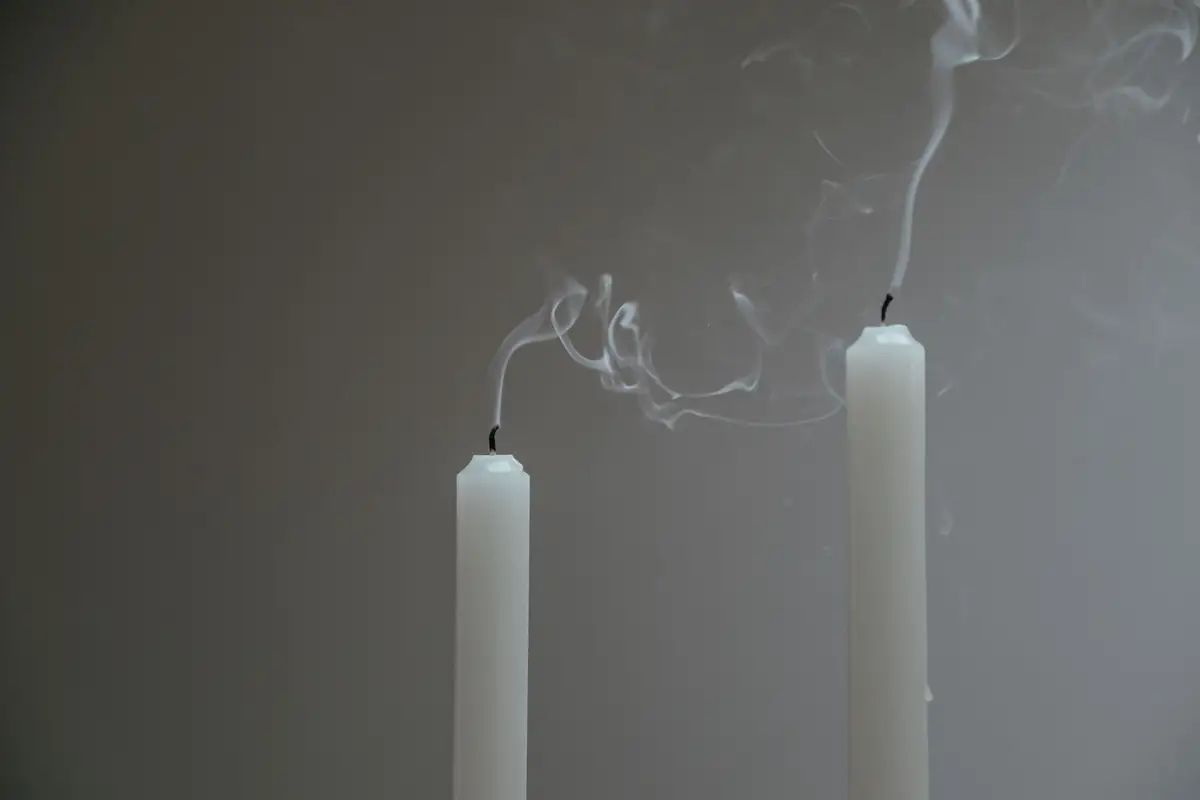
Customers sometimes send us a photo of a jar with a black ring of soot around the rim and ask whether the candle is faulty. Usually it is not, and the fix takes five seconds.
Soot is unburned carbon. It forms when a flame gets more fuel than it can burn cleanly, and the most common reason is a wick that is too long. As a cotton wick burns, it grows. Once it passes about 1 cm, the flame becomes tall and flickers, and it starts to smoke. Trim it to 5 mm before every lighting, and the flame will settle into a calm, steady shape.
The second reason is moving air. A fan, an open window or an air-conditioner vent makes the flame dance, and a dancing flame smokes. In Goa this is very common. Move the candle a metre away from the draught, or put the lid on until the fan is off. The third is burning too long. After four hours the wick mushrooms, a small black blob forms on its tip, and the flame grows. Blow the candle out, let it cool, trim the wick and light it again later.
We use soy and beeswax with cotton and wooden wicks, which tend to burn cleanly when cared for. Still, any flame makes a little smoke. Burn candles in a ventilated room, keep them away from curtains and pets, and never leave one burning in an empty room.
Keep reading
Two and a half hours, two candles, a scent you blend yourself. What happens on a Saturday afternoon at the studio.
Monsoon earth, cashew blossom, kokum and a church on a feast day: where each of our candles started.
Where to put it, how often to flip the reeds, and why a diffuser lasts longer in July than in May.