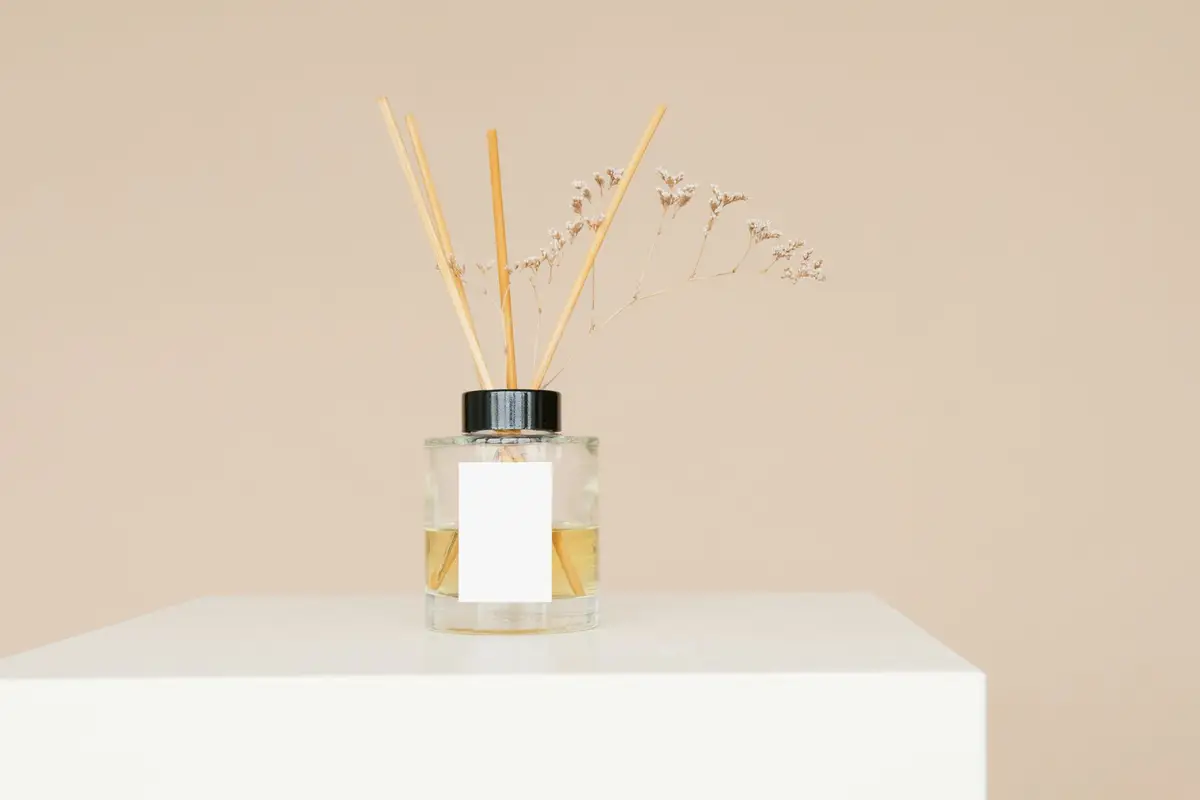
How to get the most from a reed diffuser
Where to put it, how often to flip the reeds, and why a diffuser lasts longer in July than in May.
Saturday candle-making workshops in Assagao · Shipping across India in 3–6 days
House 214, Badem Church Road, Assagao, Bardez, Goa 403507
Tue–Sun · 11 am – 7 pm · Workshops Sat 4 pm
Monsoon earth, cashew blossom, kokum and a church on a feast day: where each of our candles started.

When we started pouring in Assagao, we decided that every scent should start from something you could smell within a few kilometres of the studio. It has kept the range small and, we hope, particular.
Monsoon vetiver began with the first rain of June on the red laterite roads. That smell is partly the earth itself and partly the oils of dry plants released by the water. We built it from vetiver root, a little black pepper and a mineral, slightly metallic note. It took eleven test batches.
Cashew blossom is the smell of March and April, when the cashew orchards around Assagao and Siolim flower and the fruit ripens. Cashew apple is sweet and sharp, almost fermented; we softened it with tuberose and a trace of woodsmoke, since the season is also the season of the distilleries. Kokum and salt came from a walk along Anjuna in the evening, with a glass of kokum sherbet. It is our freshest scent: sour fruit, sea air and lime.
Our incense cones are built on benzoin and clove, the smell inside an old Goan church on a feast day, when the doors are open and the incense has been burning since morning. The forest diffuser is the hill behind the studio, wet leaves and cedar. We test each new scent in the studio for a month before it goes on sale. Some never make it.
Keep reading
Where to put it, how often to flip the reeds, and why a diffuser lasts longer in July than in May.
The first burn sets the memory of the wax. How long to let it run, how to trim the wick, and when to stop.
Two natural waxes, two different candles. What each smells like, how long they last and where each one belongs.