Planning orders around Diwali and Pongal shutdowns
Our holiday calendar, how supplier closures ripple through lead times and when to place orders for November and January.
Aerospace and automotive work · First-article samples in 10 working days
SF 214, SIDCO Industrial Estate, Kurichi, Coimbatore 641021
Mon–Sat · 8.30 am – 6 pm · two shifts
Each extra decimal place on a drawing costs time and money. How to tell which dimensions really need ±0.01 mm.
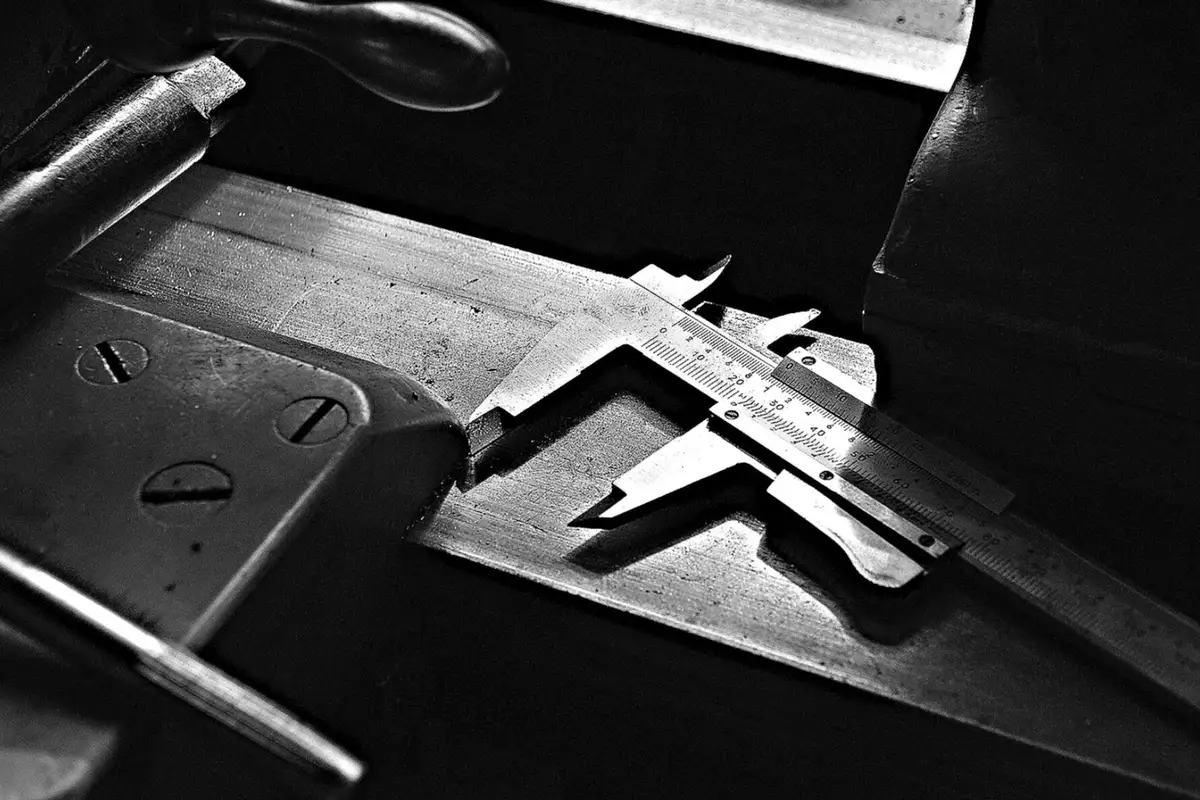
Some drawings arrive with every dimension at ±0.01 mm, including a chamfer and the outer edge of a cover plate. The engineer means well: tighter seems safer. In practice, unnecessary tight tolerances raise cost and lead time without making the part work any better.
Tight tolerances cost money in several ways. A feature at ±0.1 mm can be cut in one pass at a high feed rate. The same feature at ±0.01 mm may need a roughing pass, a finishing pass with a fresh tool, a slower feed and a measurement on the machine. At ±0.005 mm, we may need to let the part stabilise in temperature before the final cut and measure it in our controlled room. Each step adds minutes, and minutes multiply over a batch. Inspection time also grows, because every tight dimension must be checked and reported.
The right question is what each feature does. A bearing bore, a locating pin hole or a sealing face needs a tight tolerance, because the part fails without it. A clearance hole for a bolt, an outer profile or a pocket that only removes weight usually does not. A general tolerance block on the drawing, at ±0.1 or ±0.2 mm, covers these well.
When we review your drawing, our engineers mark features where the tolerance seems tighter than the function needs, and show the cost difference in the quote. You decide. On a recent housing, opening six non-functional dimensions from ±0.01 to ±0.1 mm cut the cycle time by 22% and the price by about 15%, with no change to how the part worked.
Keep reading
Our holiday calendar, how supplier closures ripple through lead times and when to place orders for November and January.
Five small changes to a drawing that cut cost and lead time.
How to read the report that comes with every lot.